

Table of Contents
- Understanding the Bespoke Jewelry Buying Process
- Questions to Ask a Custom Jeweler Before You Commission
- Verifying Jeweler Credentials and Authenticity Online
- Custom Jewelry Commission Timeline: What to Expect
- Ethical Gemstone Sourcing Standards and Certifications
- Securing Your Transaction: Payment, Insurance, and Legal Protection
- Toi et Moi Engagement Ring with Wedding Band: Commissioning Your Statement Piece
- Conclusion
Last Updated: August 28, 2026
Understanding the Bespoke Jewelry Buying Process
Buying bespoke jewelry online safely requires understanding how custom commissions work. Bespoke jewelry is custom-designed and handcrafted jewelry created specifically to your specifications, involving direct collaboration between you and the jeweler from initial consultation through final delivery.
The bespoke process typically follows: initial consultation, design development, material selection, prototype or rendering creation, production, and delivery. Most commissions take 8 to 16 weeks from start to finish.
At LÖF, the bespoke approach centers on sustainable luxury, using 18k gold, platinum, and ethically sourced gemstones. The key difference between buying online and visiting a physical studio is relying on detailed communication, photography, CAD renderings, and video calls to evaluate your piece before completion. This requires trust in both the jeweler's expertise and their ability to translate your vision accurately.
Questions to Ask a Custom Jeweler Before You Commission
Before committing to a design, you need answers to specific questions that reveal how the jeweler operates, what they guarantee, and how they handle problems.
Start with fundamentals: What is your design consultation process, and is there a consultation fee? Most charge $200-$500 or offer free consultations (the American Academy of Dermatology). Ask whether consultations happen via video call, email, or phone, and how many revision rounds are included.
Clarify the financial structure. What's the deposit amount, and when is the remainder due? Most jewelers require 50% upfront, with the balance due before shipping. Ask about refund policy if you're unhappy with the design before production begins.
Material sourcing is critical. Ask: Where do you source gemstones and precious metals? Can you provide certifications for diamonds and colored stones? For ethical sourcing, ask whether they use conflict-free diamonds, lab-grown options, or antique stones. Request proof and certifications from recognized bodies like the Gemological Institute of America (GIA) or Responsible Jewellery Council (RJC).
Ask about their experience with your specific vision. Have you designed pieces similar to what I'm imagining? Can you show me examples? Ask for references from past clients with similar commissions.
Finally, ask about revisions and modifications after delivery. What if sizing is wrong or a stone becomes loose? What's covered under warranty and for how long?
Verifying Jeweler Credentials and Authenticity Online
When you can't visit a studio in person, verification becomes your primary defense against fraud, misrepresentation, or poor craftsmanship.
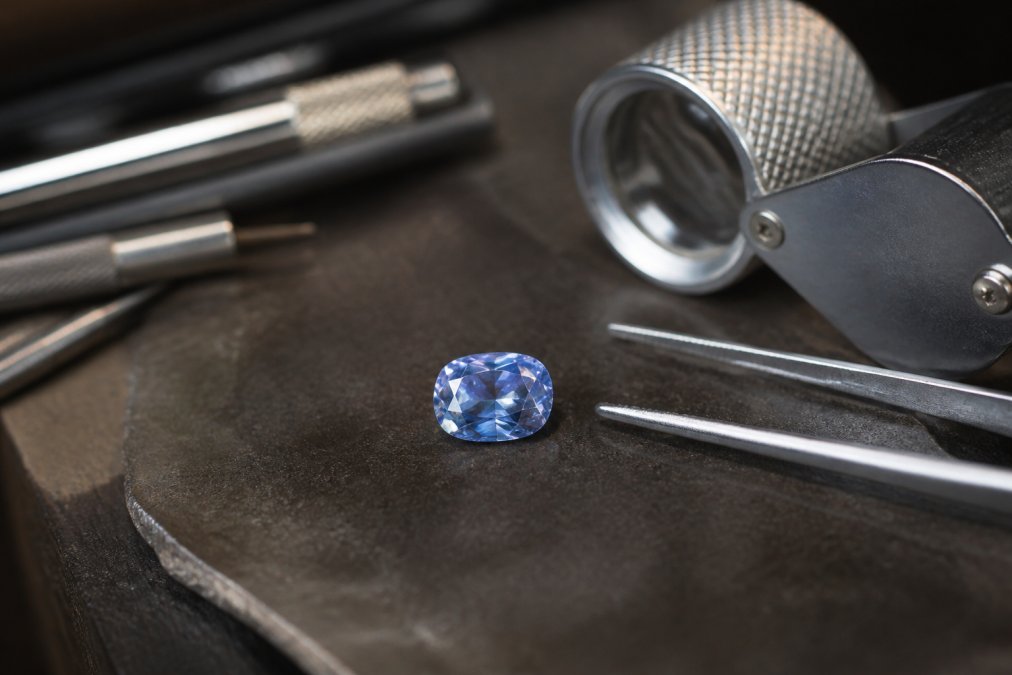
Check professional credentials. Is the jeweler a member of the American Gem Society (AGS), Jewelry Industry Council, or Responsible Jewellery Council (RJC)? Verify membership directly on the organization's website. Search for the jeweler's name on Google, Instagram, and jewelry forums. Read reviews on Google Reviews, Trustpilot, or industry-specific sites, paying attention to comments about custom commissions, revisions, timeliness, and whether the final piece matched expectations.
Look for evidence of actual work. A legitimate bespoke jeweler will have a portfolio of completed pieces on Instagram and their website showing real commissions with client photos and material descriptions. Request to see work similar to your vision and ask for client references you can contact directly.
For gemstone and metal authenticity, check whether the jeweler provides third-party certifications. Diamonds should come with GIA, AGS, or similar certification. Precious metals should be hallmarked: 18k gold is stamped "750," platinum "950" or "Plat." A jeweler who can't or won't provide hallmark information is a major red flag.
Check the jeweler's business registration with their state or country's business registry. A legitimate business means legal accountability if something goes wrong. Finally, look for transparency about their design process. Do they show CAD renderings or sketches before production? Do they provide progress photos? Legitimate bespoke jewelers document their work because they're proud of it and because it protects both parties.
Custom Jewelry Commission Timeline: What to Expect
Understanding the realistic timeline for a bespoke commission prevents frustration and helps you plan around important dates.
| Phase | Duration | What Happens | Your Role |
|---|---|---|---|
| Consultation & Design | 2-4 weeks | Initial meeting, design sketches, material discussion | Provide inspiration, feedback, preferences |
| Design Approval | 1-2 weeks | CAD rendering or detailed sketch review, revisions | Approve final design or request changes |
| Material Sourcing | 2-4 weeks | Sourcing gemstones, precious metals, securing certifications | Confirm material choices, approve sourced stones |
| Production & Crafting | 4-8 weeks | Handcrafting, stone setting, initial finishing | Minimal involvement; jeweler may send progress updates |
| Quality Control & Polish | 1-2 weeks | Final inspection, polishing, hallmarking | Jeweler ensures quality before shipping |
| Shipping & Delivery | 1-2 weeks | Packaging, insurance, delivery to your address | Receive piece, verify condition, sign for delivery |
The entire process typically spans 8 to 16 weeks, though complex commissions with rare gemstones can extend to 20 weeks. Simpler designs with readily available materials might complete in 6 to 8 weeks.
Gemstone availability significantly affects timeline. If you've requested a specific color or cut of sapphire or particular weight diamond, sourcing can add weeks. Antique diamonds, which LÖF specializes in, require extra time because each stone is unique. Ethical gemstone sourcing also takes longer than mass-market alternatives.
Seasonal demand matters too. Commissions placed September through November often face longer timelines due to engagement rings and holiday gifts. Placing a commission in January or February typically means faster turnaround.
Ask your jeweler for a written timeline with specific milestones and completion dates. If your commission is time-sensitive, communicate this upfront so the jeweler can prioritize accordingly or let you know if they can't meet your deadline.
Ethical Gemstone Sourcing Standards and Certifications
When you commission bespoke jewelry, the materials you choose matter as much as the design. Ethical gemstone sourcing means gemstones are obtained, traded, and processed in ways that don't harm communities, environments, or workers.
For diamonds, the Kimberley Process Certification Scheme prevents conflict diamonds from entering the market (kimberleyprocess.com). However, many jewelers now recognize that Kimberley certification alone isn't sufficient, it addresses conflict but not labor practices or environmental impact. Look for diamonds certified as conflict-free by third parties, or consider lab-grown diamonds, which eliminate mining concerns entirely.
Colored gemstones present different challenges. Mining practices vary dramatically by country and mine. A reputable jeweler should tell you where a gemstone was sourced and whether it comes with documentation proving ethical origin. Some gemstones carry certifications from the Responsible Jewellery Council (RJC) or Gemological Institute of America (GIA), which audit sourcing practices.
Antique and vintage diamonds offer another ethical path. These stones were mined decades or centuries ago, carrying no risk of funding modern conflicts. They also represent recycling, giving new life to existing stones rather than driving new mining. LÖF incorporates antique diamonds into many bespoke commissions, aligning with both ethical sourcing and sustainability.
When commissioning custom jewelry, ask your jeweler which gemstone options align with your ethical preferences. Do they offer lab-grown diamonds? Can they source conflict-free stones? Will they use antique diamonds if you prefer?
Securing Your Transaction: Payment, Insurance, and Legal Protection
High-value bespoke commissions require strong financial and legal protection.
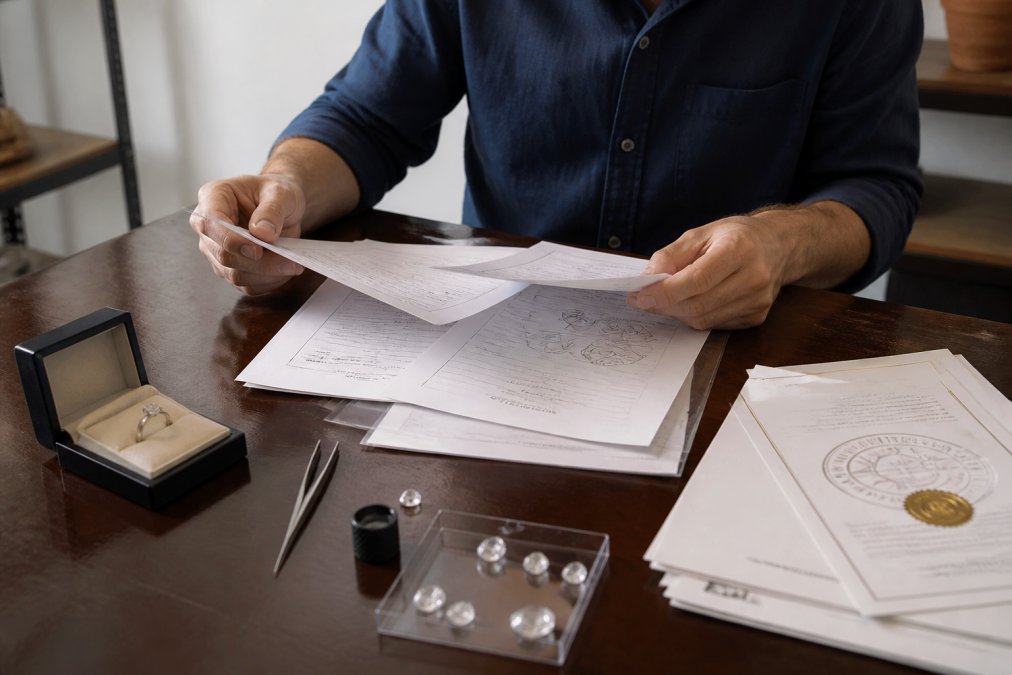
Never send funds via wire transfer, cryptocurrency, or untraceable methods. Use credit cards, PayPal, or other payment systems offering buyer protection. Credit cards are ideal because they provide chargeback protection if the jeweler fails to deliver or delivers substandard work.
Request a written contract before any payment specifying:
- Exact design specifications (materials, gemstone details, dimensions)
- Total cost and payment schedule
- Timeline and completion date
- Revision policy
- Refund policy
- Warranty coverage
- Cancellation terms
This contract protects both you and the jeweler by creating a legal record of what was promised.
Once your piece is completed and shipped, insurance becomes critical. Ask whether your jeweler insures the piece during shipping and whether that insurance transfers to you upon delivery. Most reputable jewelers use insured shipping and include insurance in the cost.
Upon delivery, inspect the piece immediately. Check that all details match the design specifications. Take photos and video for documentation. If anything seems wrong, contact the jeweler within 24 to 48 hours.
Request a formal appraisal after delivery. An independent gemologist will evaluate your piece, verify materials, assess quality, and provide a written appraisal document. This creates a legal record of your piece's value for insurance purposes and verifies that the jeweler delivered what they promised. Appraisals typically cost $150-$300.
Document all communication, save emails, screenshots of messages, and photos of your piece. For high-value commissions, consider consulting a lawyer before signing the contract. A brief legal review (often $200-$500) can identify problematic terms and protect your interests.
Toi et Moi Engagement Ring with Wedding Band: Commissioning Your Statement Piece
The toi et moi style, featuring two distinct gemstones of different shapes and colors, represents a bold, personalized approach to engagement jewelry.
A toi et moi engagement ring features two center stones of contrasting shapes, colors, or gemstone types, symbolizing two individuals coming together. The style gained popularity in the 19th century and has experienced a renaissance among couples seeking distinctive, non-traditional engagement rings.
When commissioning a toi et moi ring online, clarify your vision. Do you want two diamonds, or are you open to mixing gemstones? What shapes appeal to you? What's your budget? These decisions shape everything that follows.
The technical challenge with toi et moi designs is balance. Two stones of equal size can look overwhelming; vastly different sizes can appear unbalanced. A skilled bespoke jeweler will guide you toward proportions that feel harmonious. CAD renderings become invaluable, you can see how different stone combinations actually look before committing.
Gemstone sourcing for toi et moi rings often takes longer than solitaire commissions because you're sourcing two stones that must complement each other aesthetically. If you're requesting antique diamonds, sourcing can extend your timeline by 2 to 4 weeks. LÖF specializes in antique diamonds and can source complementary pairs that create stunning toi et moi combinations.
When designing your wedding band to accompany a toi et moi engagement ring, consider how the band will sit against the engagement ring's setting. Some couples prefer a curved band that nestles perfectly against the engagement ring's shoulders; others prefer a straight band worn on top.
The pricing for a toi et moi commission varies dramatically based on stone selection. A pair of high-quality antique diamonds in a platinum setting with a complementary wedding band can easily exceed $40,000. LÖF's Toi et Moi Engagement Band, featuring an antique marquise fancy yellow diamond and an antique pear white diamond with additional antique marquise diamonds on the shoulders, represents the caliber of craftsmanship and material quality that defines luxury bespoke work.
One consideration specific to toi et moi rings is resizing and repair. If your ring ever needs to be resized or repaired, the jeweler must work with two stones instead of one. Choose a jeweler who commits to lifetime maintenance and repair.
Conclusion
Buying bespoke jewelry online safely comes down to three interconnected commitments: thorough research before you commission, clear communication throughout the process, and documented verification at every stage. The jewelers worth trusting are the ones who welcome these safeguards because they have nothing to hide.
LÖF combines sustainable materials, 18k gold, platinum, and ethically sourced gemstones, with architectural design that creates heirloom pieces. When you commission a custom piece through LÖF, you're investing in craftsmanship that honors both your vision and your values. Choose options to explore how a bespoke commission works, or connect with the LÖF team to discuss your specific vision for a statement piece that lasts generations.
Frequently Asked Questions
Q: How do I know if a bespoke jewelry website is legitimate before buying online?
A: Check for hallmarks of a trusted jeweler: verified customer reviews on independent platforms, published gemstone certifications (GIA, AGS), clear return and warranty policies, secure payment gateways, and professional design consultation processes. Legitimate bespoke jewelers provide detailed information about metal purity, gemstone sourcing, and craftsmanship credentials. Request references from previous clients and verify any certifications directly with issuing organizations rather than relying solely on website claims.
Q: What should I look for when verifying ethical gemstone sourcing standards?
A: Ask your jeweler for specific certifications: conflict-free diamond documentation, Kimberley Process certification for diamonds, and third-party gemstone appraisals from recognized labs. Reputable bespoke jewelers provide detailed sourcing information for each stone, including origin and ethical practices. They should be transparent about whether stones are newly mined, recycled, or antique. Request written documentation of sourcing claims and verify certifications independently rather than accepting verbal assurances alone.
Q: What is the typical custom jewelry commission timeline, and how long should I expect to wait?
A: Most bespoke commissions take 8-16 weeks from design approval to final delivery. This includes design consultation (1-2 weeks), CAD rendering and approval (1-2 weeks), wax model or 3D printing (1-2 weeks), stone setting and craftsmanship (4-8 weeks), quality checks and finishing (1-2 weeks), and shipping with insurance. Timelines vary based on complexity, material sourcing, and the jeweler's workload. Confirm exact deadlines in writing before commissioning, and clarify whether rush options are available.
Q: How do I communicate my design ideas effectively to ensure my bespoke piece matches my vision?
A: Provide visual references (mood boards, Pinterest collections, sketches) and detailed written descriptions of your preferences. Request CAD renderings or 3D prints before final production so you can approve the exact design, proportions, and stone placement. Schedule design consultations to discuss metal choice, stone selection, and any modifications. Ask your jeweler for revision rounds included in the commission process. Clear communication through design blueprints and multiple approval checkpoints reduces the risk of disappointment with your final bespoke piece.
This article was written using GrandRanker