

Table of Contents
- What Makes Jewelry Heirloom Quality?
- How Long Does Fine Jewelry Last? The Role of Precious Metals
- Is 18k Gold Better Than Platinum for Generational Wear?
- Gemstone Durability and Setting Security
- How to Care for Heirloom Jewelry: A Maintenance Schedule
- Restoration, Re-Polishing, and Repairability
- Documentation, Insurance, and Provenance
- Conclusion
- Frequently Asked Questions
Last Updated: October 1, 2026
What Makes Jewelry Heirloom Quality?
Fine jewelry is defined as pieces crafted from precious metals and genuine gemstones, built to be worn daily and passed down through generations. Heirloom quality goes further: it means the construction, materials, and craftsmanship are durable enough to survive decades of wear without losing structural integrity.
The Four Pillars of Heirloom Construction
- Metal purity and alloy choice - solid 14k or 18k gold and platinum resist deformation far better than plated or filled alternatives
- Setting security - hand-finished prongs and bezels hold stones mechanically, not with glue or thin castings
- Gemstone hardness - stones rated 7 or higher on the Mohs hardness scale handle daily wear
- Repairability - solid construction can be re-tipped, re-polished, and resized rather than replaced
A common mistake is assuming any gold piece qualifies as heirloom. Vermeil and gold-plated jewelry wear through to the base metal within years, no matter how careful the owner is.
How Long Does Fine Jewelry Last? The Role of Precious Metals
A well-constructed piece of fine jewelry can last indefinitely with proper care, but the metal itself determines how much maintenance it needs along the way. Solid gold and platinum do not degrade, yet they do deform, scratch, and fatigue under repeated stress.
| Metal | Wear Behavior | Typical Maintenance Interval | Best For |
|---|---|---|---|
| 14k gold | Gradual material loss, scratches | Re-polish every 2-3 years | Budget-conscious daily wear |
| 18k gold | Softer, richer color | Re-polish every 2-3 years | Heirloom pieces, statement wear |
| Platinum | Displaces, minimal loss | Re-polish every 3-5 years | Maximum longevity, daily wear |
Is 18k Gold Better Than Platinum for Generational Wear?
Neither metal wins outright; the right choice depends on how the piece will be worn. Platinum is denser and more resistant to metal fatigue, making it the stronger option for rings worn every day. 18k gold offers a warmer color, greater design flexibility, and easier resizing as fingers change over decades.
Gemstone Durability and Setting Security
Gemstone durability comes down to two factors: hardness and setting security. A diamond rated 10 on the Mohs hardness scale can still chip if its setting leaves the girdle exposed to impact.
| Gemstone | Mohs Hardness | Daily Wear Suitability | Care Note |
|---|---|---|---|
| Diamond | 10 | Excellent | Chip-resistant, check prongs yearly |
| Sapphire | 9 | Excellent | Very durable, safe for rings |
| Ruby | 9 | Excellent | Same durability as sapphire |
| Emerald | 7.5-8 | Moderate | Brittle, best for occasional wear |
| Opal | 5.5-6.5 | Low | Needs protective setting |
How to Care for Heirloom Jewelry: A Maintenance Schedule
Heirloom jewelry lasts generations when it is cleaned gently, checked regularly, and stored correctly. Most damage comes from chemicals and careless storage, not from wearing the piece.
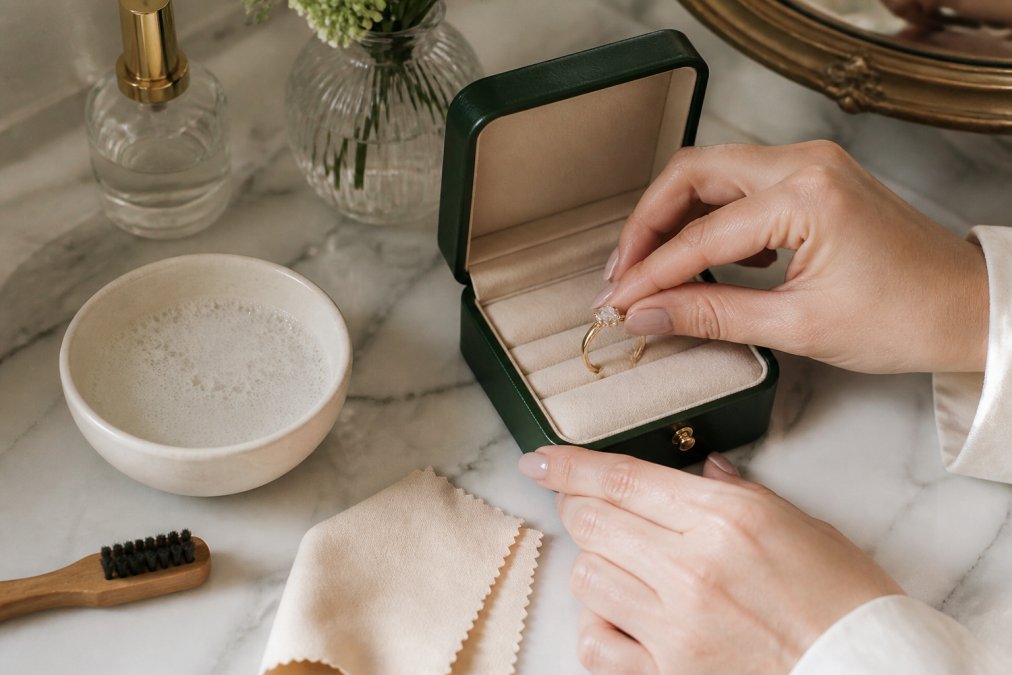
A simple schedule keeps pieces in wearable condition:
- Weekly: wipe with a soft dry cloth after wearing to remove skin oils
- Monthly: clean with mild soap and warm water using a soft brush
- Every 6 months: inspect prongs and clasps for looseness
- Annually: professional cleaning and prong tightening
- Every 2-3 years: professional re-polishing to remove surface scratches
- Every 5 years: full structural inspection of shanks and settings
Storage, Chemicals, and Environmental Protection
Chemical exposure is the silent killer of heirloom jewelry. Chlorine weakens gold alloys over time, and household cleaners, perfume, and hairspray leave residue that dulls stones and accelerates oxidation on sterling silver.
Restoration, Re-Polishing, and Repairability
Restoration returns a worn piece to wearable condition without erasing its history. A skilled bench jeweler can re-tip worn prongs, reinforce a thinning shank, replace a lost stone, and re-polish metal to remove decades of scratches. But not all jewelry is equally repairable. The difference often comes down to the original construction method and setting style.
Repairability Index: Modern vs. Vintage Settings
When evaluating a piece for generational wear, consider how easily it can be repaired fifty years from now. The following table ranks common setting styles by their repairability after decades of daily wear:
| Setting Style | Repairability After 50+ Years | Why |
|---|---|---|
| Bezel | High | Enclosed metal protects stone; easy to re-tighten or replace |
| Channel | High | Stones set between metal walls; minimal prong wear |
| Prong (hand-fabricated) | Moderate to High | Thick prongs can be re-tipped multiple times |
| Prong (thin cast) | Low | Prongs may wear through; often requires full re-setting |
| Tension | Low | Relies on metal stress; losing tension means replacing the entire setting |
| Invisible | Low | Complex, proprietary settings; few jewelers can repair |
Re-Polishing: The Trade-Off Between Shine and Longevity
Re-polishing removes a microscopic layer of metal, so it should be done sparingly. Every polish shortens the piece's lifespan slightly. This is why annual professional cleaning matters more than annual polishing: cleaning preserves, polishing consumes. A common pattern is to limit full re-polishing to every 5-10 years, depending on wear.
When to Restore vs. When to Retire
Not every piece should be restored. Heavily damaged pieces with thin metal or fragile stones may be better preserved as-is for sentimental display. A qualified bench jeweler can advise whether restoration will compromise the piece's integrity or value. For pieces with provenance, always document any restoration work and keep original parts if replaced.
Documentation, Insurance, and Provenance
Documentation is what turns a piece of jewelry into a documented family treasure. Provenance, the recorded history of a piece, adds both sentimental and monetary value, and it protects you if the piece is lost or stolen. Without a paper trail, even the most valuable jewelry can become just another unidentifiable item in an insurance claim.
The Paper Trail: What to Keep and Why
A complete documentation package should include:
- Original purchase receipt - establishes ownership and initial value.
- Written appraisal from a qualified gemologist - updated every 3-5 years to reflect market changes.
- Photographs from multiple angles, including close-ups of hallmarks, inclusions, and any unique features.
- Certificates for graded diamonds or colored gemstones (e.g., GIA, AGS).
- Repair and restoration records - dates, jeweler names, and work performed.
- Provenance notes - who owned it, when, and any stories or historical context.
Store digital copies in cloud storage and physical copies in a fireproof safe, separate from the jewelry itself.
Insurance: Beyond the Basic Policy
Standard homeowners or renters insurance often caps jewelry coverage at a low limit (e.g., $1,000-$2,500). For heirloom pieces, a scheduled personal property rider or separate jewelry insurance policy is essential. These policies require:
- A recent appraisal (usually within 3-5 years).
- Detailed descriptions and photographs.
- Proof of purchase or ownership.
Provenance: The Story That Adds Value
Provenance is the documented history of ownership. It can increase both sentimental and monetary value. Keep a written record of:
- Who owned the piece and when.
- Any significant events (weddings, anniversaries, inheritances).
- Any historical context (e.g., Art Deco era, mid-century modern).
Estate Planning: Ensuring a Smooth Transfer
If you intend for a piece to become an heirloom, include it in your estate plan. Specify who will receive it, and provide that person with the documentation. Without clear instructions, even valuable pieces can be lost in probate or divided without regard to their history. A simple codicil to your will or a separate letter of instruction can prevent disputes and ensure the piece stays in the family.
Conclusion
Building a jewelry collection that genuinely lasts generations takes deliberate choices about metal, setting, and care, and most buyers never think about it until a piece fails. LÖF crafts every ring from 18k recycled gold, platinum, and ethically sourced gemstones and antique diamonds, with the structural integrity that heirloom wear demands. Explore pieces like The Astor Ring or The Poiret Ring, both built for daily wear and designed to be passed down.

Frequently Asked Questions
Does 18k gold last longer than lower karat gold for daily wear?
Yes, 18k gold generally outlasts 10k or 14k gold for daily wear because it contains 75% pure gold, which resists corrosion and tarnish better than alloys. The higher gold content also holds its color longer. That said, 18k gold is softer than 14k, so it can scratch or dent more easily. For a ring worn every day, a well-constructed 18k piece with secure prongs and a thick shank will still hold up for decades with proper care.
How often should heirloom jewelry be professionally inspected?
Once a year is the standard recommendation for pieces worn regularly. A jeweler will check prong tightness, shank wear, clasp function, and stone security. For rings worn daily, some experts suggest a check every six months. Catching a loose prong early costs far less than replacing a lost gemstone. If you notice a stone rattling or a clasp feeling loose, book an inspection immediately rather than waiting for the annual visit.
What is the definition of heirloom jewelry?
Heirloom jewelry is a piece made well enough to be passed down through generations. It usually features precious metals like 18k gold or platinum, durable gemstones, and craftsmanship that allows for repair and restoration. The term also implies provenance: who owned it, when it was made, and what it commemorates. A family treasure does not need to be antique, but it does need structural integrity, timeless design, and materials that will not degrade in storage or daily wear.
How do I properly store fine jewelry to ensure it lasts generations?
Store each piece separately in a soft-lined box or pouch to prevent scratches. Keep jewelry away from humidity, direct sunlight, and temperature swings. A dry, dark drawer works better than a bathroom cabinet. For silver and vermeil, use anti-tarnish strips. Never store gemstones like opals or pearls in airtight containers, as they need some moisture. If you live in a humid climate, add silica gel packets to your jewelry box and replace them every few months.