

Table of Contents
- What Makes a Diamond Anklet Worth Buying
- Diamond Quality: Carat Weight, Clarity, and Ethical Sourcing
- Diamond Anklet Sizing Guide: Getting the Fit Right
- How to Style Diamond Anklets for Any Occasion
- Durability, Daily Wearability, and Investment Value
- Caring for Fine Jewelry Anklets to Last Generations
- Customization and Gifting: Making It Personal
- Choosing a Diamond Anklet That Reflects Your Values
Last Updated: August 17, 2026
What Makes a Diamond Anklet Worth Buying
A diamond anklet sits close to the ground, catches light with every step, and draws the eye in a way that feels both subtle and deliberate. At LÖF, we believe that what you wear on your ankle says as much about your sensibility as anything else in your collection.
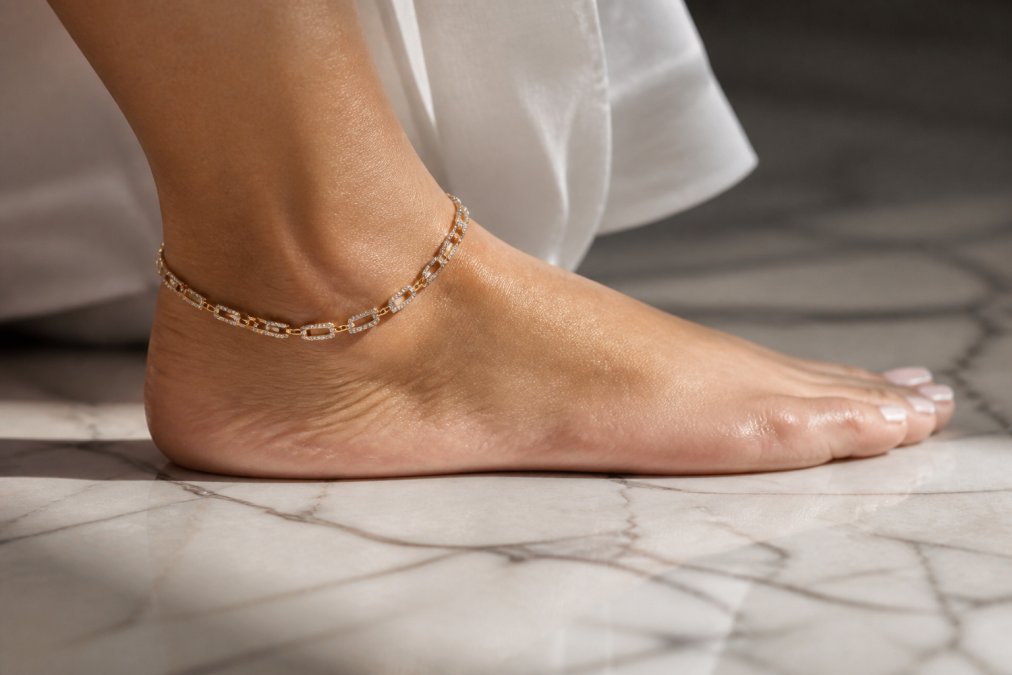
The difference between a diamond anklet worth buying and one that disappoints comes down to three things: the quality of the diamonds, the integrity of the metal, and the craftsmanship of the setting. A poorly made anklet will flex in the wrong places, stress the settings, and eventually lose stones. A well-made one will outlast the decade and improve with age. The chain style determines everything else, it affects how the diamonds sit, how much light they reflect, and whether the piece moves gracefully or looks rigid on the ankle.
Chain Styles: Curb, Tennis, and Bezel-Set Designs
Curb chain anklets use interlocking flat links, often accented with diamond-cut facets that catch light even without stones. They read as architectural and modern.
Tennis anklets set diamonds in a continuous line, usually in four-prong or bezel settings. Bezel-set designs, where each diamond is encircled by a thin rim of metal, offer superior security and a cleaner, more contemporary look than prong settings. For daily wear, bezel-set designs are the better choice.
Dangle styles add movement, suspending a single diamond or cluster from a delicate chain. These are best for occasions rather than everyday wear.
Metal Options: 18k Gold, White Gold, and Platinum
The metal choice determines durability, skin compatibility, and long-term value.
18k gold strikes the right balance between purity and wearability. At 75% pure gold, it resists tarnish and holds its colour over decades. LÖF works exclusively in 18k gold, using recycled and repurposed precious metal to ensure ethical integrity.
White gold achieves its colour through alloying with metals such as palladium, then typically receives a rhodium plating to enhance brightness. That plating will wear over time and require re-application.
Platinum is the most durable option and naturally hypoallergenic. It does not require rhodium plating, and its density means settings hold stones more securely over years of wear.
Diamond Quality: Carat Weight, Clarity, and Ethical Sourcing
Diamond quality in an anklet is evaluated the same way as in any fine jewelry piece: carat weight, clarity, colour, and cut. For anklets, which typically use smaller stones, cut quality matters more than carat weight. A well-cut stone of modest size will outsparkle a larger, poorly cut one.
Carat weight in anklets is usually described as total weight across all stones. A total weight of 0.50 to 2.00 carats is typical for a fine anklet.
Clarity refers to the presence of inclusions. For stones this small, eye-clean clarity (no visible inclusions to the naked eye) is the practical standard.
According to the Kimberley Process Certification Scheme, certified diamonds must be accompanied by a government-issued certificate confirming they are conflict-free. The more meaningful distinction is between mined diamonds and lab-grown diamonds.
Lab-grown diamonds are chemically, physically, and optically identical to mined stones. They are produced without the environmental disruption of mining and can be traced with greater transparency.
Antique diamonds represent a third option that LÖF has long championed. Repurposing antique stones eliminates new mining entirely while preserving the character and history of the stone. The slight irregularities in antique cuts create a warmth and depth that modern brilliant cuts do not replicate.
Diamond Anklet Sizing Guide: Getting the Fit Right
An anklet that fits poorly is an anklet you will not wear. An anklet should sit just above the ankle bone with enough ease to move freely but not so loose that it slides down over the foot. The standard finished length for most adult women falls between 23 cm and 26 cm, but ankle circumference varies considerably.
How to Measure Your Ankle Circumference at Home
- Wrap a soft measuring tape around the narrowest part of your ankle, just above the ankle bone.
- Note the measurement in centimetres.
- Add 1.5 to 2.5 cm to that measurement for a comfortable fit. Add closer to 2.5 cm if you prefer a looser drape, or 1.5 cm if you prefer a snug fit.
- If you are between sizes, size up rather than down.
If you do not have a soft measuring tape, wrap a strip of paper around your ankle, mark the overlap, and measure the strip flat against a ruler.
| Ankle Circumference | Recommended Anklet Length |
|---|---|
| 20 - 21 cm | 22 - 23 cm |
| 22 - 23 cm | 24 - 25 cm |
| 24 - 25 cm | 26 - 27 cm |
| 26 cm and above | 27 - 28 cm or custom |
Adjustable Length and Clasp Security
Many fine anklets include an extender chain, typically adding 1 to 2 cm of adjustable length. This is useful for ankles that swell in warm weather.
Clasp security is non-negotiable on a diamond anklet. A spring ring clasp is the most common choice for lighter pieces. For heavier tennis or curb chain designs, a lobster clasp provides greater security. Some high-end pieces use a box clasp with a safety catch, which is the most secure option for a piece carrying significant gemstone value. A common mistake is buying an anklet with a clasp that is difficult to operate single-handed.
How to Style Diamond Anklets for Any Occasion
The most versatile diamond anklet is a simple bezel-set or tennis style in 18k gold or platinum. It reads as elegant barefoot, with sandals, with trainers, and under trousers.
For casual daywear, a fine curb chain anklet with diamond accents pairs naturally with linen trousers, tailored shorts, or a midi skirt. For formal occasions, a tennis anklet in a continuous diamond line adds presence without effort. For beach or poolside wear, platinum and 18k gold are both safe in salt water and chlorinated water for short periods.
Layering Techniques for a Curated Look
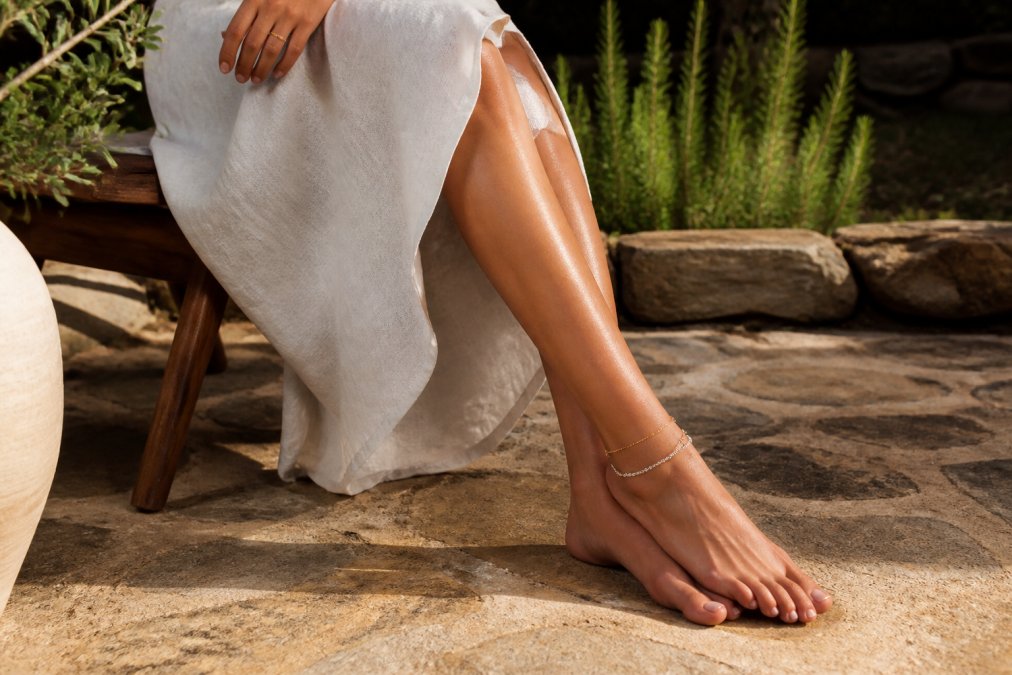
Layering anklets is having a genuine moment in fine jewelry styling. The most successful layered ankle looks follow two rules. First, vary the chain weight: pair a fine diamond anklet with a slightly heavier plain gold chain. Second, vary the length: wear one anklet at the ankle bone and one 1 to 2 cm above it, so both are visible and neither obscures the other.
Mixing metals works when done deliberately. A platinum diamond anklet layered with an 18k yellow gold chain creates contrast that reads as intentional. Avoid layering dangle-style anklets with other pieces, as the pendants will catch on each other.
Durability, Daily Wearability, and Investment Value
Whether a fine diamond anklet can be worn every day depends on the construction. An 18k gold bezel-set anklet is built for daily wear. A thin-gauge prong-set piece with delicate links is not.
Bezel settings protect diamonds more effectively than prong settings because the metal rim encircles the stone. Prongs can catch on fabric, bend over time, and eventually release a stone. The ankle is a high-movement area, so solder joints and link connections are under repeated stress. Handcrafted links with properly finished solder points will outlast machine-made chains by years.
Fine jewelry in 18k gold and platinum holds intrinsic metal value regardless of design trends. According to the World Gold Council's gold demand data, gold has maintained long-term value across economic cycles. Diamonds with strong cut, clarity, and ethical provenance documentation are also more liquid than stones with uncertain sourcing histories. A hallmarked anklet with a certificate of gemstone origin will command a stronger resale price than an equivalent piece without paperwork.
Caring for Fine Jewelry Anklets to Last Generations
The ankle is exposed to more abrasion, more moisture, and more product residue than most other areas of the body. Sunscreen, body lotion, and sand are the primary enemies of an anklet's finish and setting integrity.
Daily care habits that matter:
- Remove your anklet before applying sunscreen or body lotion, and wait until products are fully absorbed before putting it back on.
- Rinse the piece in clean water after beach or pool exposure and dry it gently with a soft cloth.
- Store the anklet separately from other jewelry to prevent scratching.
- Inspect the clasp and settings every few months.
For cleaning, a soft toothbrush with warm water and a small amount of mild dish soap is effective for 18k gold and platinum. Avoid ultrasonic cleaners for bezel-set pieces unless a jeweler confirms the settings are secure.
According to the Gemological Institute of America's jewelry care guidance, professional cleaning and inspection once a year is the standard recommendation for fine jewelry worn regularly. For a diamond anklet worn daily, twice yearly is more appropriate.
Customization and Gifting: Making It Personal
A customized anklet with diamonds is one of the most considered gifts in fine jewelry. Unlike a ring, which requires precise sizing and carries significant symbolic weight, an anklet is more forgiving in fit and more personal in meaning.
Customization options typically include choice of metal, chain style, diamond weight and quality, and the addition of engraving. Some makers, including LÖF, offer bespoke design services where the piece is conceived from scratch around the wearer's preferences and lifestyle.
For gifting, choose an adjustable-length piece with an extender chain, which accommodates a range of ankle sizes. Pair the piece with a note explaining the care instructions and the sourcing story behind the stones. A hallmarked piece in a properly fitted box, accompanied by a certificate of gemstone origin and a care card, signals that the purchase was considered rather than convenient.
A fully custom diamond anklet from initial consultation to finished piece typically requires several weeks to months depending on complexity.
Choosing a Diamond Anklet That Reflects Your Values
The final question is whether this piece aligns with what you actually believe. The fine jewelry industry has made significant progress on transparency, but greenwashing remains a genuine problem. Vague claims about "responsible sourcing" without supporting documentation should be treated with skepticism. The meaningful markers are specific: hallmarked metal, traceable gemstone certificates, documented use of recycled or repurposed gold, and clear information about whether stones are mined, lab-grown, or antique.
LÖF was founded on the principle that luxury and ethical responsibility are not in tension. Every piece is crafted from 18k gold or platinum, using recycled and repurposed precious metal where possible, with ethically sourced gemstones and antique diamonds whose provenance is documented rather than assumed.
According to the Responsible Jewellery Council's standards framework, certified members must meet independently audited standards across human rights, labour practices, environmental impact, and business ethics. Seeking out makers who hold or align with such frameworks is a practical way to verify claims rather than accept them at face value.
The best diamond anklet is the one you reach for every morning without thinking twice. That requires the right fit, the right construction, the right metal, and the confidence that what you are wearing is exactly what it claims to be.
Frequently Asked Questions
Are diamond anklets suitable for everyday wear?
Yes, provided the setting and metal are chosen for durability. A bezel-set diamond anklet in 18k gold or platinum is far more resistant to daily knocks than a prong-set design. Look for a secure spring ring or lobster clasp and hallmarked precious metal. Avoid wearing any fine jewelry anklet in chlorinated pools or the sea, as prolonged exposure degrades both the metal and the setting over time.
How do I choose the right length for a diamond anklet?
Measure your ankle circumference with a soft tape measure or a strip of paper, then add 2-3 cm for a comfortable fit that sits just above the ankle bone without sliding onto the foot. Most fine jewelry anklets are designed for ankle circumferences between 20 and 24 cm. If you are between sizes, opt for an adjustable length design with an extender chain, which gives you flexibility without compromising the look.
How much should I expect to pay for a high-quality diamond anklet?
Price depends on carat weight, gemstone clarity, metal type, and the maker's craftsmanship standards. An anklet with diamond accents in sterling silver sits at the accessible end; one in 18k gold or platinum with ethically sourced or antique diamonds commands significantly more. Rather than comparing by price alone, evaluate the hallmarking, sourcing transparency, and setting quality. Visit LÖF's website directly for current pricing on their fine jewelry collection.
What is the difference between lab-grown and antique diamonds in an anklet?
Lab-grown diamonds are chemically identical to mined stones and are graded on the same carat weight, clarity, and cut criteria. Antique diamonds, by contrast, are reclaimed from earlier pieces, giving them a unique cut profile and a lower environmental footprint than newly mined stones. Both are conflict-free options. For a luxury anklet intended as a heirloom, antique diamonds offer a provenance and character that new stones, lab-grown or mined, cannot replicate.
Choosing a fine diamond anklet is more complex than most buying guides acknowledge, particularly when durability, ethical sourcing, and long-term value all factor into the decision. LÖF brings together 18k gold and platinum construction, antique and ethically sourced diamonds, and handcrafted settings designed to be worn daily and passed down through generations. Browse the LÖF collection and choose options that reflect both your aesthetic and your values.
This article was written using GrandRanker