

Last Updated: October 29, 2026
Quick Summary
To secure a diamond anklet clasp, identify the clasp type first, then close it by its mechanism: squeeze and release a lobster lever, snap a spring-ring pin fully into its seat, or click a box clasp tab into its notch. Always hook the chain's end loop rather than the lever, and tug lightly to confirm the clasp is seated.
- Fasten the anklet at the inside of your ankle, then rotate it into position.
- An anklet should sit with roughly a finger's width of slack.
- Hold the clasp by its metal body, never by the stone or prongs.
- A delicate clasp on a heavier chain will always work loose.
- A safety chain catches a clasp failure but does not replace a secure clasp.
Table of Contents
- Know Your Clasp Type Before You Fasten It
- How to Close a Lobster Clasp on a Diamond Anklet
- How to Put On an Anklet by Yourself Without Help
- Protect the Diamonds and Settings While Fastening
- When Your Anklet Clasp Keeps Coming Undone
- Add a Diamond Anklet Safety Chain for Extra Security
- Check the Fit and Confirm the Clasp Is Secure
- Choose a LÖF Diamond Anklet Made to Stay On
- Frequently Asked Questions
Know Your Clasp Type Before You Fasten It
Learning how to secure a diamond anklet clasp starts with identifying which clasp you own, because each type closes in its own way. A diamond anklet clasp is the fastening that holds the chain around your ankle.
- Lobster clasp: a levered hook that springs shut. Squeeze the lever, hook it, release.
- Spring ring: a round ring with a tiny push pin. Pull the pin back, attach, let go.
- Box or barrel clasp: two halves that slide or screw together, often used on heavier chains.
Our advice at LÖF is simple. Look closely at the clasp before you put the anklet anywhere near your ankle. A lobster clasp has a visible trigger. A spring ring has a small pin on the side. A box clasp has a tab or threads.
Watch out: fastening the wrong part, like hooking the lever instead of the ring, can bend the mechanism.
How to Close a Lobster Clasp on a Diamond Anklet
The mechanism is simple: a spring-loaded lever holds a hook shut. Squeeze the lever, the hook opens; release it, the spring snaps the hook closed.
- Hold the clasp body between thumb and index finger, gripping the flat metal side, never the stone or the chain right next to the clasp.
- Press the lever inward with your thumbnail until the hook clears the body.
- Slide the hook through the chain's end loop or jump ring, not through the lever itself.
- Release the lever and listen for the click.
- Tug the chain lightly in both directions to confirm the hook is seated and the lever has returned flush.
Hook the loop rather than the lever. The Gemological Institute of America's jewelry care guidance makes the same point about checking fastenings before wear.
Why anklets behave differently from bracelets
- Fasten at the inside of the ankle, not the back. Rotate the closed anklet so the clasp sits where you can see and reach it, then turn it into position. Working blind at the heel is how levers get bent.
- Match clasp size to chain weight. A delicate lobster clasp on a heavier curb or rope chain will always creep open. If your clasp looks undersized next to the chain, that is a build problem, not a technique problem, see the troubleshooting section below.
Spring-ring and box clasps: the two other types you may own
Spring ring. A round ring with a tiny push pin on the side. Pull the pin back with a fingernail, slide the chain's end loop onto the ring, and let the pin snap home. The pin must return fully into its seat, a pin that sits proud will pop open.
Box or barrel clasp. Two halves that slide or screw together, often used on heavier chains. For a slide box clasp, push the tab down, insert the tongue, and release so the tab clicks into the notch. For a screw barrel, turn the barrel until it seats, hand-tight only, never with pliers.
The American Gem Society's guide to jewelry fasteners notes that most fastening damage comes from working at awkward angles, not from the clasp itself, which is why the next section focuses on getting the angle right.
How to Put On an Anklet by Yourself Without Help
Putting on an anklet alone is possible.
- The front-facing method: turn the clasp to the inside of your ankle, where you can see it, then rotate the anklet into place once closed.
- The loop-and-hold method: slip a finger through the chain to keep tension while your other hand works the clasp.
- The seated method: sit down, rest your ankle on the opposite knee, and fasten in that position.
The American Gem Society's guide to jewelry fasteners notes that most fastening damage comes from working at awkward angles, not from the clasp itself.
Protect the Diamonds and Settings While Fastening
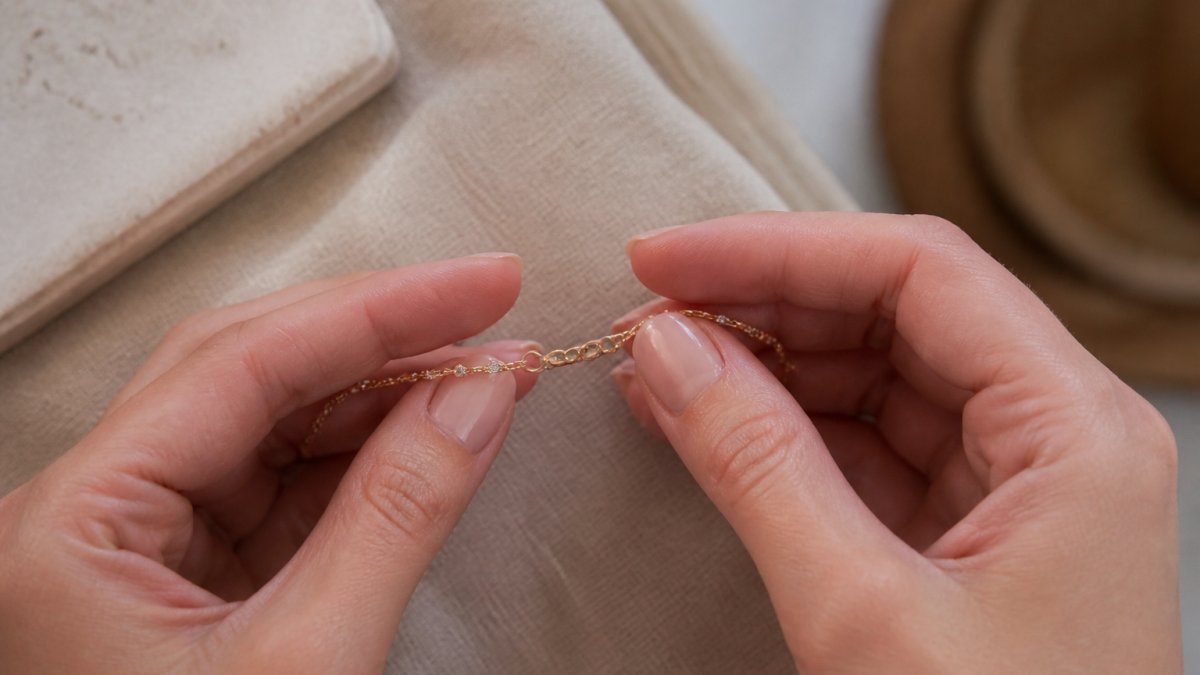
- Hold the clasp by its metal body, never by the stone or the prongs. Our anklet with diamonds buying guide covers sizing, metals, and care for expert handling.
- Fasten over a soft surface, like a towel or carpet, so a dropped anklet lands gently.
- Keep your thumbnails short; long nails catch prongs and lift them.
- Never use your teeth to open a stiff clasp. Ever.
When Your Anklet Clasp Keeps Coming Undone
An anklet clasp that keeps coming undone is telling you something specific. Work through the causes in order, cheapest and safest first, before you assume the clasp is broken.
Step 1: Rule out fit before you touch the clasp
A loose anklet swings, and swinging works a clasp open. This is the most common cause and the easiest to fix. An anklet should sit with roughly a finger's width of slack, enough to rotate a little, not enough to slide down over the heel. If yours rotates freely around your ankle all day, the clasp is taking constant friction it was never designed for. Tighten the fit (a jeweler can shorten the chain or move the end loop) before spending money on a repair.
Step 2: Inspect the clasp mechanism
- Bent lever (lobster): the lever no longer seats flush against the body, or the spring feels weak. A jeweler can usually reshape it; do not bend it yourself.
- Stretched end loop: the loop the hook catches has opened slightly and slips off under tension. This needs closing with pliers, a jeweler's job, because a crushed loop on a fine chain is worse than a stretched one.
- Proud spring-ring pin: the pin does not return fully into its seat. Often a cleaning issue; if it persists after a soap-and-water flush, it needs professional attention.
- Box clasp that slides without a click: the tab or notch has worn. This is a repair, not an adjustment.
Step 3: Check whether the clasp is undersized for the chain
A delicate clasp on a heavier chain will always work loose. This is a build problem, not a technique problem, and no amount of careful fastening will fix it. If your clasp looks visibly small next to the chain's weight, ask a jeweler about upgrading to a heavier clasp, it is usually a modest job and far cheaper than replacing a lost anklet.
Step 4: Know when to stop and see a jeweler
That last point matters more than people expect. If your anklet rotates freely around your ankle, the clasp is taking constant friction. A closer fit reduces that movement. Our guide to comparing diamond and gold chain anklets for lasting wear explains how chain and setting construction affect daily durability.
Work through these causes in order, cheapest and safest first, before assuming the clasp is broken.
| Problem | Cause | Fix |
|---|---|---|
| Clasp keeps opening | Loose fit lets anklet swing | Tighten fit; jeweler shortens chain or moves end loop |
| Bent lever (lobster) | Lever no longer seats flush, weak spring | Jeweler reshapes it; do not bend it yourself |
| Stretched end loop | Loop opened slightly and slips off | Jeweler closes it with pliers |
| Proud spring-ring pin | Pin does not return fully into its seat | Soap-and-water flush; professional attention if it persists |
| Box clasp slides without a click | Tab or notch has worn | Repair, not an adjustment |
| Clasp works loose repeatedly | Delicate clasp undersized for heavier chain | Ask jeweler about upgrading to a heavier clasp |
Add a Diamond Anklet Safety Chain for Extra Security
A safety chain does not replace a secure clasp. It catches the failure. Think of it as insurance, not a repair.
Check the Fit and Confirm the Clasp Is Secure
Fit matters here too. An anklet should sit snugly enough to stay in place but loose enough to rotate a little. If you are unsure of your measurement, our guide on how to measure your ankle for a bracelet walks through the sizing method we recommend.
Choose a LÖF Diamond Anklet Made to Stay On
Ready to see the difference? Browse our chain anklets and choose a piece designed to stay on.
Frequently Asked Questions
How do you fasten a diamond anklet clasp securely?
Hold the clasp steady between your thumb and index finger, then hook the jump ring or chain end into the clasp opening. For a lobster clasp, press the lever down until it clicks shut. Give the chain a gentle tug to confirm the clasp is fully closed. With a diamond anklet, keep your fingers on the metal parts only and avoid pressing on the stones or settings, which can loosen prongs over time.
How can you put on an anklet by yourself?
Sit on a low stool or the edge of a bathtub and rest your ankle on your opposite knee. Pre-open the clasp and hold it in one hand while bringing the chain end to it with the other. A clasp helper tool or a small piece of tape can hold the chain steady. If you still struggle, attach a safety chain first, then fasten the main clasp. Practicing this seated position makes one-handed fastening much easier.
What should you do if your anklet clasp keeps coming undone?
First, check whether the clasp is fully engaging: a lobster clasp should click, and a spring ring should close flush. If it opens on its own, the spring may be worn. Avoid pulling the anklet by the chain when taking it off, as this bends the clasp. For a clasp that repeatedly fails, ask a jeweler to replace it or add a diamond anklet safety chain, which provides a backup connection and prevents loss.
Can you add a safety chain to a diamond anklet?
Yes. A safety chain is a short secondary chain that connects the clasp to the opposite end of the anklet. It keeps the piece attached even if the main clasp opens. Choose a chain made of the same metal as your anklet, such as 18k gold or platinum, to avoid tarnishing or color mismatch. LÖF can advise on the right safety chain for your specific piece, or a jeweler can solder one on securely.
A clasp that opens is not a flaw you have to live with. It is a fit, build, or handling issue, and each one has a fix. LÖF crafts heirloom-quality anklets from recycled 18k gold and platinum, with hand-set antique and ethically sourced diamonds and clasps matched to every chain. Get started with LÖF and wear a diamond anklet built to stay where you put it.
