

Table of Contents
- Quick Comparison: Natural Ethical Gemstones for Engagement Rings
- Durable Gemstones for Engagement Rings: What Survives Daily Wear
- The Benefits of Antique Diamonds for Sustainability
- How to Verify Gemstone Ethical Sourcing Before You Buy
- Ethical Gemstone Options: Diamond, Sapphire, Emerald and Tourmaline
- Recycled 18k Gold and Platinum: The Metal Side of Ethical
- Pieces to Start With: LÖF Rings Built Around Ethical Stones
- Frequently Asked Questions
Last Updated: October 9, 2026
Quick Comparison: Natural Ethical Gemstones for Engagement Rings
Choosing natural ethical gemstones for engagement rings comes down to four things: hardness, provenance paperwork, the age of the stone, and the metal it sits in. This guide from LÖF walks through each, with a comparison table, honest trade-offs, and the questions worth asking before you spend.
The short version: sapphire and antique diamond are the safest daily-wear choices, emerald needs care, and tourmaline is the most distinctive but the most fragile. Antique stones sidestep new mining entirely. Recycled 18k gold and platinum close the loop on the metal side.
| Gemstone | Mohs Hardness | Daily-Wear Risk | Best For | Ethical Sourcing Note |
|---|---|---|---|---|
| Diamond (antique) | 10 | Very low | Heirloom everyday rings | Already mined; no new extraction |
| Sapphire | 9 | Low | Colour with durability | Ask for origin disclosure |
| Emerald | 7.5-8 | Moderate (treatments common) | Statement pieces, occasional wear | Request treatment disclosure |
| Tourmaline | 7-7.5 | Higher (chips, abrades) | Bold, one-of-a-kind designs | Certified stones, smaller supply chain |
Below, we break down what survives daily wear, why antique diamonds matter, how to verify sourcing, and which LÖF pieces put all of it together.
Durable Gemstones for Engagement Rings: What Survives Daily Wear
Durability is the first filter, because an engagement ring is worn far more than almost any other piece of jewelry. Hardness tells you what a stone can resist; toughness tells you what it can survive. Those are not the same thing.

Mohs Hardness vs Real-World Toughness
The Mohs scale is a measure of scratch resistance, ranking minerals from 1 (talc) to 10 (diamond). It says nothing about how a stone handles impact.
A diamond at 10 resists scratching from essentially anything. Sapphire at 9 is close behind and widely used in everyday rings for that reason. Emerald sits around 7.5 to 8, which sounds high until you learn emeralds routinely carry internal fractures and are commonly treated with oil or resin to improve clarity (Emerald Care and Cleaning Guide). A knock that a sapphire shrugs off can open a fissure in an emerald.
Tourmaline lands around 7 to 7.5. It is perfectly wearable, but it abrades faster than sapphire and chips more readily at the edges.
Stones That Chip, Crack or Cloud Over Time
Three failure modes matter in practice:
- Chipping at the girdle, the thin edge around a stone's widest point, most likely on emerald and tourmaline.
- Cracking along internal inclusions, a risk in emeralds because of their natural fracture patterns.
- Clouding or surface wear, where repeated abrasion dulls the polish on softer stones.
Diamond, sapphire, and (with care) antique diamond are the stones that hold up to decades of daily wear. If you want colour and durability together, sapphire is the honest answer.
The Benefits of Antique Diamonds for Sustainability
Antique diamonds are already-mined stones, typically cut before the mid-twentieth century, which means buying one creates no new mining demand. That single fact is the core of their sustainability case. No new earth is disturbed, no new water is consumed for extraction, and a stone that already exists gets a second life.
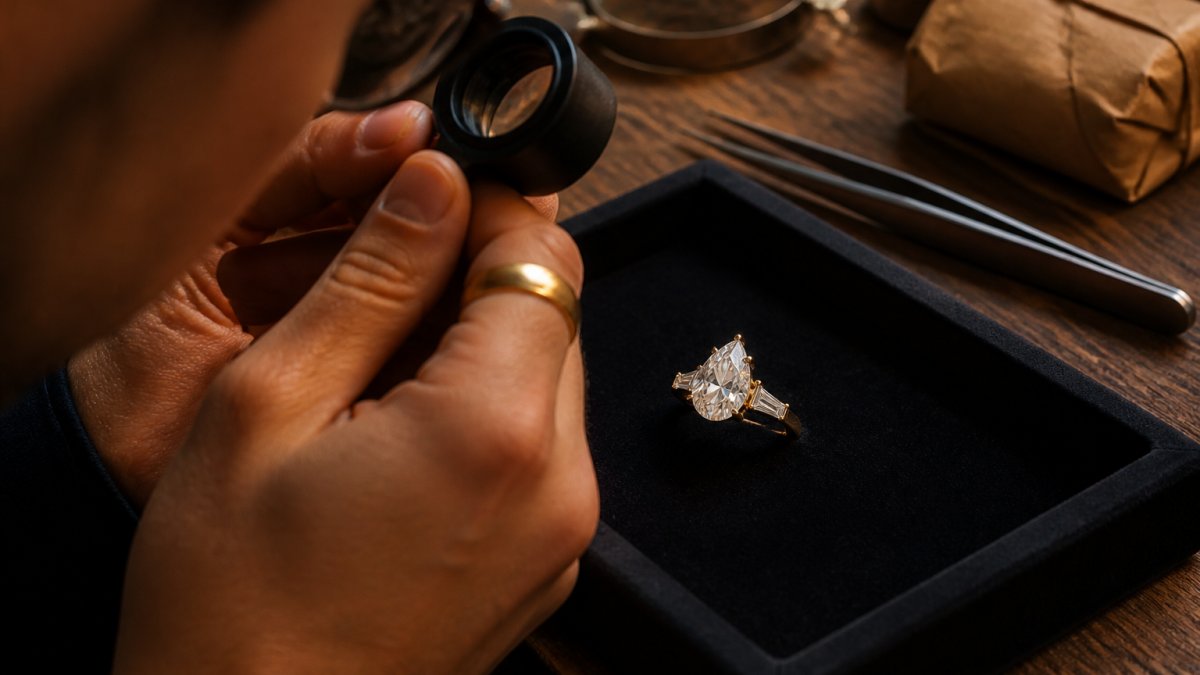
There is a second benefit: antique stones are traceable in a way new stones often are not. A stone cut a century ago has a documented history. It cannot have been mined under modern conditions you would object to, because it predates them.
Old European and Old Miner Cuts: Character You Cannot Recreate
Old European cut diamonds have a small table, a high crown, and a large open culet at the bottom. Old Miner cuts are similar but typically chunkier and less symmetrical. Both were cut by hand to follow the rough stone rather than to hit a mathematical ideal.
The result is a softer, more candlelit sparkle than a modern brilliant cut produces. Under a jeweller's loupe, you can usually spot the culet and the irregular facet patterning. Modern cutting machines cannot reproduce that.
How to Verify Gemstone Ethical Sourcing Before You Buy
Verification comes down to paperwork and specific questions. A brand that sources responsibly will answer all of them without hesitation. One that cannot is telling you something.
Documents, Certificates and Questions Worth Asking
Ask for these documents before you commit:
- Gemstone certificate from an independent laboratory, confirming the stone's identity and, where relevant, treatment status.
- Origin disclosure for coloured stones, stating the country of extraction where known.
- Metal sourcing statement covering whether gold and platinum are recycled or newly mined.
- Treatment disclosure for emeralds specifically, since oiling and resin-filling are common and affect both value and care.
Then ask the questions that paperwork does not answer:
- Where was this specific stone sourced, and can you show me the documentation?
- Is the gold recycled or newly mined?
- What treatments, if any, has this stone received?
- If I resell this piece, will you provide the provenance records to my buyer?
The FTC guidance on jewelry advertising and disclosure sets out what sellers may and may not claim about gemstone treatment and origin, which makes it a useful reference when a description feels vague.
If a seller says "ethically sourced" without naming a certificate, a lab, or a country, it is advisable to treat it as marketing language until proven otherwise.
Ethical Gemstone Options: Diamond, Sapphire, Emerald and Tourmaline
Each stone makes a different trade. Here is the honest version of each.
Antique diamond is the strongest choice for daily wear combined with a clear ethical story. It is the hardest stone available, it requires no new mining, and its cut carries character no modern stone matches.
Sapphire is the best balance of colour and toughness. At Mohs 9 it handles daily wear well, and it comes in a wider range of hues than most buyers realise.
Emerald is the most beautiful stone on this list and the most demanding. Its colour is unmatched, and it will chip if you treat it like a sapphire. Buy one for a piece worn on special occasions, or accept that it needs a protective setting and careful handling.
Tourmaline offers colours few other stones produce and a genuinely individual look. It is softer and more brittle than the others, so it suits a statement ring rather than a ring worn through everything.
Recycled 18k Gold and Platinum: The Metal Side of Ethical
Most ethical sourcing conversations stop at the stone. The metal matters just as much, because gold mining carries its own environmental and social footprint, and recycled metal avoids it entirely.
Recycled 18k gold is refined from existing jewelry, industrial scrap, and electronic waste. Chemically and physically it is identical to newly mined gold. The difference is where it came from, not what it is. At 18k, it contains 75% pure gold, which gives it the weight and warmth that 14k lacks while staying workable for detailed settings.
Platinum is denser, naturally white, and highly resistant to wear. It develops a soft patina over time rather than losing metal, which makes it a strong choice for a ring intended to be worn for decades and then passed on.
Choosing recycled metal does not compromise the finished piece. It changes the supply chain behind it.
Pieces to Start With: LÖF Rings Built Around Ethical Stones
LÖF works exclusively in 18k gold, platinum, ethically sourced gemstones, and antique diamonds. Here are pieces that map directly onto the guidance .
The Zig Zag Engagement Ring is the purest expression of the antique-diamond argument: a 4-carat antique diamond flanked by two Old Miner Cut diamonds totalling 0.75 carats, with 0.80 carats of pavé on zigzag shoulders, set in 18k yellow gold. See the Zig Zag Engagement Ring.
Something Blue Engagement Band pairs a 2-carat antique pear diamond with a halo of blue sapphires and diamond baguettes, available in platinum or 18k yellow gold. It is the sapphire-durability case with a diamond centre. View Something Blue.

The Rockwell Ring centres on a 2-carat vivid green emerald in a domed halo with a further 2 carats of pavé emeralds and 1 carat of baguette diamonds beneath, set in blackened yellow gold. A statement piece, and one to wear with the emerald caveats in mind. Explore The Rockwell.

The Valentine Ring holds a tourmaline between swooping 3mm bands of solid yellow gold, with all gemstones certified. It is the tourmaline option done properly, with the certification that makes the sourcing claim checkable. See The Valentine.
For a lower entry point, The Pear Wedding Band in 18k yellow gold or platinum carries 3.5 carats total of pear diamonds on a 5mm band. View The Pear Wedding Band.
Frequently Asked Questions
What makes a gemstone ethically sourced?
An ethically sourced gemstone can be traced to a known origin, was extracted without funding conflict or forced labour, and was cut and traded under fair working conditions. In practice, that means the seller can show you documentation: origin reports, supplier records, or certification for coloured stones and diamonds. Antique and repurposed stones sidestep new mining entirely, which is why they sit at the centre of most ethical gemstone collections. Ask what paperwork accompanies the stone before you commit, not after.
Which gemstones are the most durable for daily wear?
Diamond sits at 10 on the Mohs scale and handles daily wear better than any other natural stone. Sapphire and ruby follow at 9, which is why blue sapphire halos hold up well on a ring worn constantly. Emerald and tourmaline sit lower, around 7.5, so they suit rings worn a few times a week rather than every day. Durability is not only hardness: a stone in a protected bezel or a low-set domed halo resists knocks far better than a high prong setting.
How can I verify the origin of a natural gemstone?
Start with the seller's documentation. Reputable houses provide certificates for coloured gemstones, supplier records for antique diamonds, and written confirmation of the metal content, such as 18k gold or platinum. Ask whether the stone is natural or treated, whether it has been repolished, and where the setting was made. If a seller cannot answer those questions in writing, treat the ethical claim as marketing rather than fact. Certification is the difference between a promise and proof.
What are the benefits of antique diamonds for sustainability?
Antique diamonds were mined decades ago, so buying one adds no new demand for extraction. No new land is disturbed, no new water or energy is spent on mining, and the stone already exists in a finished, cut form. They also carry cuts that modern machines do not produce, such as Old European and Old Miner cuts, which give a softer, candlelit sparkle. For a buyer wanting an heirloom with a lighter footprint, an antique stone is the strongest single choice.
Are natural gemstones better than lab-grown for ethical engagement rings?
Neither is automatically more ethical. Lab-grown stones avoid mining, but they still require significant energy, and their resale value is far lower than natural or antique stones. Natural stones carry mining risk unless the supply chain is documented. Antique diamonds avoid both problems: they are natural, already mined, and traceable through dealer records. The right answer depends on whether you prioritise a lower footprint, long-term value, or the character of a stone cut by hand a century ago.
The hardest part of buying an ethical engagement ring is not finding a beautiful stone, it is getting a straight answer about where it came from. LÖF builds every piece from 18k gold and platinum, ethically sourced gemstones, and antique diamonds, with gemstone certification and full provenance available on request. Start with the antique-diamond designs or the certified coloured-stone pieces, and choose options that you can hand down with the paperwork to match.