

Table of Contents
- What Conflict-Free Diamond Certification Actually Guarantees
- The Kimberley Process: How Certification Works and Kimberley Process Limitations
- Is the Certification Worth the Extra Cost? A Direct Assessment
- Diamond Provenance and Traceability: Why Origin Matters Beyond Conflict Status
- Antique Diamonds Sustainability: The Case for Stones That Already Exist
- Questions to Ask When Buying an Ethical Diamond
- Conclusion: What Certification Can and Cannot Do
- Frequently Asked Questions
Last Updated: October 15, 2026
What Conflict-Free Diamond Certification Actually Guarantees
Conflict-free diamond certification is a written assurance that a stone did not finance armed conflict, verified through a chain-of-custody system tracking rough diamonds from mine to market.
Certification confirms a diamond is not a conflict diamond. It does not confirm the stone was mined without environmental damage, that the miner was paid fairly, or that the cutting facility met basic labor standards.
"Conflict-free" is as much a marketing phrase as a legal one. Knowing what each scheme verifies helps you spend where it counts.
The Kimberley Process: How Certification Works and Kimberley Process Limitations
The Kimberley Process (KP) is an international certification scheme that regulates the trade of rough diamonds to prevent conflict diamonds from entering legitimate markets. The Kimberley Process official documentation outlines the scheme's scope and participant obligations.
The system works like this:
- Participating countries pass domestic legislation to control rough diamond imports and exports
- Shipments travel in sealed containers with government-issued Kimberley Process certificates
- Each shipment must be certified on entry and re-exported with a new certificate
The Kimberley Process limitations are significant and often glossed over.
The scheme defines "conflict diamonds" narrowly: rough diamonds used by rebel movements to fund armed conflict against legitimate governments.
Enforcement is another weak point. The KP relies on self-reporting and peer review, with no independent monitoring body wielding enforcement power; suspension is slow and politically fraught.
How the Kimberley Process Compares to Other Certification Schemes
Because the KP sets a low bar, independent schemes have emerged to address what it misses:
| Scheme | Scope | Evidence Required | Key Limitation |
|---|---|---|---|
| Kimberley Process | Rough diamonds only; conflict funding | Government-issued certificates for shipments | Does not cover labor, environment, or human rights; no individual stone tracking |
| Responsible Jewellery Council (RJC) | Entire jewelry supply chain, including labor and environment | Third-party audits against a code of practices | Membership-based; not all retailers participate; audit quality varies |
| Traceability programs (e.g., mine-to-market initiatives) | Individual stone or batch origin | Physical tracking, sometimes blockchain | Limited to participating producers; not universally available |
| Fairmined / Fairtrade | Artisanal and small-scale mining | Independent certification with social and environmental standards | Focused on gold and some gemstones; diamond coverage is limited |
A single "conflict-free" label is insufficient: the KP is the floor, not the ceiling. For labor or environmental assurance, look for schemes that explicitly cover those areas, and understand they have their own limitations.
Current Policy and Enforcement Changes
The KP has evolved since 2003:
- Expanded definitions: Discussions continue about broadening the definition of conflict diamonds to include state-sponsored violence, but consensus is difficult because it would implicate participating governments.
- Strengthened peer review: Review visits have increased, but remain voluntary and depend on the country's cooperation.
- Blockchain and traceability pilots: Some participants are exploring digital traceability to supplement paper certificates, though these are not yet core requirements.
For buyers in 2026, KP certification alone is a baseline legal requirement, not a mark of ethical excellence. If a seller emphasizes it as a premium feature, you are paying for the minimum. To go further, ask about independent audits, traceability to a specific mine or region, and schemes like the RJC.
Is the Certification Worth the Extra Cost? A Direct Assessment
Certification is worth paying for when it comes with independent verification and traceability to a specific mine or region. It is not worth a premium when it only means the seller signed a generic conflict-free warranty with no third-party audit behind it.
Certification Cost and Price Comparisons
Does certification add a measurable premium? It depends on the type and seller:
- Kimberley Process certificate only: A legal requirement for any legitimate retailer. It should not add a premium; if a jeweler charges more for a KP certificate alone, you are paying for the bare minimum.
- Supplier self-declaration: A written assurance that costs nothing to produce and carries little weight. It should not command a premium.
- Third-party audited traceability: Independent verification, sometimes with physical audits or blockchain records. It can add a moderate premium, often a few percent to low double digits, depending on the program and stone. This is where the real value sits, because an independent body checked the claims rather than the seller grading their own homework.
A common mistake is confusing a diamond grading report with a conflict-free certificate. A grading report (GIA, AGS, or IGI) documents cut, color, clarity, and carat weight but not origin or ethical sourcing. A conflict-free certificate verifies the stone did not fund conflict but says nothing about the 4Cs. You need both.
A Decision Framework: Natural, Lab-Grown, Recycled, and Antique Diamonds
Conflict-free certification is not the only responsible-purchase criterion. Here is how the main options compare:
| Option | Ethical Considerations | Certification Relevance | Cost Profile |
|---|---|---|---|
| Newly mined natural diamond | Can be conflict-free but may involve labor, environmental, and community impacts | KP is baseline; third-party traceability adds assurance | Highest, especially with traceability premium |
| Lab-grown diamond | Avoids mining entirely; energy use and sourcing of inputs vary | No conflict-free certification needed; look for energy and labor disclosures | Generally lower than natural, though prices vary |
| Recycled diamond (antique/estate) | No new mining; provenance is historical | Certification less relevant; focus on condition and grading | Varies; often competitive with new stones |
| Recycled metals (gold, platinum) | Reduces new extraction and associated impacts | Not covered by diamond certification; look for recycled content claims | Similar to newly mined metals |
If your primary concern is avoiding conflict funding, KP certification is a baseline. If you also care about labor conditions, environmental impact, or community displacement, look beyond conflict-free labels, and consider antique or lab-grown diamonds that sidestep those issues entirely.
How to Verify a Specific Stone's Provenance
A seller's general claim that its inventory is conflict-free is not enough. To verify a specific stone:
- Ask for the Kimberley Process certificate for the shipment, if available. It covers the rough shipment, not your individual polished stone.
- Request a diamond grading report from a reputable lab (GIA, AGS, IGI). This tells you what the stone is, not where it came from.
- Ask for provenance documentation: a traceability record, mine-to-market certificate, or third-party audit report tied to your stone. If the seller cannot produce one, you have a partial picture.
For buyers comparing options, the Responsible Jewellery Council's certification standards sets out what independent third-party certification should cover across the diamond supply chain, from mining to retail.
The Verdict
Certification is worth it when it provides independent, audited traceability beyond the Kimberley Process minimum, and not worth a premium when it only confirms legal compliance. For the strongest ethical assurance, consider antique or estate stones, which avoid new mining entirely, or lab-grown diamonds, which avoid mining altogether. For newly mined stones, pay for third-party traceability if provenance matters, but understand even the best certification cannot guarantee every aspect of ethical sourcing.
Diamond Provenance and Traceability: Why Origin Matters Beyond Conflict Status
Diamond provenance and traceability go further than conflict status by documenting where a specific stone was mined, how it moved through the supply chain, and who handled it at each stage.
Origin matters because a stone can be conflict-free and still carry serious ethical baggage. Artisanal mining employs millions worldwide, often informally with limited safety protections.
The practical tools for verifying origin include:
- Mine-to-market traceability programs run by larger producers
- Blockchain-based chain-of-custody platforms that log each transfer
- Independent third-party certification with physical audits
For buyers who care about responsible sourcing, the question shifts from "is this conflict-free?" to "can I verify this stone's path to my hand?" That is a higher bar, and fewer sellers can meet it.
Antique Diamonds Sustainability: The Case for Stones That Already Exist
Antique diamonds are the most sustainable choice in most cases, because no new mining occurs to bring them to market.
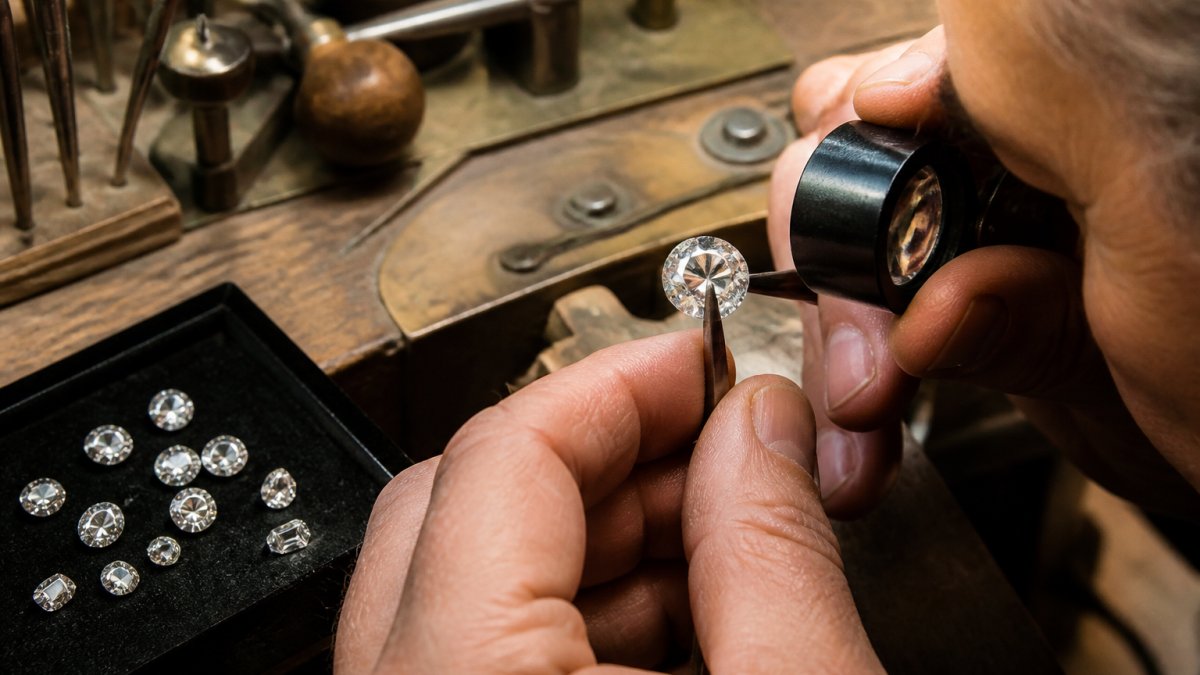
Instead of paying a premium to certify a newly mined stone, choose one that sidesteps the question entirely.
The trade-offs are real. Antique stones come in the cuts and proportions of their era, so they will not match the precise brilliance of a modern cut.
LÖF builds its collection around this principle. Our pieces use antique diamonds set in 18k gold, platinum, and recycled gold, so the ethics are built into the material rather than bolted on afterward. The Natural Resources Canada diamond extraction guidance offers useful context on how diamond mining affects land and water, which is part of why we favor stones that do not require new extraction.
Questions to Ask When Buying an Ethical Diamond
The right questions separate genuine responsible sourcing from marketing language. Ask them before you commit, and note how specific the answers are.
- Where was this specific stone mined? A confident answer names a country or region. A vague answer ("conflict-free sources") tells you little.
- Can you show me documentation for this stone, not just your policy? Ask for the actual certificate or traceability record tied to your diamond.
- Is this stone newly mined or antique? Antique stones avoid the new-mining question entirely.
For buyers comparing options, the Responsible Jewellery Council's certification standards sets out what independent third-party certification should cover across the diamond supply chain, from mining to retail.
Conclusion: What Certification Can and Cannot Do
Conflict-free diamond certification is worth paying for when it reflects independent, audited traceability, and not worth a premium when it only confirms the minimum legal standard.
What certification can do: keep conflict diamonds out of legitimate supply chains and give baseline assurance that your stone did not fund rebel violence. What it cannot do: guarantee fair labor, protect mining communities, or eliminate the environmental impact of new extraction.
The challenge for conscious buyers is that the most ethical choice is often the one with the least paperwork: a stone that already exists. Our collection includes the Shard Ring, set with a 1.5ct antique pear diamond in platinum, and the Toi et Moi Engagement Band, which pairs an antique marquise fancy yellow diamond with an antique pear white diamond.

Frequently Asked Questions
Does conflict-free diamond certification guarantee a diamond is ethical?
No. Conflict-free certification only confirms a rough diamond didn't finance rebel groups in a war zone. It says nothing about worker safety, fair wages, environmental damage, or community impact. A stone can be fully certified and still come from a mine with poor labor conditions. If ethical sourcing matters to you, ask about provenance and traceability beyond the certificate, and look for jewelers who can name where a stone was cut and polished.
Is conflict-free diamond certification worth the extra cost?
It depends on what you're buying. For a mined diamond from a large-scale operation, certification is a baseline expectation, not a premium feature, and you shouldn't pay a large markup for it. Where the extra cost becomes justified is when a jeweler adds documented provenance, independent verification, and traceability that goes past the minimum. That level of transparency costs money to maintain, and it's what separates a certificate from a real sourcing commitment.
How can I verify where a diamond came from?
Ask for the diamond's Kimberley Process certificate, then go further. Request the name of the cutting and polishing facility, the mine region if known, and any third-party traceability reports. Reputable jewelers should answer without hesitation. Antique diamonds are a practical alternative because their origin is historical rather than newly mined, so there is no active mining supply chain to trace. If a seller can't answer basic origin questions, treat that as a warning sign.
Are antique diamonds a more sustainable choice?
Antique diamonds avoid new mining entirely, which sidesteps the land disturbance, water use, and labor concerns tied to extracting new stones. They were already cut and polished decades ago, so no additional energy goes into production. The trade-off is supply: antique stones are limited, and no two are alike. For buyers who want a conflict-free diamond with a defensible sustainability story, antique diamonds offer one of the strongest cases available.
What questions should I ask a jeweler about a diamond's sourcing?
Ask where the rough diamond was mined, who cut and polished it, and whether the jeweler has documentation beyond the Kimberley Process certificate. Request the diamond grading report and ask if the stone is natural, lab-grown, or antique. Ask what due diligence the jeweler performs on suppliers and whether they can name them. A jeweler who sources responsibly will welcome these questions. Vague answers about 'ethical sourcing' without specifics are a red flag.