

Table of Contents
- What Makes Heirloom Quality Jewelry Worth Passing Down
- How to Identify Heirloom Quality Jewelry Before You Buy
- LÖF: Antique Diamonds and Recycled Gold Built for Generations
- Sustainable Fine Jewelry Investment: What Your Money Actually Buys
- Appraisal, Authentication, and Insurance for Heirloom Pieces
- Repair, Restoration, and Jewelry Maintenance Over Decades
- Frequently Asked Questions
Last Updated: September 14, 2026
What Makes Heirloom Quality Jewelry Worth Passing Down
Heirloom quality jewelry is fine jewelry built from solid precious metals and genuine stones, constructed to be worn, repaired, and handed down for generations. This guide from LÖF breaks down what separates a future heirloom from a pretty purchase, so you can judge a piece on materials and construction rather than marketing.
Solid Gold, Karat Weight, and Metal Purity
Solid gold means the entire piece is gold alloy, not a thin layer bonded over brass, the biggest durability variable in fine jewelry.
Karat weight tells you how much gold is in that alloy: 18k is 75% pure gold, while 24k is nearly pure but too soft for daily wear. Platinum is denser and naturally white, so it holds a setting securely.
The FTC Jewelry Guides on precious metal marketing require accurate marking of these claims, so "solid 18k" is a statement you can verify, not a slogan.
Hallmarks, Provenance, and Setting Security
A hallmark is a stamped mark identifying metal purity and often the maker. Provenance is the documented history of a piece or stone. Together they form the paper trail that makes a piece verifiable.
Setting security matters just as much. Prongs, bezels, and channel settings fail differently, and a loose stone is the most common repair in older jewelry. Check that every stone sits flush and clasps and hinges feel solid.
How to Identify Heirloom Quality Jewelry Before You Buy
You can identify heirloom quality jewelry by checking five things: metal purity and hallmark, stone certification, setting construction, clasp and hinge durability, and whether the design is timeless enough that you would still wear it in twenty years. Run this checklist in a showroom or against product photos:
- Metal is stamped with a purity hallmark (18k, 750, PT950)
- Stones come with a certificate stating origin and treatment
- Prongs and bezels are thick enough to survive a knock
- Clasps and hinges operate smoothly with no play
- The design reads as timeless, not tied to a single season
- The maker can explain where the metal and stones came from
That last point separates a considered purchase from a speculative one. A common mistake is falling for carat weight alone while ignoring construction; a heavy stone in a thin setting is a repair bill waiting to happen.
LÖF: Antique Diamonds and Recycled Gold Built for Generations
LÖF is a luxury jewelry maison founded by jeweler and designer Morgan Mackintosh, built around the heirloom criteria above: 18k gold and platinum, ethically sourced gemstones, recycled and repurposed gold, and antique diamonds with decades of history.
The house's approach to sustainability is structural rather than promotional: recycled gold re-enters the supply chain instead of being mined, and antique diamonds are reclaimed stones with their own provenance, easier to verify than a vague ethical statement.
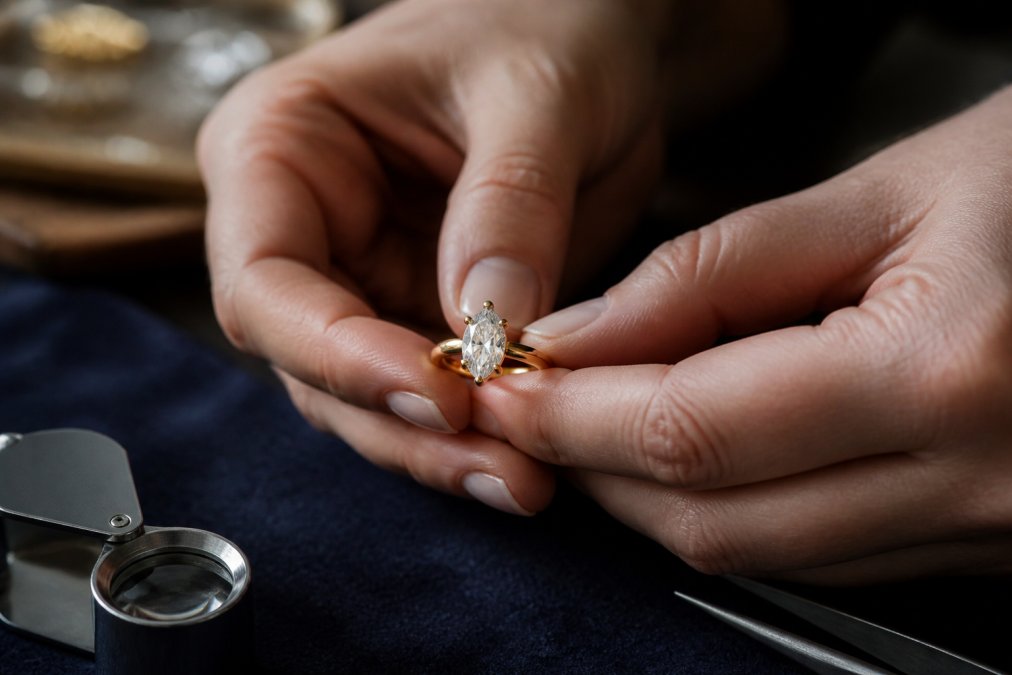
The Maze Ring and The Poiret Ring: Everyday Heirlooms
The The Maze Ring is the house signature: a maze motif set with an antique marquise diamond in 18k solid yellow gold, available plain or with black enamel. At $18,000, it is a statement piece you can wear daily without the finish wearing through.

The The Poiret Ring sits at the other end of the range at $5,000, with signature bars set with 0.6cts of emeralds in 18k recycled gold, set diagonally across the band. Stack it or wear it solo, it proves the materials story at the collection's lowest entry point.
The Tillie Ring and The Barbette Ring: Statement Craftsmanship
The The Tillie Ring is an antique-style domed ring set with Old European Cut diamonds in platinum and white or yellow gold, priced at $20,000. Domed settings spread impact across the surface rather than concentrating it on a single prong, which is why this style has survived a century of fashion cycles.

The The Barbette Ring takes a different route: three 18k solid yellow gold bands joined into a thick cigar band, with a hand-painted black enamel and gold square and 1.5ct of baguette diamonds in the center band. At $25,000, it is the collection's most architectural piece.

| Piece | Price | Metal | Signature Detail |
|---|---|---|---|
| The Poiret Ring | $5,000 | 18k recycled gold | 0.6cts emeralds, slanted bars |
| The Maze Ring | $18,000 | 18k solid yellow gold | Antique marquise diamond |
| The Tillie Ring | $20,000 | Platinum, white or yellow gold | Old European Cut diamonds |
| The Barbette Ring | $25,000 | 18k solid yellow gold | Baguette diamonds, black enamel |
| The Sonne Ring | $50,000 | 18k yellow gold | Yellow sapphire, antique emerald cuts |
Sustainable Fine Jewelry Investment: What Your Money Actually Buys
Sustainable fine jewelry investment means buying pieces whose materials hold value and whose construction can be maintained indefinitely. The return is not a stock ticker; it is metal value, stone value, and a piece that never needs replacing.
"Sustainable" does two jobs here: recycled gold reduces new mining demand, and antique diamonds already exist, so no additional extraction is required. For a buyer weighing a $25,000 ring against a cheaper alternative, that is the honest difference: solid materials, documented stones, and a piece a jeweler can repair in thirty years.
The Responsible Jewellery Council standards set the framework many houses use to verify sourcing, and it is a reasonable question to ask any maker about their supply chain.
Appraisal, Authentication, and Insurance for Heirloom Pieces
Most guides stop at "get it appraised." That advice is useless without knowing what an appraiser checks, how authentication differs from valuation, and how to build a documentation file an insurer or estate lawyer will accept, the difference between a piece that can be replaced and one that becomes a paperwork nightmare.
What an Appraisal Actually Covers
An appraisal is not a single number. A proper insurance appraisal establishes replacement value, what a comparable piece would cost today, and should include:
- Precise measurements of the metal and each stone
- Metal purity confirmed by assay or X-ray fluorescence (XRF)
- Stone identification, including treatment and origin where determinable
- Photographs from multiple angles, including any hallmarks or signatures
- A description detailed enough that a jeweler could recreate the piece
For antique stones, the appraiser notes cut style (Old European, mine cut, rose cut) because it affects value and replacement difficulty. A modern brilliant cut is not a like-for-like substitute in an antique setting, and the appraisal should say so.
Authentication vs. Valuation: Two Different Jobs
Authentication answers "is this what it claims to be?" Valuation answers "what is it worth?" Conflating them is a common and expensive mistake.
Authentication for metals relies on hallmarks and assay. A stamp reading "750" or "18k" indicates 75% gold, but stamps can be forged or worn; an assay by a jeweler or assay office confirms metal content independently. For platinum, look for "PT950" or "PLAT" marks; for palladium, "PD950."
Authentication for stones requires a gemologist. For diamonds, a laboratory report from a recognized body (GIA, AGS, IGI) confirms color, clarity, carat, and whether the stone is natural or lab-grown. For colored stones, reports may note origin (e.g., Burmese ruby, Colombian emerald) and treatment (heated, oiled, fracture-filled). Antique diamonds often predate modern certification, so a gemologist's opinion on cut style and age becomes the primary evidence.
Experienced collectors keep a "provenance file" with old receipts, family photographs of the piece being worn, and prior appraisals. That file does more for authentication than a single modern certificate, because it establishes a continuous history.
Insurance: Replacement Value, Riders, and the Review Cycle
Standard homeowners or renters policies cap jewelry coverage, often at a low threshold, and may exclude mysterious disappearance or breakage (abi.org.uk). A scheduled rider (or floater) lists each piece individually and covers a broader set of risks.
To get a rider, the insurer will ask for:
- A recent appraisal (usually within 2-3 years)
- Photographs of the piece
- Proof of ownership (receipt or prior appraisal)
- A description that matches the appraisal
Insurers price the policy against appraised replacement value, not what you paid. If you bought a ring at auction for less than retail replacement, the rider still covers the higher replacement cost, but you must document that value.
Review the appraisal every 2-3 years, or after any major market move in gold, platinum, or the relevant stone category. An outdated valuation leaves you underinsured at exactly the wrong moment. If you inherit a piece, get a new appraisal in your name; the estate's appraisal may not be accepted by your insurer.
Documentation for Estate Planning and Future Generations
An heirloom is only as transferable as its paperwork. Build one physical folder and one digital backup containing:
- Original purchase receipt and any certificates
- Independent appraisal with photographs
- Insurance rider and policy number
- Repair and restoration records (who did the work, when, what was replaced)
- A signed, dated inventory listing each piece, its provenance, and any known stories
For estate planning, this file prevents disputes and helps heirs decide what to keep, sell, or donate. If a piece has significant value, consider a separate memorandum in your will that specifically bequeaths it rather than letting it fall into the general estate.
Do not rely on a jeweler's verbal opinion as authentication. If you need to prove a stone's identity or a metal's purity for insurance or legal purposes, get it in writing from an independent appraiser or gemologist. A verbal "it looks like 18k" has no standing.
Ask your appraiser to include a "replacement difficulty" note for antique or one-of-a-kind pieces. If a stone is irreplaceable, the insurer needs to know that a like-for-like substitute may not exist, which can affect both coverage and payout.
The most valuable document in your heirloom collection is not the receipt, it is the appraisal file. Keep it current, keep it complete, and keep a copy somewhere other than your jewelry box.
Repair, Restoration, and Jewelry Maintenance Over Decades
Heirloom jewelry survives because it gets maintained, not because it never gets worn. But repair and restoration are where most owners get stuck: who to trust, what to expect, and how to avoid a repair that quietly destroys value.
Annual Inspection: The Baseline Habit
A yearly inspection by a qualified jeweler is the cheapest insurance you can buy. In a few minutes, they check:
- Prong tightness and wear (a loose stone is the most common repair in older jewelry)
- Clasp tension and hinge play on bracelets and necklaces
- Stone security in bezels and channel settings
- Metal fatigue at stress points (e.g., where a ring shank meets the head)
Catching a loose stone early costs a fraction of replacing it. A re-tipped prong might be a minor bench charge; a lost antique diamond can be irreplaceable.
Cleaning: What Is Safe and What Is Not
Gentle cleaning at home is fine for most pieces: warm water, mild dish soap, and a soft brush. But ultrasonic and steam cleaners are not universally safe. Avoid them on:
- Antique stones with older treatments (e.g., emeralds that may be oiled or filled)
- Opals, pearls, and other porous or soft stones
- Pieces with enamel, which can chip
- Jewelry with glued-in stones or delicate filigree
When in doubt, ask a jeweler to clean it. The cost is minimal compared to the risk.
Finding a Reputable Restorer
Not every jeweler does restoration, and not every restorer understands antique pieces. A good restorer will:
- Match original metal alloys and finishes rather than modernizing
- Source period-correct stones or cut styles when replacement is needed
- Preserve original settings and patina where possible
- Document the work with before-and-after photographs and a written description
Ask specifically about their experience with antique or estate jewelry. General jewelers often handle simple repairs (sizing, re-tipping, clasp replacement) but refer complex restoration to specialists. If your piece is signed, has a maker's mark, or is one-of-a-kind, ask whether the restorer has worked on comparable pieces.
Restoration vs. Alteration: The Value Trade-Off
Restoration preserves the piece's original character; alteration changes it. For heirloom jewelry, restoration is almost always right, because altering an antique setting can reduce both its authenticity and its market value.
Examples of restoration:
- Replacing a worn prong with metal of the same alloy and color
- Rebuilding a clasp to original design
- Re-setting a loose stone in its original mount
Examples of alteration (often value-reducing):
- Re-cutting an antique diamond to modern proportions
- Replacing original enamel with modern paint
- Resizing a ring so aggressively that the shank is thinned or the hallmark is removed
If a stone is lost, sourcing a period-correct replacement takes longer and costs more than a modern equivalent. A restorer who specializes in antique jewelry will know where to look, estate sales, dealer networks, old stock, but expect a wait of weeks or months.
Storage and Handling Between Wears
Storage matters more than most owners realize. Harder stones (diamonds, sapphires) scratch softer metals and softer stones (pearls, opals, emeralds). Store pieces separately in soft pouches or a lined jewelry box with individual compartments. Keep chains clasped to prevent tangling, and lay necklaces flat rather than hanging them, which stresses the clasp and links.
For pieces worn regularly, a quick wipe with a soft cloth after each wear removes oils and perspiration that dull metal and stone over time.
The single most valuable habit for an heirloom collection is a yearly inspection. It costs little, catches problems while they are still minor, and is the difference between a piece that lasts two generations and one that lasts five. Pair it with a written repair log, and you give the next owner a complete maintenance history, which is itself part of the piece's provenance.
Frequently Asked Questions
What defines heirloom quality jewelry?
Heirloom quality jewelry is built from solid precious metals like 18k gold or platinum, set with stones held by secure settings, and finished by hand. It carries hallmarks, documented provenance, and construction that survives daily wear for decades. Plated or hollow pieces tarnish and wear through, which is why they rarely get passed down. Look for karat weight stamps, signed maker marks, and gemstone certificates before you commit.
How can I tell if a jewelry brand is truly heirloom quality?
Ask three questions: what metal is used (solid gold or platinum, not plating), where the stones come from (mine-to-market traceability or antique sourcing), and whether the piece comes with documentation. A brand selling sustainable fine jewelry investment pieces should show certificates for diamonds, explain its recycled metal supply, and offer appraisal support. Vague sustainability claims without paperwork are a warning sign.
Is 18k gold better for heirloom jewelry than 14k?
18k gold contains 75% pure gold, giving it richer color and greater value than 14k, which is 58.5% gold. The trade-off is softness: 18k scratches more easily, so it suits rings worn with care or pieces reinforced by alloy blends. Platinum is denser and holds settings tightly, which matters for antique diamonds. All three last generations when the craftsmanship is sound.
Are antique diamonds better for heirloom pieces?
Antique diamonds, including Old European Cut and Old Miner Cut stones, were cut by hand before modern machinery, so each has a distinct facet pattern and character no two share. They are also recycled by nature, which supports ethical sourcing without new mining. Many antique stones come with certificates confirming their origin, making them strong candidates for pieces intended to be passed down.
What should I look for when investing in fine jewelry?
Prioritize metal purity, gemstone integrity, and setting security over trend-driven design. Request an appraisal and keep the certificate with your purchase records. Check clasp durability on bracelets and cuffs, since closures fail before metal does. Timeless design holds value better than seasonal styles, and pieces from a bespoke or artisanal maker often carry stronger provenance than mass-produced alternatives.
Building a collection that outlives you takes more than a large budget. It takes solid metals, documented stones, and construction that a jeweler can still work on decades from now, which is exactly the standard LÖF holds itself to with 18k gold and platinum, recycled and repurposed gold, antique diamonds, and ethically sourced gemstones across bold, architectural designs. Explore the LÖF collection and choose a piece made to be worn now and passed down later.