

Table of Contents
- What Defines Modernist Jewelry Style
- Characteristics of Modernist Design in Fine Jewelry
- Ethical Fine Jewelry Brands and Sustainable Practices
- Innovative Materials and Artisan Craftsmanship
- How to Style Modernist Jewelry for Professional Settings
- The Bespoke Jewelry Commissioning Process
- The Lifecycle of Recycled Metals and Circular Economy Impact
- Vintage vs. Contemporary Modernist Pieces
Last Updated: August 23, 2026
What Defines Modernist Jewelry Style
Modernist statement jewelry prioritizes geometric shapes, sculptural forms, and architectural precision over decorative embellishment. It emerged as a direct response to maximalism, embracing asymmetry, bold proportions, and unexpected material combinations designed to provoke conversation.
What distinguishes modernist statement jewelry is its intellectual foundation. Each piece reflects deliberate design decisions rooted in engineering principles and material science, functioning as wearable sculpture where form and structure carry as much weight as materials themselves.
For conscious consumers, this distinction matters. Modernist statement jewelry aligns with values around intentionality and sustainability. When you invest in a piece designed with this philosophy, you're choosing something built to last decades, not seasons. The bold architectural language means these pieces transcend trend cycles, aging into classics rather than becoming dated.
Characteristics of Modernist Design in Fine Jewelry
Modernist design in fine jewelry operates according to specific principles that distinguish it from other luxury jewelry movements.
Geometric Shapes and Sculptural Forms
Geometric precision defines modernist jewelry through clean lines, angular planes, and mathematical proportions. Rectangles, triangles, and abstract three-dimensional shapes dominate the visual language as structural elements that define the piece's entire presence.
The André Necklace exemplifies this approach, handcrafted in solid 18k yellow gold with custom elongated matchstick links that form an architectural chain. The Josephine Ring demonstrates how enamel integrates into geometric composition: its chunky ridged design in 18k yellow gold alternating with black enamel stripes creates both visual and tactile presence.

Minimalist Approach vs. Statement-Making Pieces
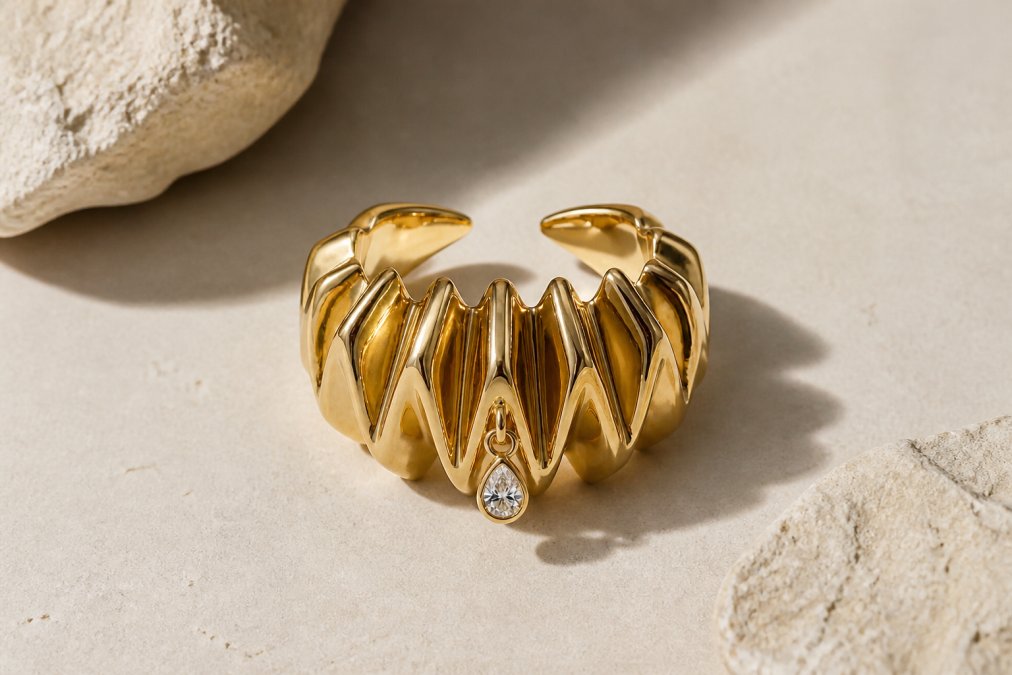
Modernist statement jewelry resolves an apparent contradiction: how to make a bold impact through restraint. The Édith Ring, handcrafted in 18k recycled gold with a signature scrunched texture, exemplifies minimalist modernism. There's no gemstone, yet the piece commands attention through its weighty presence and distinctive surface treatment.
The Cecil Earrings, sculptural expressions of modern deco in 18k white gold with hand-selected kite-shaped white diamonds, make an unmistakable visual statement through form and material rather than quantity or sparkle.
Ethical Fine Jewelry Brands and Sustainable Practices
The conscious consumer movement has fundamentally shifted how luxury jewelry brands operate. Ethical fine jewelry brands now prioritize transparency, material sourcing, and production practices with the same rigor they apply to design.
Recycled Metals and Fair Trade Standards
Recycled metals represent the most direct path toward sustainable luxury jewelry. When precious metals are reclaimed and refined, they eliminate the environmental and ethical costs associated with mining. Recycled 18k gold carries the same material properties as newly mined gold but without the extraction impact.
Brands committed to conscious practices track their metal supply chains with precision. The Édith Ring, crafted in 18k recycled gold, demonstrates this commitment. Fair trade standards ensure that artisans throughout the supply chain receive equitable compensation and work in safe conditions.
The circular economy principle underpins sustainable metal practices. Rather than treating precious metals as finite resources to extract and deplete, ethical brands view metals as perpetually recyclable materials.
Traceability and Responsible Mining
Traceability means knowing the complete journey of every material in your jewelry. For gemstones, this includes identifying the mine, processing facility, and distributor before the jeweler receives the stone. Antique diamonds, mined decades or centuries ago, offer inherent traceability. The Édith Cuff features a 2ct antique pear diamond with a certificate, providing documented provenance.
Responsible mining practices minimize water usage, protect ecosystems, and ensure worker safety and fair wages. For conscious consumers, the premium for responsible sourcing reflects genuine environmental and social benefits.
Innovative Materials and Artisan Craftsmanship
Modernist statement jewelry often explores unconventional material combinations and handcrafted techniques that challenge traditional jewelry conventions.
Mixed Metals and Handcrafted Techniques
Mixed metals create visual complexity through material contrast. The Baker Hoops exemplify this approach: 18k gold paired with black enamel creates stark visual contrast that emphasizes the geometric ridged form. Handcrafted techniques distinguish modernist statement jewelry from mass-produced alternatives. When a piece like the Anara Torque is handcrafted in 18k solid gold with a signature zig-zag motif set with Imperial Orange Topaz and Citrine, the artisan's skill directly influences the final result.

Artisan craftsmanship in modernist jewelry requires specialized skills. Creating clean geometric forms, precise enamel work, and balanced sculptural proportions demands years of training.
Antique Diamonds and Ethically Sourced Gemstones
Antique diamonds offer compelling ethical advantages. Mined before modern extraction practices, they carry inherent sustainability benefits. The Édith Cuff's 2ct antique pear diamond represents this approach. Ethically sourced gemstones like the Imperial Orange Topaz and Citrine in the Anara Ring demonstrate that colored stones can be traced to responsible sources while maintaining exceptional material quality. shopping small for jewelry.
How to Style Modernist Jewelry for Professional Settings
Modernist statement jewelry presents a styling challenge: how do you wear bold, architectural pieces in conservative professional environments? The answer lies in understanding that modernist design's restraint and precision actually facilitate professional integration.

Layering and Convertible Jewelry
Layering modernist pieces creates visual interest without excess. A single statement necklace like the André Necklace commands attention on its own. Pairing it with minimal earrings or a simple ring prevents visual chaos while emphasizing the necklace's architectural quality.
Professional styling relies on negative space. Rather than filling every visible surface with jewelry, you create focal points. The Cecil Earrings demand minimal competition. Pair them with a simple pendant or skip the necklace entirely. Color coordination matters with mixed-metal pieces. The Baker Hoops' gold and black enamel combination works with warm-toned professional wardrobes.

Care and Maintenance of Modernist Materials
Modernist jewelry's longevity depends on proper maintenance. Enamel pieces like the Baker Hoops demand gentle handling. Clean these pieces with soft cloths and avoid submersing them in water. Professional cleaning every 2-3 years ensures enamel maintains its color and surface integrity.
Recycled gold and platinum require the same care as newly mined metals. Gemstones vary in hardness. Diamonds and sapphires withstand daily wear without special precautions. Topaz and citrine are softer and benefit from protective storage when not worn.
The Bespoke Jewelry Commissioning Process
Commissioning bespoke modernist statement jewelry represents the ultimate expression of conscious consumption. You collaborate with a designer to create a piece reflecting your specific vision and values.
The commissioning process begins with a detailed consultation discussing aesthetic preferences, lifestyle requirements, and material values. Material selection follows, where you specify whether you prefer recycled gold, platinum, or mixed metals, and choose between antique diamonds, ethically sourced gemstones, or minimal stone settings.
Design development involves sketches, renderings, and sometimes physical samples. Expect 2-4 weeks for this phase. Production timelines vary based on complexity, a straightforward bespoke ring might take 4-6 weeks, while intricate pieces with custom enamel work require 8-12 weeks. Quality assurance before delivery ensures the piece meets specifications.
The Lifecycle of Recycled Metals and Circular Economy Impact
Understanding how recycled metals function within the circular economy transforms how conscious consumers view luxury jewelry. Rather than treating jewelry as disposable, circular economy thinking positions pieces as perpetually recyclable assets.
Recycled metal production begins with collection. Jewelry that's damaged, outdated, or no longer worn enters recycling streams. The metal is separated from gemstones, then melted and refined to meet the same purity standards as newly mined material.
The environmental impact of recycling versus mining is substantial. Recycled gold requires significantly less energy to produce than newly mined gold. Water usage drops dramatically. Ecosystem disruption is eliminated entirely. The Édith Ring, crafted in 18k recycled gold, exemplifies this philosophy. When this piece eventually reaches end-of-life, its gold can be recycled again, continuing the cycle indefinitely.
Vintage vs. Contemporary Modernist Pieces
The choice between vintage and contemporary modernist jewelry reflects different sustainability approaches and aesthetic preferences.
Vintage modernist pieces carry inherent sustainability benefits. No new production was required, and you're giving existing pieces extended life. However, vintage pieces present challenges. Finding specific styles requires patience. Sizing and repairs can prove difficult if the original designer is no longer active. Provenance documentation may be incomplete.
Contemporary modernist statement jewelry offers advantages vintage pieces can't match. You know exactly where materials originated. You can commission custom pieces reflecting your specific vision. You support living artisans committed to ethical practices. A contemporary piece designed by LÖF, crafted in 18k recycled gold with antique diamonds, will likely outlast most vintage pieces due to superior design and construction.
| Consideration | Vintage Modernist | Contemporary Modernist |
|---|---|---|
| Environmental Impact | Zero new production | Recycled materials reduce extraction |
| Material Transparency | Often unknown | Fully documented |
| Craftsmanship Standards | Variable | Verified and consistent |
| Customization | Impossible | Available through commission |
| Artisan Support | Supports secondary market | Supports living makers |
| Availability | Limited and unpredictable | Consistent selection |
Modernist statement jewelry for conscious consumers represents more than an aesthetic choice, it's a commitment to intentional luxury that honors both the wearer and the planet. Whether you select from LÖF's collection of handcrafted pieces or commission a bespoke design, you're investing in jewelry that transcends trends through architectural integrity and ethical craftsmanship.
LÖF's modernist pieces, from the sculptural Cecil Earrings to the geometric Anara Ring, demonstrate that bold statement jewelry and sustainable practices aren't competing values. They're complementary philosophies. When you choose pieces crafted in recycled 18k gold and platinum, featuring antique diamonds and ethically sourced gemstones, you're making a choice that aligns luxury with responsibility.
The Ellen MacArthur Foundation's circular economy framework provides essential context for understanding how recycled metals contribute to sustainable systems. The Responsible Jewellery Council's standards for ethical sourcing establishes verification criteria for material responsibility claims. The Gemological Institute of America's guidance on antique diamond authentication ensures you can verify the authenticity of antique stones in your pieces.
Begin your modernist jewelry journey by exploring pieces that resonate with your aesthetic and values. LÖF's collection offers versatile options, from the understated Édith Studs to the architectural André Necklace. Each piece demonstrates that conscious luxury jewelry doesn't require compromise between beauty, boldness, and responsibility.
Frequently Asked Questions
What defines modernist jewelry style and how is it different from other design movements?
Modernist jewelry emphasizes geometric shapes, sculptural forms, and minimalist aesthetics that prioritize design integrity over ornamentation. Unlike vintage or maximalist styles, modernist statement jewelry uses bold architectural elements, mixed metals, and innovative materials to create pieces that function as wearable art. The style emerged from the principle that form follows function, making each element serve both aesthetic and structural purposes.
How can I identify ethically sourced statement jewelry and verify sustainability claims?
Look for brands that provide traceability documentation, certifications from responsible mining initiatives, and transparency about their supply chain. Ethical fine jewelry brands should disclose whether gemstones are antique, recycled, or newly sourced with fair trade practices. Request certificates of authenticity for diamonds and gemstones, and ask about the origin of precious metals. Reputable makers like those using 18k gold and platinum from recycled sources will share detailed information about their materials and sourcing practices.
What materials are used in sustainable modernist jewelry?
Sustainable modernist jewelry typically features recycled precious metals like 18k gold and platinum, which reduce environmental impact compared to newly mined metals. Designers incorporate ethically sourced gemstones, antique diamonds salvaged from vintage pieces, and innovative materials like responsibly sourced topaz and citrine. Mixed metals in sculptural designs allow artisans to create bold statement pieces while minimizing waste through handcrafted techniques that repurpose materials from the circular economy.
What is the bespoke jewelry commissioning process and how long does it typically take?
The bespoke jewelry commissioning process begins with a consultation where you discuss your vision, preferred materials, and design preferences with the jeweler. The designer creates sketches and explores options for stone selection, metal choices, and architectural elements. Once approved, the piece is handcrafted using artisan techniques, with periodic check-ins to ensure quality. Timeline varies depending on complexity, but most custom modernist pieces require several weeks to months for completion, allowing time for careful craftsmanship and quality assurance.
This article was written using GrandRanker