

Table of Contents
- Why Antique Diamond Earrings Are Worth the Extra Care
- How to Identify Antique Diamond Cuts Before You Buy
- Antique Diamond Earrings Certification: What Documents Actually Prove
- Antique Diamond Jewelry Appraisal Cost and What It Covers
- Red Flags in Seller Listings and How to Spot Them
- Insurance and Documentation Requirements for Your Purchase
- Post-Purchase Safety: Caring for Antique Settings
- Frequently Asked Questions
Last Updated: September 21, 2026
Why Antique Diamond Earrings Are Worth the Extra Care
Buying antique diamond earrings safely comes down to one rule: verify the stones, the metal, and the seller before money changes hands. Antique pieces carry history and often better cutting than modern mass production, but also risks new jewelry does not.
Old stones can hide chips, replaced settings, or unclear origins, so caution protects a purchase you plan to keep for decades.
How to Identify Antique Diamond Cuts Before You Buy
Antique diamond cuts are the fastest way to date a piece: wider culets, higher crowns, and softer light return than modern round brilliants.
Old European, Old Mine, and Rose Cuts: What to Look For
Each antique cut has telltale features. Learn these three and you can date most pieces on sight.
- Old European cut: round outline, large culet, small table, chunky facets
- Old Mine cut: cushion shape, high crown, deep pavilion
- Rose cut: flat bottom, domed top, no pavilion facets at all
Antique Diamond Earrings Certification: What Documents Actually Prove
Antique diamond earrings certification is a chain of proof, not one document. Each paper answers a different question, so know which before you wire money.
Here is what each document actually tells you:
| Document | What It Proves | What It Doesn't |
|---|---|---|
| Gemological report (e.g., GIA, AGS) | Stone identity, carat weight, clarity, color, cut grade | Age, origin, or that the stone is original to the setting |
| Seller appraisal | Stated replacement value for insurance | Independent verification of that value |
| Provenance records | Ownership history, sometimes exhibition or auction history | Stone quality or authenticity |
| Hallmarks and maker's marks | Metal purity, country of assay, sometimes maker and date range | Diamond authenticity or that the stones are original |
| Independent appraisal (yours, not the seller's) | Fair market value and condition notes from a party with no stake in the sale | Nothing about resale demand |
The Remote-Buyer Verification Protocol
Most antique diamond earrings are now bought online. Here is the protocol that protects you when you cannot hold the piece.
Decoding Deceptive Listing Language
Listing language is often the first red flag. Watch for:
- "Antique style" or "vintage-inspired", New jewelry made to look old. If the listing does not name a period (Victorian, Edwardian, Art Deco) or date range, assume it is modern.
- "Estate", Pre-owned, but not necessarily antique. It can be five years old. Ask for the age.
- "Old European cut" used loosely, Some sellers apply this to any round stone with a large table. Ask for a photo of the culet and crown; a true Old European cut has a visible culet and high crown.
- "Diamond" without qualification, In many markets this can legally include lab-grown. If the listing does not say "natural" or "mined," ask directly and get the answer in writing.
- "Certificate available on request", Often means there is no certificate. Ask for the report number and lab name before you commit.
- "Final sale" or "no returns", A dealbreaker for online antique purchases. You cannot verify a piece you cannot return.
- Price far below market, If a pair of antique diamond earrings is priced at a fraction of comparable pieces, either the stones are not what they claim or the metal is plated.
FTC guidance on jewelry advertising and disclosure
Antique Diamond Jewelry Appraisal Cost and What It Covers
Antique diamond jewelry appraisal cost varies by jeweler, location, and detail. Most appraisals fall into two types: insurance and fair market value.
What a good appraisal includes:
- Metal type and purity, confirmed by hallmarks
- Gemstone identification and measurements
- Carat weight, diamond clarity, and cut grade
- Setting description and condition notes
- Clear photos of the piece
Red Flags in Seller Listings and How to Spot Them
The biggest red flags in seller listings are vague descriptions and missing documents. Sellers who know antique jewelry describe it precisely; those hiding something stay vague.
Watch for these warning signs:
- No mention of hallmarks or metal purity
- "Antique style" instead of a specific period
- No certificate for stones sold as antique diamonds
- Prices far below market for the stated quality
- Stock photos instead of photos of the actual piece
- No return policy or a very short one
- Pressure to pay outside the platform's protection
Insurance and Documentation Requirements for Your Purchase
Insuring antique diamond earrings requires documentation most buyers forget to gather. Your insurer will ask for proof of value, and a receipt alone rarely covers it.
Gather these before you call your insurer:
- A recent appraisal from a qualified jeweler
- Gemological certification for the stones
- Original purchase receipt
- Clear photos from multiple angles
Post-Purchase Safety: Caring for Antique Settings
The first 30 days after you buy antique diamond earrings are the most important for long-term safety. Antique settings were not engineered for modern daily wear, and old metal has fatigue new jewelry does not.
The First 48 Hours: Inspection and Documentation
Do not wear the earrings out of the box. Take them to a qualified jeweler or gemologist within the first 48 hours, while your return window is open.
Ask the jeweler to:
- Confirm the stones match the listing and any certificate
- Check every prong for tightness and wear
- Inspect the backs, posts, and hinges for cracks or fatigue
- Note any previous repairs or alterations in writing
- Photograph the piece from multiple angles for your records
The First 30 Days: Insurance and Appraisal
Your homeowner's or renter's insurance almost certainly does not cover antique diamond earrings at full value. Standard policies cap jewelry coverage at a low threshold, often a few thousand dollars, and may exclude mysterious disappearance or breakage. You need a separate rider or standalone jewelry policy.
To get one, your insurer will ask for:
- A recent appraisal from a qualified independent appraiser (not the seller)
- Gemological certification for the stones, if available
- The original purchase receipt
- Clear, dated photos of the earrings from multiple angles
- Any provenance or hallmark documentation
Understanding Antique Setting Mechanics
Antique earring backs and settings fail differently than modern ones. Knowing the mechanism tells you what to check.
- Screw backs, Common on antique earrings. Threads wear down over decades, and a worn screw back can release without warning. Check threads monthly; if loose or gritty, have a jeweler re-thread or replace the post.
- Push backs (friction backs), Friction depends on metal tension. Old push backs lose tension and slide off; if the back slides on too easily, it needs adjustment.
- La Pousette backs, A modern upgrade adding a locking mechanism to a friction back. The safest option for valuable antique stones, worth having a jeweler install on pieces you wear often.
- Clip-on and screw-back conversions, Many antique earrings were originally clip-on or screw-back and later converted to pierced. Conversion work is a common source of weakness, have a jeweler inspect the conversion points.
- Prongs, Antique prongs are often thinner and more worn than modern ones, and a prong that has held a stone for a century can snap. Check monthly with a loupe; replace any prong that looks thin or lifted before it fails.
Ongoing Care Routine
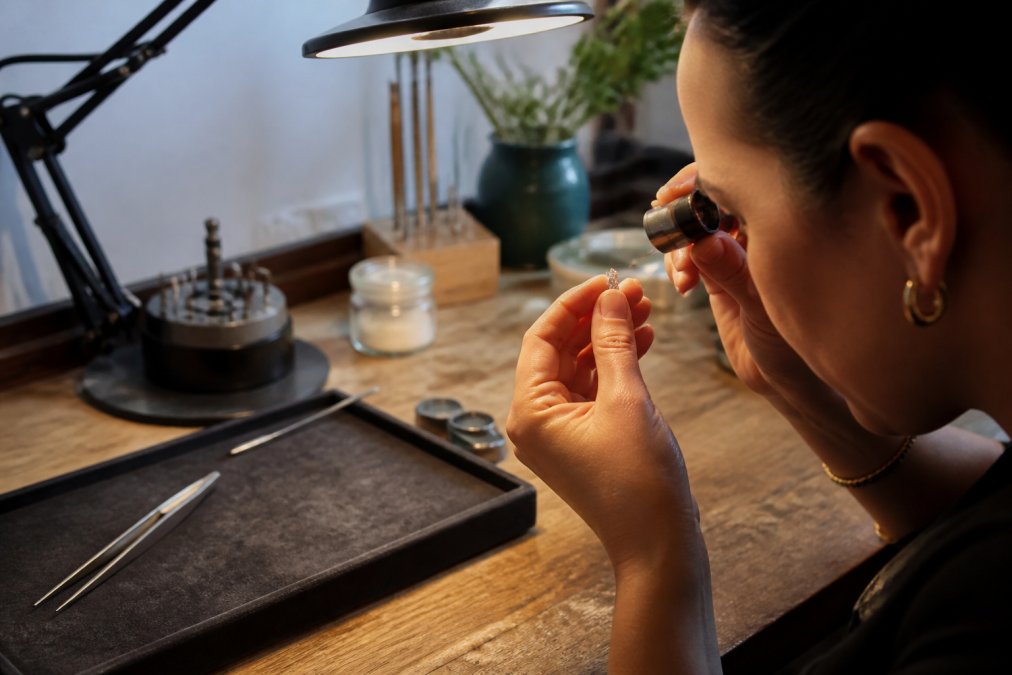
- Inspect your earrings monthly with a loupe, checking prongs, backs, and posts
- Remove earrings before showering, swimming, sleeping, or exercising
- Clean with warm water and mild soap only, using a soft brush
- Dry thoroughly before storing
- Get a professional jewelry inspection once a year
- Store earrings separately in a soft pouch or lined box to prevent scratches
A piece like the Tallulah Max Earrings, handcrafted in 18k yellow gold with antique baguette diamonds and a detachable antique pear, shows how antique stones can live in modern settings. The detachable design also lets you wear the pear on a hoop, chain, or charm.

Frequently Asked Questions
How can I verify if antique diamond earrings are authentic before buying?
Ask for gemological certification from a recognized lab and check for period-specific hallmarks on the metal. Request close-up photos of the prong setting and earring backs. A reputable jeweler will provide documentation showing carat weight, diamond clarity, and cut grade. If buying online, ask for a video inspection and a return window long enough for an independent appraisal.
Are antique diamonds less expensive than modern ones?
Antique diamonds often cost less per carat than modern brilliant cuts because they were cut before standardized proportions existed. The trade-off is that antique stones may show more warmth or visible facets. Value depends on rarity, condition, and provenance. Investment-grade antique diamonds with strong documentation can command higher prices than comparable modern stones.
What is the difference between vintage and antique diamond jewelry?
Antique jewelry is at least 100 years old and falls into defined periods like Victorian, Edwardian, or Art Deco. Vintage pieces are typically 20 to 99 years old. Estate jewelry refers to any pre-owned piece regardless of age. This distinction matters for appraisal and insurance because period construction and provenance affect value.
What are the risks of buying antique jewelry online?
The main risks are undisclosed repairs, replaced stones, and misleading photos. Some sellers use stock images or enhance color in editing. Metal fatigue in older settings can also cause prongs to fail. Mitigate these by requesting a video call, asking for gemological certification, and confirming a return policy that covers independent appraisal.