

Table of Contents
- What Defines Ethical Jewelry in Fine Luxury
- Recycled Gold Jewelry Benefits and Why They Matter
- How to Identify Ethically Sourced Gemstones
- Sustainable Fine Jewelry Brands: What Sets Them Apart
- Everyday Elegance vs. Statement Pieces for Her
- Cost-Per-Wear Analysis: Investing in Heirloom Pieces
- Gift-Giving Etiquette for Sustainable Luxury Jewelry
- Frequently Asked Questions
Last Updated: September 20, 2026
What Defines Ethical Jewelry in Fine Luxury
An ethical jewelry gift guide represents a fundamental shift in how we think about luxury gifting. It's about every decision made to create it, from sourcing to final polish. At LÖF, true luxury demands responsibility: jewelry that looks stunning and feels good to wear because you know its story.
Ethical jewelry combines three core elements: responsibly sourced materials (recycled gold, conflict-free diamonds, fair-labor gemstones), transparency in sourcing and processing, and longevity, pieces designed to last generations.
Real ethical jewelry comes with certifications, clear sourcing documentation, and makers willing to explain their process. LÖF's architectural designs in 18k recycled gold exemplify this traceability and responsible craftsmanship.
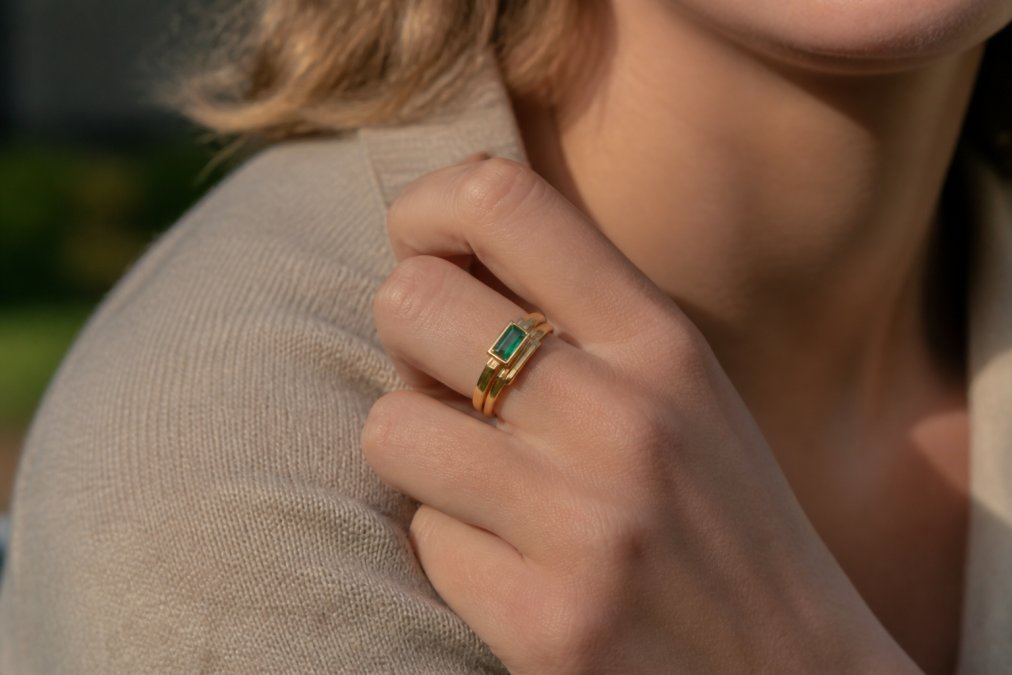
Ethical jewelry differs through intentional sourcing: same precious materials as conventional luxury, but responsibly sourced. Quality is identical; impact is transformed.
Recycled Gold Jewelry Benefits and Why They Matter
Recycled gold is precious metal recovered from old jewelry, electronics, or industrial waste, then refined and reused. Chemically identical to newly mined gold, the difference is environmental and ethical.
Mining new gold requires significant water, energy, and land disruption. Recycled gold eliminates this impact. The 18k recycled gold in LÖF pieces like The Poiret Ring delivers the same luxury without extraction costs.

Recycled gold offers traceability: you know it came from reclaimed sources, not conflict zones. You're buying a story you can stand behind.
Recycled gold performs identically to mined gold and won't tarnish, break, or fade faster. Heirloom quality depends on craftsmanship and design, not metal origin.
How to Identify Ethically Sourced Gemstones
Gemstone sourcing is where many ethical claims fall apart. A diamond might be "conflict-free" but still involve poor labor conditions. Identifying truly ethical gemstones requires understanding certification limits.
Understanding Major Certifications and Their Scope
The Kimberley Process certifies conflict-free diamonds but has significant limitations: it focuses narrowly on preventing "blood diamonds" and does not address labor practices, environmental standards, or fair wages. A diamond can be Kimberley certified and still come from a mine with documented labor violations.
The Responsible Jewellery Council (RJC) offers comprehensive certification covering labor, environmental management, and supply chain transparency. RJC certification signals a brand willing to invest in deeper accountability.
Fairmined certification guarantees fair wages and working conditions for artisanal and small-scale miners, particularly valuable for colored gemstones. However, Fairmined-certified gemstones represent a small percentage of the global market.
Lab-Grown vs. Mined: The Trade-Off
Lab-grown diamonds and gemstones are chemically and optically identical to mined stones but created in controlled laboratories over weeks. They eliminate mining impact entirely: no habitat disruption, no labor concerns, no water consumption.
Lab-grown stones offer clarity: you know exactly where they came from and under what conditions. For someone prioritizing ethical certainty, lab-grown gemstones remove doubt.
Lab-grown stones cost 30-40% less than comparable mined stones, allowing larger or higher-quality gemstones at the same price point.
Red Flags That Signal Greenwashing
Watch for these red flags:
- Vague sourcing language: "Responsibly sourced" without specific certification or documentation. Ethical brands name certifications explicitly.
- No origin documentation: Inability to provide gemstone origin certificates from independent gemological institutes.
- Conflicting information: Claims of sustainability but newly mined gold, or fair trade without disclosed suppliers.
- Premium pricing without justification: High prices don't guarantee ethical sourcing. Brands should clearly explain what justifies the cost.
- Lack of transparency about limitations: Truly ethical brands acknowledge supply chain imperfections and explain improvement efforts.
Antique and Vintage Gemstones: A Circular Alternative
Antique and vintage gemstones sidestep sourcing questions: already mined and circulated, they don't drive new mining demand. You're participating in the circular economy.
Antique stones carry history and character. A Victorian emerald or Art Deco diamond adds emotional resonance, the stone has a story before becoming part of hers.
Antique stones may lack modern gemological documentation. A reputable jeweler can have them re-certified by an independent lab, adding cost but providing assurance.
What to Ask Before You Buy
When evaluating a gemstone for your ethical jewelry gift guide, ask the brand directly:
- What certification does this gemstone carry, and from which organization?
- Can you provide the origin certificate or gemological report?
- If the stone is mined, which mine or region did it come from?
- If lab-grown, what laboratory created it and under what conditions?
- If antique, what is the documented provenance?
- What is your supply chain for gemstone refining and setting?
Brands that answer these questions clearly and provide documentation are demonstrating genuine ethical commitment. Brands that deflect, generalize, or claim they "can't disclose suppliers for competitive reasons" are signaling that transparency isn't their priority.
Sustainable Fine Jewelry Brands: What Sets Them Apart
Sustainable fine jewelry brands distinguish themselves through consistent practices across sourcing, manufacturing, and business operations. The best ones aren't just using recycled metals; they're rethinking how jewelry gets made and, critically, what happens to it after the wearer is done with it.
Transparency as the Foundation
Transparency separates true sustainable brands from greenwashing. They publish sourcing practices, name suppliers (or explain why they can't), explain manufacturing, and acknowledge limitations. They claim progress, not perfection.
Reputable sustainable brands provide specific certifications with verification numbers, supplier names or regions, manufacturing location and labor documentation, clear explanations of recycled vs. newly sourced materials, and sustainability reports. Vague language like "responsibly sourced" without documentation is a red flag.
Material Choices That Define the Standard
Sustainable brands prioritize recycled precious metals, lab-grown or certified gemstones, and avoid murky supply chains. Commitment to 18k recycled gold and ethical gemstones as baseline, not premium, signals genuine dedication.
Material choices reveal priorities. Some brands use mixed recycled and newly mined metals (honest about constraints); others commit to 100% recycled (more complex sourcing, zero mining impact).
Sustainable brands extend thinking to secondary materials: recycled cardboard, minimal plastic, and compostable packaging demonstrate holistic sustainability.
Artisanal Craftsmanship and Manufacturing Integrity
Sustainable brands invest in artisanal craftsmanship rather than mass production, creating jobs and reducing waste. This means higher prices because handcrafted jewelry from responsibly sourced materials costs more to produce.
A piece made by a skilled artisan from recycled materials with timeless architecture outlasts trends. The initial investment is higher, but longevity justifies it.
Sustainable brands explain their production process: where pieces are made, how long they take, and what quality control ensures durability. This demonstrates brand understanding and control of impact.
The Circular Economy: Recycling, Trade-In, and End-of-Life Programs
Sustainable brands separate themselves through circular economy thinking: when jewelry reaches end-of-life, materials cycle back into use rather than landfills.
The best sustainable brands offer repair and restoration services, trade-in programs, recycling initiatives, buy-back programs, and resale partnerships, all extending piece longevity and reducing waste.
Knowing the brand supports end-of-life responsibility adds meaning to an ethical jewelry gift. The piece cycles back into use rather than becoming waste.
Longevity by Design
Sustainable brands engineer durability at design stage: pieces withstand daily wear, settings protect gemstones for generations, and proportions are timeless.
Certification and Verification
Everyday Elegance vs. Statement Pieces for Her
The best ethical jewelry gift depends on the wearer's lifestyle and aesthetic: bold architectural pieces or understated elegance.
Cost-Per-Wear Analysis: Investing in Heirloom Pieces
Cost-per-wear transforms how you think about luxury jewelry investment.
Cost-per-wear divides total price by expected wearings. A ring worn daily for 30 years (7,300+ wearings) has dramatically lower per-wear cost than a statement necklace worn 20 times.
Gift-Giving Etiquette for Sustainable Luxury Jewelry
Giving ethical jewelry as a gift deserves thoughtfulness about presentation.
Frequently Asked Questions
What defines ethical jewelry in fine luxury?
Ethical jewelry combines responsible sourcing, fair labor practices, and environmental stewardship. It uses recycled precious metals, conflict-free diamonds, and gemstones from transparent supply chains. Brands like LÖF prioritize third-party certification, hallmarked materials (18k gold, platinum), and traceability throughout production. The commitment extends beyond materials to artisanal craftsmanship that ensures heirloom quality, pieces designed to last generations rather than follow fleeting trends.
How can I verify if a jewelry brand is truly sustainable and not greenwashing?
Look for third-party certifications, transparent supply chain documentation, and specific material claims backed by hallmarks. Ask brands directly: Where does the gold come from? Are diamonds certified conflict-free? Who crafted the piece? Genuine sustainable brands provide certificates for gemstones, disclose recycled metal percentages, and explain their labor practices. Avoid vague claims like 'eco-friendly' without proof. Brands committed to accountability, like LÖF, openly share their sourcing standards and use antique diamonds with certificates.
What are the benefits of choosing recycled gold and antique diamonds?
Recycled gold eliminates the environmental footprint of new mining, no habitat disruption, reduced carbon emissions, and preserved water resources. Antique diamonds carry history and require no new extraction. Both reduce environmental impact while maintaining the same quality and brilliance as newly mined materials. For gift-givers, recycled gold and antique pieces offer the luxury and durability of fine jewelry with a clear ethical foundation, making the gift meaningful on multiple levels.
How do I choose the perfect ethical jewelry piece for her style?
Consider her daily life and aesthetic. For understated elegance, pieces like The Tallulah Mini Studs ($3,800) or The Édith Pendant ($8,000) offer refined everyday wear. For bold statement lovers, The Rockwell ($28,000) with its emerald and diamond composition or The Valentine Torque ($110,000) make architectural declarations. Assess whether she prefers minimalist designs or sculptural pieces. Sustainable luxury brands offer both, the key is matching the piece's style to her wardrobe and occasion frequency, ensuring high cost-per-wear value.