

Table of Contents
- What Ethical Craftsmanship Means at the Highest Level
- How to Identify Ethically Sourced Gemstones
- Recycled Precious Metals and Antique Diamonds: Why Provenance Drives Value
- Best Sustainable Jewelry for Everyday Wear That Retains Heirloom Quality
- Investment-Grade Provenance Documentation: What Collectors Should Demand
- Bespoke Ethical Design: Commissioning Pieces With a Verifiable Story
- Resale Value and Circular Luxury: Why Ethical Craftsmanship Holds Its Worth
- Frequently Asked Questions
Last Updated: September 26, 2026
What Ethical Craftsmanship Means at the Highest Level
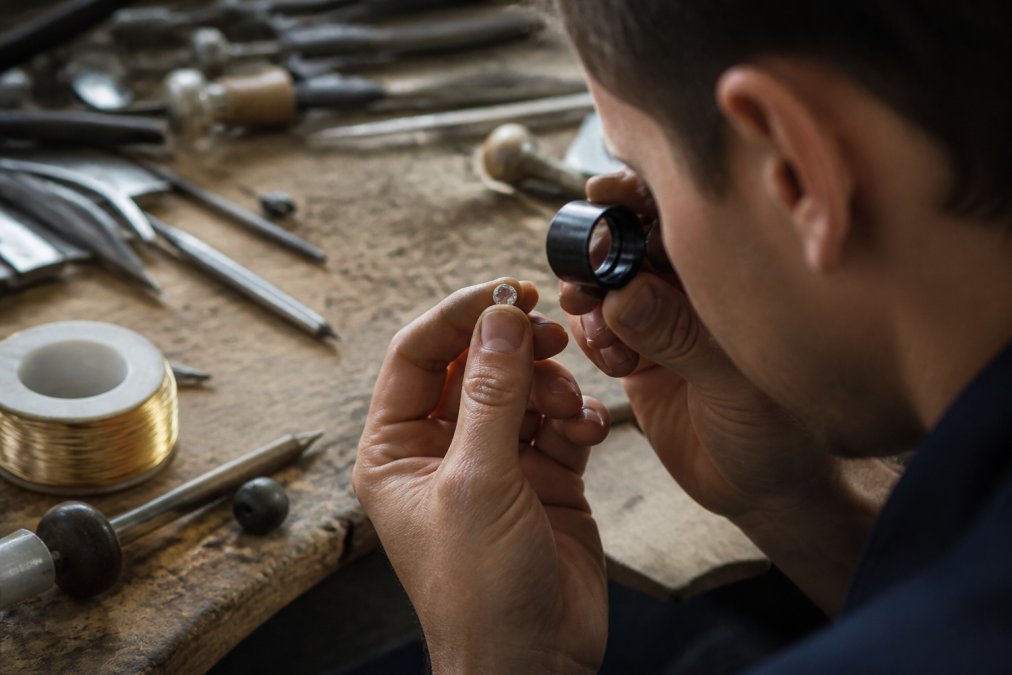
For high net worth buyers, ethical craftsmanship is the verifiable practice of sourcing, refining, and finishing jewelry so that every stage can be traced, audited, and defended. It is not a marketing label. It is a paper trail, a set of third-party standards, and a maker willing to answer hard questions before you spend.
Beyond Greenwashing: The Standards That Actually Matter
The biggest mistake buyers make is accepting a brand's own word. A logo on a website proves nothing.
Three things separate real standards from theater:
- Traceable origin for every metal and stone
- Independent audit, not self-reporting
- Named refineries and cutters, not "trusted partners"
How to Identify Ethically Sourced Gemstones
Identifying ethically sourced gemstones means matching the stone to a documented origin and a named certification body. A receipt is not enough. Ask for the paperwork that travels with the stone from mine to setting.
Certification Bodies and Third-Party Auditing
Look for the Kimberley Process for rough diamond trade, RJC certification for the broader supply chain, and independent gemological reports for the stone itself. The Kimberley Process official framework exists specifically to keep conflict diamonds out of legitimate trade.
| Question to Ask | What a Good Answer Looks Like | Red Flag |
|---|---|---|
| Where was this stone mined? | Named country and region | "We don't disclose that" |
| Is it certified? | Named body plus certificate number | A generic logo |
| Are the metals recycled? | Named refinery and source | "Eco-friendly gold" |
| Can I see the documentation? | Full file shared before purchase | Delays or excuses |
Questions to Ask Before Any High-Value Purchase
Ask these before money changes hands. A serious maison will answer all of them without hesitation.
- Who refined the metal, and can you name the refinery?
- Is the diamond antique or newly mined, and what proof exists?
- Which third-party body audited you, and when?
- Will the certificate transfer to me on resale?
Recycled Precious Metals and Antique Diamonds: Why Provenance Drives Value
Provenance drives value because it removes the two biggest risks a high net worth buyer faces: authenticity risk and liquidity risk. A stone with a documented, conflict-free history is easier to insure, easier to appraise, and easier to sell. Recycled precious metals carry the same logic: the gold already exists, so no new mining is required, and the metal itself is chemically identical to newly mined gold.
Why Antique Diamonds Sit at the Center of This
Antique diamonds were cut decades ago, before modern supply-chain concerns existed, and they carry a history no newly mined stone can match. For a collector, that history is not sentimental decoration. It is a form of pre-existing provenance: the stone has already circulated, already been graded, and already survived the scrutiny of at least one prior owner.
Three practical consequences follow:
- Old-cut grading is different. Antique stones are often graded on older reports, and cut grades reflect the proportions of their era rather than modern ideal-cut standards. A buyer comparing an antique stone to a modern one on cut grade alone is comparing two different scales.
- Certificates may be older. A report issued decades ago is still valid evidence of the stone's identity, but appraisers and insurers may want a current re-examination to confirm the stone has not been altered.
- Setting and metal often predate the stone's current mount. A stone may have been reset one or more times. The provenance file should note this, because resets affect both insurance valuation and resale narrative.
How Provenance Translates Into Resale and Insurance Value
Best Sustainable Jewelry for Everyday Wear That Retains Heirloom Quality
The best sustainable jewelry for everyday wear balances two things most buyers assume are in conflict: durability and ethics. You should not have to choose between a piece you can wear daily and a piece you can pass down.
Investment-Grade Provenance Documentation: What Collectors Should Demand
Investment-grade provenance documentation is the file that proves what a piece is, where it came from, and why it is worth what you paid. Collectors should demand it as standard, the same way they would for any asset.
That file should contain:
- Gemological certificates for every significant stone
- Metal origin and refinement records
- Certification body references and audit dates
- Original purchase documentation for resale
Bespoke Ethical Design: Commissioning Pieces With a Verifiable Story
Bespoke ethical design lets you commission a piece whose entire story you can trace, because you helped write it. You choose the stone, approve the metal source, and receive the documentation alongside the finished work. For a high net worth buyer, the appeal is not customization for its own sake. It is control over provenance at the moment provenance is decided.
What You Actually Control in a Commission
A bespoke commission is a sequence of decisions, and each one is a provenance decision in disguise:
- Stone selection. You can specify antique, estate, or newly mined with a named origin. You can also specify the certification body whose report you will accept, rather than accepting whatever report arrives.
- Metal sourcing. You can require recycled 18k gold or platinum from a named refinery, and ask for the refinement record to be included in the final file.
- Design authorship. You approve the render or sample before the piece is made. This matters for resale, because a documented original design by a named maker is a different asset than an anonymous custom piece.
- Documentation handoff. You decide, in advance, what the provenance file will contain and when it will be delivered, ideally at the same time as the finished piece, not weeks later.
The Trade-Offs Nobody Mentions
Commissioning is not strictly better than buying. It is a different risk profile, and HNW buyers should weigh it honestly.
- Time versus certainty. A commission takes longer than an off-the-shelf purchase. In exchange, you get a piece whose materials you approved rather than inherited.
- Design risk. You are approving a render, not a finished object. A maison with a strong bench minimizes this, but it does not eliminate it.
- Liquidity. A bespoke piece is more personal, which can narrow the resale audience. A documented commission by a recognized maker mitigates this; an undocumented one does not.
- Auction alternative. For certain stones, buying at auction and resetting may offer better provenance than commissioning new. The right answer depends on whether the stone or the design is the primary asset.
How the Process Works in Practice
The sequence is straightforward, but the documentation discipline is what separates a serious commission from a custom order:
- Brief and design discussion. You define the piece, the occasion, and the constraints.
- Material confirmation. You approve the stone and the metal source, with provenance documentation reviewed before commitment.
- Render or sample approval. You sign off on the design before fabrication begins.
- Fabrication. The piece is made to the approved specification.
- Delivery with file. The finished piece arrives with its certificates, metal records, and certification references.
Resale Value and Circular Luxury: Why Ethical Craftsmanship Holds Its Worth
Ethical craftsmanship holds its worth because documentation and material quality are exactly what the secondary market pays for. Circular luxury depends on pieces that can be authenticated, revalued, and resold without losing their story.
Frequently Asked Questions
What defines ethically responsible craftsmanship in high-end jewelry?
Ethically responsible craftsmanship in high-end jewelry means verifiable sourcing at every stage: recycled or fair-trade gold, conflict-free diamonds with documented origin, and third-party auditing of the supply chain. It also includes ethical labor practices in cutting, setting, and finishing. For buyers spending significant sums, the defining test is documentation. A piece with certified antique diamonds and recycled 18k gold carries a provenance trail that mass-produced jewelry cannot match, and that trail is what separates genuine ethical craftsmanship from marketing claims.
How can high-net-worth individuals verify the provenance of luxury gemstones?
Start by requesting the gemstone's certificate of origin and any third-party audit reports the maker holds, such as RJC certification. Reputable jewelers provide documentation for every stone, including antique diamonds, which carry their own history of prior ownership. Ask specifically whether the gemstone origin is traceable to a named mine or supplier, and whether the metal content is certified recycled. If a seller cannot produce paperwork, treat the provenance claim as unverified. Independent appraisal before purchase adds another layer of confirmation for high-value acquisitions.
What is the difference between recycled gold and ethically mined gold?
Recycled gold is refined from existing jewelry, industrial scrap, or electronic waste, so no new mining occurs. Ethically mined gold comes from operations that meet responsible mining standards, including fair wages, safe conditions, and environmental controls, typically verified through third-party auditing. Both reduce harm compared to conventional mining, but recycled gold has a smaller environmental footprint because it skips extraction entirely. For investment-grade pieces, the distinction matters less than the documentation: what counts is that the metal's origin is traceable and certified, whether recycled or responsibly mined.
How does antique diamond sourcing contribute to sustainable luxury?
Antique diamonds were mined decades ago, so buying them creates no new extraction, no additional carbon output from mining, and no fresh demand on conflict-affected regions. They also tend to have hand-cut proportions that modern cuts cannot replicate, which gives them rarity value. Because each antique stone is unique and comes with its own certificate, it supports the circular economy model that defines sustainable luxury. For collectors, antique diamonds combine ethical sourcing with the scarcity that underpins resale and heirloom value over time.