

Table of Contents
- Why Platinum Is the Smart Choice for Daily Wear
- The Shard Ring: Architectural Platinum for Every Day
- The Savoy Ring: Bold Platinum Cocktail Style
- The Pear Wedding Band: Understated Platinum Elegance
- Toi et Moi Engagement Band: Heirloom Platinum Craftsmanship
- Something Blue Engagement Band: Platinum with Gemstone Detail
- What Makes Ethical Platinum Jewelry Different
- How to Choose Ethical Jewelry: A Practical Framework
- Frequently Asked Questions
Last Updated: October 12, 2026
Why Platinum Is the Smart Choice for Daily Wear
Platinum is the most practical precious metal for jewelry you never take off, which is why we build our pieces from it at LÖF. It is dense, naturally white, and resists the everyday knocks that dull softer metals. If you are comparing the 5 best sustainable platinum jewelry brands for daily wear, the metal itself is the first thing to get right in any sustainable platinum jewelry search.
A ring worn daily meets door handles, gym equipment, dish soap and keyboard edges. Platinum handles that contact without the plating wear that affects rhodium-finished white gold, which needs re-plating over time.
Durability and Scratch Resistance
Platinum scratches but does not lose material the way softer metals do. Instead of flaking away, it displaces and forms a patina many wearers prefer to a high polish.
That density also holds stones securely. A platinum setting grips a diamond or sapphire with more resistance to bending, which reduces the risk of a loose stone in a ring you wear constantly.
Hypoallergenic Properties for Sensitive Skin
Platinum is naturally hypoallergenic, so it suits people who react to nickel or other alloy metals. Because it is worn near-pure rather than plated, there is no coating to wear through and expose a reactive layer underneath.
For anyone with a history of skin irritation from jewelry, platinum removes one variable entirely, a real advantage for a piece you wear every day.
The Shard Ring: Architectural Platinum for Every Day
The Shard Ring is our sharpest expression of architectural platinum: a 1.5ct antique pear diamond in a geometric multi-strand band of round diamonds, handcrafted in platinum to read as a statement without fragility.

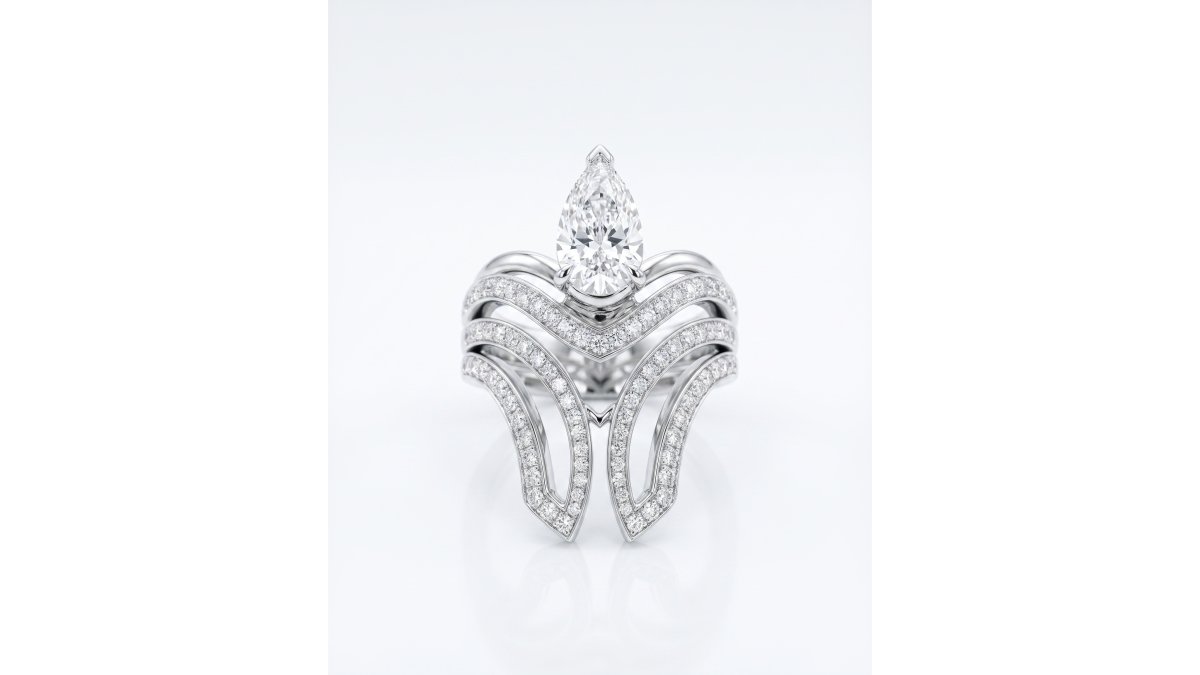
What sets the Shard apart is the multi-strand band, which spreads weight across the finger and keeps a large ring comfortable all day. The antique pear diamond gives it a cut no two pieces share exactly.
The Savoy Ring: Bold Platinum Cocktail Style
The Savoy Ring answers a different brief: a cocktail ring that still works as everyday jewelry. It centers on a large Asscher-cut white sapphire in a gold bezel above a domed band fully pavé-set with graduated round diamonds. Total width is 16mm; available in platinum or yellow gold at $28,000.

The Asscher cut earns it a place in a daily-wear list: its step facets catch light in clean, geometric planes rather than a single flash, reading as considered rather than loud. The pavé band adds sparkle without competing with the center stone.
The Pear Wedding Band: Understated Platinum Elegance
The Pear Wedding Band is the quietest piece in our collection and the easiest to wear every day: a 5mm band set with pear diamonds totaling 3.5 carats, available in platinum or 18k yellow gold at $12,000. It is the most affordable entry into platinum in this list.

That 5mm width is the number that matters: it sits flush against the finger, stacks cleanly with an engagement ring, and does not catch on fabric. For platinum's durability without a high-profile setting, this is the practical pick.
Toi et Moi Engagement Band: Heirloom Platinum Craftsmanship
The Toi et Moi Engagement Band is the most storied piece we make, and the one most likely to be passed down.
The two-stone format carries meaning, but the practical case is the antique diamonds: older cuts were shaped by hand, so each has proportions no modern machine reproduces. That is what makes a Toi et Moi read as an heirloom rather than a trend piece.
We will reach out after purchase to get the exact size needed.
Something Blue Engagement Band: Platinum with Gemstone Detail
The Something Blue Engagement Band pairs a 2 carat antique pear diamond with a halo of blue sapphires and diamond baguettes.
The sapphire halo separates this from a standard diamond ring. Blue sapphires are durable enough for daily wear, so the color detail does not cost practicality, and the baguette diamonds add a linear counterpoint to the pear's curve.
For a buyer who wants a ring with a story built into its stones, this is the one. It reads as an engagement piece without looking like every other engagement piece.
What Makes Ethical Platinum Jewelry Different
Most sustainable jewelry guides treat platinum as an afterthought to gold. That is a mistake: platinum has a sourcing story that is genuinely different, and harder to verify. Understanding it separates a piece that is sustainable in practice from one that is sustainable in marketing.
Why Platinum Sourcing Is a Different Problem Than Gold
Platinum is one of the rarest metals on earth. Global annual production is a small fraction of gold's and is concentrated in a handful of regions, most notably South Africa and Russia, so a single supply chain decision can carry outsized environmental and geopolitical weight.
Extraction is also ore-intensive: platinum group metals occur at very low concentrations, so recovering a single ounce of refined platinum can require moving many tons of rock. That ratio is why recycled platinum is not a nice-to-have, it is the single highest-impact choice a platinum buyer can make.
Recycled vs. Newly Mined Platinum
Recycled platinum comes from existing sources: retired jewelry, industrial scrap, catalytic converters, and manufacturing offcuts. It is refined back to the same purity as newly mined metal, so there is no quality trade-off, only the upstream impact changes: no new ore extracted, no habitat disturbed, no additional mining energy spent.
Responsible jewelers typically source platinum from certified recycled refiners and document the chain of custody.
How Platinum Compares to Gold and White Gold
| Metal | Sourcing reality | Daily-wear behavior | Sustainability lever |
|---|---|---|---|
| Platinum | Very rare, ore-intensive, concentrated supply | Dense, naturally white, develops patina, holds stones firmly | Recycled platinum eliminates new extraction |
| Yellow gold | Widely mined, often alloyed | Softer, scratches and wears visibly | Recycled gold, Fairmined certification |
| White gold | Gold alloyed with white metals | Rhodium-plated; plating wears and needs re-plating | Recycled gold plus plating lifecycle |
White gold is the metal most often compared to platinum, and platinum wins on longevity. White gold is rhodium-finished, and that finish wears through with daily contact, exposing a slightly yellow alloy underneath. Platinum is naturally white all the way through, so there is no coating to fail.
Antique and Reclaimed Stones
Metal is only half the equation. A platinum ring set with newly mined stones carries those stones' mining footprint regardless of how the metal was sourced. Antique diamonds and reclaimed gemstones sidestep that entirely, they were mined decades ago, so buying them adds no new demand for extraction.
That is why antique stones are one of the strongest sustainability answers available: the environmental cost was paid long ago, and buying them extends the useful life of a stone that already exists.
What to Look For in a Platinum Brand
- A named recycled-platinum source or refiner, not just the word 'recycled.'
- Documentation of stone origin for center stones and accent stones alike.
- Third-party certification where it exists, and honesty where it does not.
- Published pricing.
- A stated repair and resizing policy.
How to Choose Ethical Jewelry: A Practical Framework
Choosing a platinum piece for daily wear is different from choosing one you wear occasionally. You are evaluating two things at once: whether the brand's sustainability claims hold up, and whether the piece will still be comfortable and repairable in ten years.
Start With the Metal Question
The first question is not 'is this brand sustainable?' It is 'is this platinum recycled, and can you show me?' A brand that sources recycled platinum usually says so specifically; 'responsibly sourced metals' tells you less than you think.
If the answer is newly mined, look for documented chain-of-custody or third-party verification.
Then Evaluate Daily-Wear Suitability
This is where platinum-specific knowledge matters, and where most buying guides stop short.
- Scratch visibility. Platinum scratches, but it displaces rather than flakes. A high-polish finish shows scratches sooner than a matte or brushed finish. If you are hard on your hands, ask how the piece is finished.
- Comfort and profile. A wide band or a high-set stone changes how a ring feels by hour eight.
- Stone security. Platinum's density grips stones firmly, but a high setting is still a high setting. For daily wear, a lower-profile setting reduces snagging and impact risk.
- Tarnish resistance. Platinum does not tarnish, which is a genuine advantage over sterling silver and a maintenance advantage over plated white gold.
- Weight. Platinum is denser than gold, so a platinum ring feels heavier on the finger. Some wearers love this; some do not.
Ask About Care, Repair, and Resizing Up Front
A piece you wear every day will eventually need attention. The brands worth buying from will tell you how they handle it before you ask.
- Cleaning. Most platinum can be cleaned with warm water, mild soap, and a soft brush.
- Polishing. Platinum can be re-polished to restore a high shine, or left to develop its patina.
- Resizing. Platinum is harder to resize than gold because of its density and higher melting point.
- Repair.
Compare Like-for-Like on Price and Warranty
Platinum pricing varies widely by design, stone content, and brand positioning. Rather than comparing headline prices across brands, compare within a category: a plain platinum band, a band with accent stones, and an engagement ring with a center stone.
A Short Checklist Before You Buy
- Is the platinum recycled, and can the brand name the source or refiner?
- Are the stones antique, reclaimed, or traceably sourced?
- Is there third-party certification, or at least documented chain of custody?
- What is the band width and head height?
- What is the finish, and how will it age with daily wear?
- Can the piece be resized?
- What does the warranty cover?
- Is the price published?
The strongest sustainability claims are the ones a brand can document, and the strongest daily-wear pieces are the ones it can service for decades.
Frequently Asked Questions
Is platinum a good metal for everyday jewelry?
Platinum is one of the best metals for daily wear because it is dense, highly durable, and naturally hypoallergenic. Unlike softer metals, platinum resists scratches and maintains its shape over decades. It develops a patina over time rather than wearing away, which makes it ideal for rings worn continuously. For those seeking sustainable platinum jewelry, platinum's longevity also means fewer replacements and less long-term environmental impact.
How can I tell whether platinum jewelry is sustainably sourced?
Look for brands that provide clear documentation on their supply chain. Ask whether the platinum is recycled or newly mined, and request details on origin. Brands that use recycled platinum jewelry practices often publish this information. If a brand cannot answer basic sourcing questions, that is a red flag for how to choose ethical jewelry.
Is recycled platinum more sustainable than newly mined platinum?
Recycled platinum avoids the environmental disruption of new mining, which involves significant energy use and land disturbance. Using recycled platinum jewelry reduces demand for newly extracted metal and keeps existing platinum in circulation. While both recycled and newly mined platinum can be sourced responsibly, recycled platinum generally has a lower carbon footprint. For conscious buyers, it is one of the clearest ways to reduce a piece's environmental impact.
What should I look for in sustainable platinum jewelry for daily wear?
Prioritize pieces made from recycled or traceable platinum, set with conflict-free or antique gemstones. Check for third-party certifications and transparent sourcing policies. Consider the design's practicality: smooth edges, secure settings, and comfortable band widths matter for daily wear. Also review the brand's warranty and repair policy.
Platinum is a long-term purchase, and the brands worth your money are the ones that can prove where their metal and stones came from. That is the standard we hold ourselves to at LÖF: platinum and 18k gold, ethically sourced gemstones, antique diamonds, and recycled and repurposed gold in every piece. If you want jewelry built to be worn daily and passed down, browse the LÖF collection and choose the piece that fits your hand.