

Last Updated: November 2, 2026
Quick Summary
Statement earrings are a good investment only when the metal content is high, the stones are certified, and the design outlives trends. Treat them as a store of value rather than a financial instrument, since retail markup and fashion risk work against resale profits.
- Fine jewelry holds value only when it meets all four criteria: metal content, gemstone certification, provenance and craft.
- 18k gold is 75% gold, while gold tone, gold filled and vermeil are not 18k gold.
- Check the hallmark first, since it is the fastest way to verify metal purity.
- Cost-per-wear divides the price by the number of times you expect to wear the piece.
- Skip statement earrings if you want a guaranteed financial return, because no earrings deliver that.
Table of Contents
- Are Statement Earrings a Good Investment? The Honest Answer
- What 'Investment' Actually Means for Jewelry
- Why Jewelry Is a Bad Investment (and When It Isn't)
- Fine Jewelry That Holds Value: The Four Criteria That Matter
- Statement Earrings as Investment Pieces: Why 18k Gold Changes the Math
- The Best Jewelry Investment Pieces Are the Ones You Actually Wear
- Resale, Insurance and Appraisal: What Statement Earrings Really Cost You
- Choosing a Pair That Earns Its Place in Your Collection
- Frequently Asked Questions
Are Statement Earrings a Good Investment? The Honest Answer
Statement earrings are a good investment only when you separate two very different questions: will they hold financial value, and will they earn their place in your life? At LÖF, we make fine jewelry from 18k gold, platinum, and antique diamonds, so we have a commercial interest in this answer. We will give you the honest version anyway.
The global jewelry market was valued at $381.5 billion in 2025, according to Grand View Research's jewelry market report, and is projected to reach $578.5 billion by 2033 at a 5.5% CAGR. That is a market-growth forecast, not a promise about your earrings. Below, we break down which pieces actually retain value, which do not, and how to tell the difference before you spend.
What 'Investment' Actually Means for Jewelry
Investment-grade jewelry is a piece whose materials, gemstones, and craftsmanship are valuable enough, and documented well enough, to be resold or insured at a meaningful fraction of its purchase price. Most jewelry sold as "an investment" never clears that bar.
Two forces work against you. Retail markup means you buy at a premium and sell at a discount. Fashion risk means a trend piece can lose desirability long before it loses gold.
For a deeper look at where high jewelry sits on this spectrum, read our guide on whether high jewelry is worth the investment for collectors.
Why Jewelry Is a Bad Investment (and When It Isn't)
Jewelry is a bad investment when you treat it as a financial instrument with a return. It is a reasonable store of value when the metal content is high, the stones are certified, and the design outlives the trend cycle.
Here is the distinction that matters:
- Speculation: buying a trend piece hoping to resell at a profit. This rarely works.
- Preservation: buying high-karat gold or platinum with certified stones, where the floor value is set by the material itself.
- Pleasure with residual value: wearing a piece for decades and passing it on. The return is measured in wears, not percentages.
Treat resale claims skeptically across the board.
Fine Jewelry That Holds Value: The Four Criteria That Matter
Fine jewelry that holds value satisfies four criteria: high precious metal content, certified gemstones, documented provenance, and genuine craftsmanship. Miss any one and the resale floor drops.
Our framework, in order of weight:
- Metal content. 18k gold and platinum carry real intrinsic value. Plated brass does not.
- Gemstone certification. A certified diamond or gemstone can be authenticated and appraised. An uncertified one is a guess.
- Provenance. Documented origin and history support both authenticity and resale.
- Craft. Hand assembly and secure settings survive decades of wear. Glued or hollow settings do not.
For the full breakdown of how these criteria interact, see our sustainable luxury jewelry investment guide.
Metal Content, Gemstone Certification, Provenance and Craft
Check the hallmarks first. Hallmarking is the stamped record of metal purity, and it is the single fastest way to verify what you are buying. Our guide on how to read jewelry hallmarks and stamps walks through the marks to look for.
Diamond clarity and gemstone certification come next. Provenance is the paper that ties the stone to its certificate.
Fine jewelry holds value only when it meets all four criteria, weighted in this order.
| Criterion | What to look for | Why it matters |
|---|---|---|
| Metal content | 18k gold and platinum; not plated brass | Carries real intrinsic value |
| Gemstone certification | Certified diamond or gemstone | Can be authenticated and appraised |
| Provenance | Documented origin and history | Supports authenticity and resale |
| Craft | Hand assembly and secure settings | Survives decades of wear |
Statement Earrings as Investment Pieces: Why 18k Gold Changes the Math
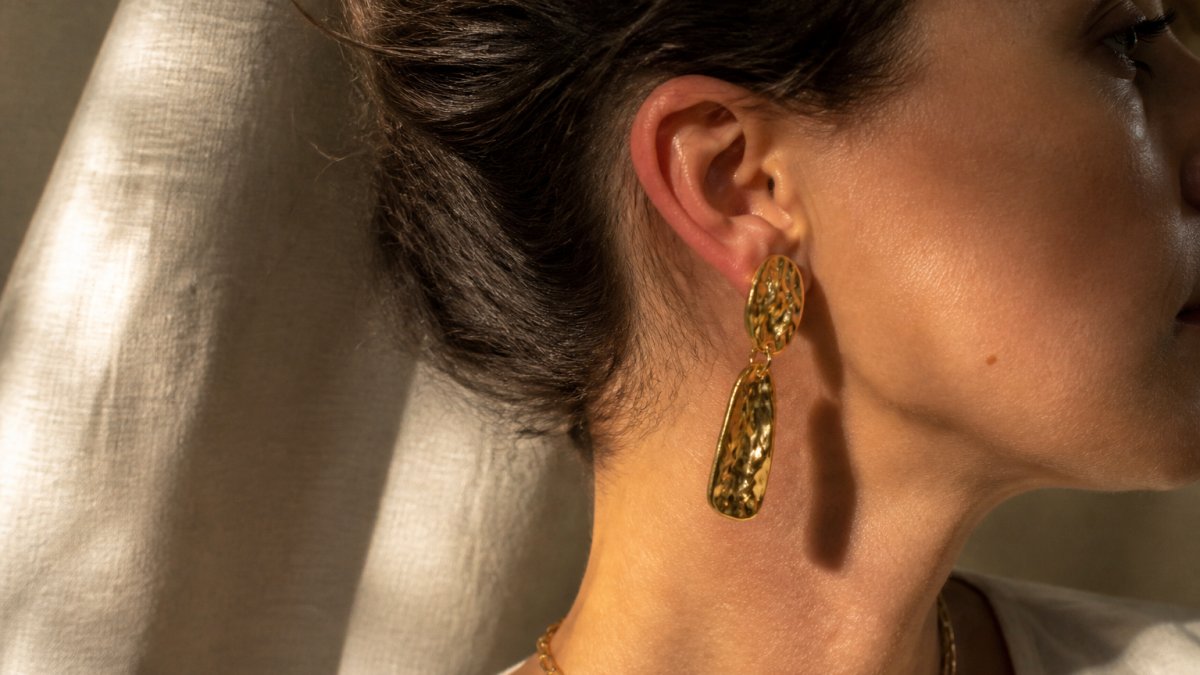
Karat tells you the proportion of pure gold in the alloy: 18k is 75% gold, and plated or vermeil pieces carry a thin layer of gold over a base metal.
At LÖF, pieces like The Édith Hoops are made in 18k yellow gold with an 8mm hoop width and 30mm diameter. The Baker Hoops are 18k gold with black enamel.

'Gold tone,' 'gold filled,' and 'vermeil' are not 18k gold, and a hallmark is a quick way to confirm what you are buying.
The Best Jewelry Investment Pieces Are the Ones You Actually Wear
The best jewelry investment pieces are the ones you reach for weekly, not the ones that sit in a box. A piece worn twice a year has a terrible cost-per-wear no matter how well it is made.
Ask three questions before buying:
- Does this work with at least five outfits I already own?
- Can I wear it for a full day without discomfort?
- Would I still want it in ten years?
Resale, Insurance and Appraisal: What Statement Earrings Really Cost You
Resale, insurance, and appraisal are the costs most buyers forget, and they decide whether a piece behaves like an asset or an expense. Budget for them before you buy. This is the part of the market most buying guides skip, so treat it as the operating manual for the money you have already spent.
Where pairs actually change hands: auction houses for signed or antique pieces, specialist jewelry resellers and consignment platforms for contemporary fine jewelry, and peer-to-peer marketplaces for everything else. Each channel takes a different cut and reaches a different buyer. A common pattern is that consignment nets more than a straight buyout but takes longer, while auction is best reserved for pieces with a name or a date attached. Watch out: a verbal 'we can resell this for you' from a retailer is not a liquidity guarantee, and no resale estimate should be treated as verified data unless it comes from a completed sale.
Authentication and certification support a piece's documentation. Keep the original certificate and receipt together so the stone's paperwork can be verified later.
Insurance for fine jewelry is typically handled through a separate policy. Keep the certificate and any appraisal on file, and confirm with your insurer what coverage applies.
For practical guidance on valuing and insuring your pieces, read how to value and insure custom made jewelry.
Weight, Wearability and the Cost-Per-Wear Calculation
Cost-per-wear is a useful way to think about value. Divide the price by the number of times you expect to wear the piece.
Before committing, check the gram weight and try the pair on for an extended period.
Choosing a Pair That Earns Its Place in Your Collection
Choose a pair that satisfies all four value criteria and that you will genuinely wear. That combination is rare, and it is the only version of "investment" that survives contact with reality.
Look for 18k gold or platinum, certified stones, documented provenance, and a silhouette that will still look deliberate in a decade. The Tallulah Earrings are set with natural baguette-cut diamonds in a channel setting.
Best for: collectors who want a documented, high-karat statement piece they will wear often. Skip if: you want a guaranteed financial return. No earrings deliver that.
Frequently Asked Questions
Are statement earrings a good investment?
They can be, but not in the way stocks are. Statement earrings in 18k gold or platinum hold a meaningful share of their purchase price through metal content and resale demand, while gem-set pieces with certification hold more. Treat the financial upside as modest and the wear value as the real return.
Do gold statement earrings hold their value?
Solid 18k gold is a precious metal, unlike plated or hollow alternatives. Hallmarking and documented provenance help at resale. Unbranded pieces tend to hold less, according to anecdotal forum reports rather than verified resale data. A pair like The Édith Hoops, made in solid 18k yellow gold, keeps its material worth even if fashion tastes shift.
Why is jewelry considered a bad investment?
Retail markups, design trends and the gap between purchase price and resale price all work against you. Jewelry also carries no income and is expensive to insure and store. It becomes a sounder store of value when you buy solid precious metals, certified gemstones and designs with longevity, and when you plan to wear the piece for decades rather than flip it.
Which materials make statement earrings more valuable?
Solid 18k gold and platinum are precious metals, and the catalog's pieces use antique diamonds and ethically sourced gemstones.
The honest challenge is this: most jewelry marketed as an investment will not appreciate, and most pieces that would hold value get worn too rarely to justify the spend. LÖF builds for the overlap, using 18k gold and platinum, ethically sourced gemstones, recycled and repurposed gold, and antique diamonds, so the piece has a material floor and a design that lasts. Get started with LÖF and choose a pair that earns its place.
