

Table of Contents
- Is High Jewelry Worth the Investment for Collectors? The Honest Answer
- Fine Jewelry vs. High Jewelry: What Actually Separates Them
- High Jewelry Resale Value: What the Market Really Pays
- Best Gemstones for Investment: What Collectors Should Prioritize
- Jewelry Investment Risks: What Can Go Wrong
- A Collector's Due-Diligence Checklist for High Jewelry
- Conclusion: Is High Jewelry Worth It for You?
- Frequently Asked Questions
Last Updated: October 5, 2026
Is High Jewelry Worth the Investment for Collectors? The Honest Answer
The honest answer is that high jewelry can be worth it for collectors, but rarely in the way buyers expect. It works as a store of value and a source of personal enjoyment, not as a liquid financial asset.
Most guides get one thing wrong: they treat the category as a single market. A signed vintage piece with documented provenance behaves nothing like a modern boutique purchase, and confusing the two is how collectors lose money.
Fine Jewelry vs. High Jewelry: What Actually Separates Them
Fine jewelry and high jewelry are separated by materials, craftsmanship and scarcity, not price alone. Fine jewelry uses precious metals and genuine stones in wearable, repeatable designs.
That gap determines how a piece behaves on the secondary market. A fine jewelry piece resells as a known commodity; a high jewelry piece resells as a collectible, so its value depends on who wants it and how badly.
The Material and Craftsmanship Divide
The materials overlap, but the execution doesn't. Both use 18k gold, platinum and natural diamonds; what changes is stone quality and the labour behind the setting.
In high jewelry, stones are selected individually for colour, clarity and cut, and matched across a piece. At LÖF, pieces like The Tallulah Drama Cuff take multiple weeks at the bench to hand set and assemble.

Where Collectors Draw the Line
Collectors draw the line at three things: uniqueness, provenance and craftsmanship hours. If a piece exists in hundreds of identical units, it's fine jewelry regardless of price. If it's a one-off with documented stones and a named maker, it's high jewelry.
- Uniqueness: one-off or strictly limited production
- Provenance: documented origin of stones and maker
- Craftsmanship: hand assembly, not cast-and-finish
High Jewelry Resale Value: What the Market Really Pays
High jewelry resale value depends far more on the secondary market's appetite than on what you paid at retail. Auction houses and specialist dealers set the real benchmark, pricing against current demand, not original invoices.
A piece bought new at full retail rarely returns its purchase price, because retail includes costs that don't transfer to a second buyer. To judge whether high jewelry is worth it for collectors, look at net returns after every cost, not the hammer price.
Retail Markup and the Resale Gap
Retail pricing bundles design, marketing, showroom overhead and brand margin, none of which survives the sale. On resale, the buyer pays for materials and desirability, not the retail experience.
The result is a gap between what you pay and what you can recover, sized by maker, stone quality and documentation.
A common pattern: unsigned modern pieces bought at full retail recover a minority of the purchase price, while signed vintage pieces with provenance can occasionally exceed original retail at auction.
Total Cost of Ownership: What You Actually Keep
Resale price is only one number. The net return a collector keeps is resale proceeds minus every cost of buying, holding and selling. Those costs are easy to underestimate because they arrive at different times.
- Retail markup: the difference between what you pay and what a dealer would pay. The largest single cost, paid on day one.
- Auction commissions: sellers pay a commission plus insurance and shipping, and buyers pay a premium that reduces what a seller can realistically achieve. Rates vary by house and lot value.
- Insurance: scheduled coverage for high-value jewelry usually costs a small percentage of appraised value yearly, compounding over a decade.
Added up, a piece that appreciates modestly in material terms can still produce a negative net return if bought at full retail and sold within a few years.
Where Returns Actually Come From
Returns come from three places, and only one is reliable.
- Material appreciation: gold, platinum and diamond prices move over time, and a piece carries that value with it. Steady but modest, the floor, not the upside.
- Collector demand: rare, signed or historically significant pieces can appreciate when demand outpaces supply. This drives headline auction results and is the least predictable, depending on maker, era, condition and active buyers.
- Personal use value: decades of enjoyment for the wearer, a real return that never appears on a statement, and for many collectors the one that justifies the purchase.
The first is a slow tailwind, the second a lottery ticket with better odds for documented pieces, and the third the one you can count on.
A Realistic Net-Return Example
Consider a collector who buys a signed high jewelry piece at retail, insures it, holds it a decade, and sells at auction. The gross result might look impressive, but the net return depends on the seller's commission, the buyer's premium baked into the price, ten years of insurance, storage and at least one appraisal update.
The honest frame: high jewelry is not a liquid financial asset. It is a collectible with a financial tailwind, and the tailwind only helps if you hold long enough and avoid overpaying at retail.
Best Gemstones for Investment: What Collectors Should Prioritize
The best gemstones for investment combine durability, rarity and steady collector demand. Diamonds, sapphires, rubies and emeralds lead the category, but quality within each matters more than the label.
The deciding factors are the ones that survive resale: carat weight, cut, clarity, colour and certification. A smaller stone with exceptional colour and a clean certificate will outperform a larger, poorly graded one almost every time.
Evidence-Based Returns by Jewelry Category
Most guides make broad claims about appreciation without showing what the market actually pays. The patterns below, drawn from publicly reported auction outcomes and dealer experience, are directional rather than guaranteed.
- Signed high jewelry: The strongest record of exceeding original retail at auction, but concentrated in a small number of makers and eras. Real but narrow upside.
- Unsigned high jewelry: Often recovers material value plus a modest craftsmanship premium, rarely exceeding retail. The buyer pool is smaller without a name to anchor demand.
- Diamonds: The most liquid category. Well-cut, certified stones trade transparently, but resale is typically below retail because of the markup. A store of value, not a high-return asset.
The categories with the highest headline auction results are also the least liquid, while the most reliable resale categories, diamonds and gold, offer the least upside. Collectors who understand this trade-off make better decisions than those who chase headlines.
What Actually Drives Performance Within a Category
Within any category, the same factors separate pieces that hold value from pieces that don't:
- Certification: A report from a recognised laboratory is the single most useful document a collector can hold, confirming the stone is what the seller says and giving buyers and sellers a common language.
- Origin documentation: For coloured gemstones, origin can matter as much as quality. A documented ruby from a celebrated source outperforms an equivalent stone without it.
- Condition: Original, unaltered pieces hold value better than resized or repaired ones. Cracks, worn settings and replaced stones reduce value sharply.
Antique diamonds deserve a mention. Pieces such as Tallulah Max Earrings, set with roughly 60 hand-assembled antique baguette diamonds and a detachable antique pear, show how character and craftsmanship combine into collectible value.

Gemological Institute of America on diamond grading and certification sets the standard most dealers and auction houses work from, so a certificate from a recognised laboratory is the single most useful document a collector can hold.
No gemstone category is a reliable investment on its own. The pieces that perform combine certification, condition, provenance and maker in a way a future buyer will recognise and pay for.
Jewelry Investment Risks: What Can Go Wrong
Jewelry investment risks centre on liquidity, condition and market timing, and they're easy to underestimate. A piece can be genuinely valuable and still impossible to sell quickly at the price you want.
The biggest mistake new collectors make is assuming a high appraisal equals a fast sale. Appraisals reflect replacement cost, a different number from what a dealer will pay.
Other risks worth naming:
- Condition damage: cracks, worn settings or resized bands reduce value sharply
- Lost documentation: missing certificates and provenance cut the buyer pool
- Fashion shifts: a style that's in demand today may not be in five years
Liquidity and Realistic Exit Routes
Liquidity in high jewelry is limited, so plan your exit before you buy. Four routes exist, each trading speed against price.
| Exit Route | Typical Speed | Price Realised | Best For |
|---|---|---|---|
| Auction house | 2-6 months | Variable, can exceed retail for rare pieces | Signed, documented, high-value pieces |
| Specialist dealer | Days to weeks | Below retail, above scrap | Straightforward, quick sales |
| Private sale | Weeks to months | Negotiable, often strongest | Well-connected collectors |
| Buyback or trade-in | Immediate | Lowest, but simple | Upgrading within one maison |
Auction works best for pieces with provenance and a name; dealers move faster but pay less; private sales can beat both if you know the right buyer; buyback is easiest and least rewarding.
Federal Trade Commission guidance on jewelry advertising and disclosure is worth reading before any sale, because it sets out what sellers must disclose about treatments, origin and grading.
A Collector's Due-Diligence Checklist for High Jewelry
Due diligence separates a collector from a shopper. Before committing to any significant piece, work through the same questions a dealer would ask, and don't accept vague answers.
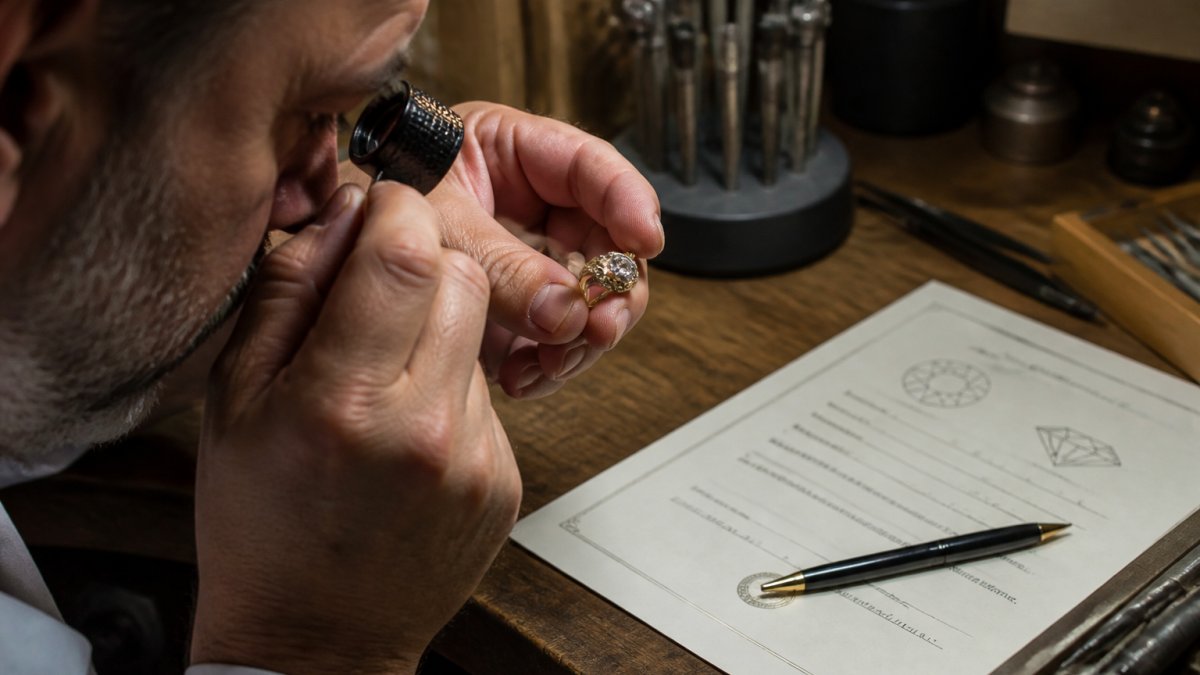
Start with the stones: ask for the certificate, check the grading laboratory, and confirm the stated carat weight, colour and clarity match the document.
- Certificate from a recognised gemological laboratory, matching the stone
- Confirmed carat weight, cut, colour and clarity
- Metal purity stated in writing, such as 18k gold or platinum
A practical example: The Rockwell pairs an octagon-cut natural 2ct emerald with a further 1ct of pavé emeralds and 0.75ct of baguette natural diamonds.
Conclusion: Is High Jewelry Worth It for You?
High jewelry asks you to hold two ideas at once: it's a genuine store of value and a genuinely illiquid one. Collectors who do well treat it as a long-term passion with a financial tailwind, not a portfolio position they can cash out on demand.
At LÖF, our pieces are made from 18k gold and platinum, set with ethically sourced gemstones and antique diamonds, and finished by hand so they hold their character for decades. If you're weighing a first serious acquisition, start with a piece you'll wear, like The Zelda Bangle or The Tallulah Choker, and let the craftsmanship do the rest.

Choose options with LÖF and invest in jewelry designed to be worn, valued and passed down.
Frequently Asked Questions
What type of jewelry increases in value?
Jewelry with documented rarity, signed provenance, and high-grade materials tends to appreciate. Pieces featuring antique diamonds, certified colored gemstones, or work by recognized houses often see stronger long-term demand. Condition matters too: original settings and unaltered stones hold value better than modified pieces. For collectors, the safest appreciation path is buying high jewelry with verifiable certification and a clear maker's mark, then holding for a decade or longer.
Does high jewelry hold its value over time?
Some high jewelry holds value, but not all. Pieces with rare gemstones, important provenance, or signed craftsmanship can retain or grow value. Mass-produced luxury items often drop 30-50% after retail purchase because of markup. The key is what you buy: antique diamonds, certified colored gemstones, and pieces from established maisons with documented history tend to hold value better than trend-driven designs. Condition and original certification also affect long-term value retention.
Which gemstones are most sought after by jewelry collectors?
Collectors consistently seek certified diamonds (especially antique cuts), untreated rubies and sapphires from Kashmir, Burma, or Sri Lanka, and Colombian emeralds with strong color saturation. Paraiba tourmaline and fine jadeite also command strong demand. Rarity, origin, and lack of treatment drive premium pricing. For investment purposes, gemstones with laboratory certification from GIA, SSEF, or Gübelin carry more trust and resale potential than uncertified stones, even when the visual quality appears similar.
How can collectors assess the resale value of high jewelry?
Start with certification from a recognized gem laboratory, then review recent auction results for comparable pieces from the same maker or gem type. Condition reports matter: scratches, resizing, or replaced stones reduce value. Check whether the piece is signed and whether original documentation exists. For a realistic number, get an independent appraisal and ask auction specialists what they would estimate. Expect resale to land below retail, often 40-70% of original price depending on demand and rarity.
Is expensive jewelry worth it compared to other assets?
Expensive jewelry rarely outperforms stocks or bonds on pure return, but it offers something those assets cannot: personal enjoyment and wearability. High jewelry can serve as a store of value and a safe-haven asset in uncertain markets, particularly rare gemstones and signed pieces. The risk-adjusted case is strongest when the buyer values wearing the piece and accepts lower liquidity. Treat jewelry as a passion asset first, an investment second, and diversify accordingly.