

Table of Contents
- Why Is Ethical Jewelry More Expensive
- The True Cost of Supply Chain Transparency
- Recycled Gold vs Mined Gold Cost: Understanding the Price Difference
- Fair Wages, Safe Working Conditions, and Labor Costs
- How to Identify Sustainable Jewelry Brands and Verify Authenticity
- The Benefits of Ethical Jewelry: Value Beyond the Price Tag
- Spotting Greenwashing: What Ethical Claims Actually Mean
- Longevity and Value Retention in Ethical Jewelry
Last Updated: August 21, 2026
Why Is Ethical Jewelry More Expensive
The price difference between ethical jewelry and mass-market alternatives reflects genuine structural costs throughout the supply chain. A simple gold band might cost twice as much when it carries certifications for fair labor and sustainable sourcing. Understanding why ethical jewelry costs more requires looking past the finished piece to the systems, people, and accountability measures that make it possible.
At LÖF, we've built our entire practice around transparency in these costs. Every piece of 18k gold and every ethically sourced gemstone carries a documented history. The real question isn't whether ethical jewelry costs more, it does. The question is whether you understand what you're actually paying for.
Most consumers assume luxury pricing reflects artistry alone. In ethical jewelry, the premium reflects something different: the cost of doing business the right way. Fair wages, environmental compliance, third-party audits, recycled material sourcing, and supply chain transparency all add layers of expense that fast-fashion jewelry simply doesn't bear. When you buy ethical jewelry, you're funding systems designed to protect people and the planet.
The True Cost of Supply Chain Transparency
Traceability is expensive. It requires documentation at every step: from the mine or recycling facility through refinement, design, and final sale. Each handoff needs verification.
Consider a gold necklace from a conventional producer. It might travel through five intermediaries before reaching the retailer. No one asks where it came from or verifies labor conditions. Ethical brands like LÖF operate differently. We source recycled gold and platinum from verified suppliers who can document their material's origin. This documentation requires systems, staff, and third-party verification, measurable overhead that conventional producers avoid.
The cost compounds at every stage. Ethical suppliers charge more because they maintain compliance infrastructure. Refineries that process recycled materials and track provenance cost more than those that don't ask questions. Designers and manufacturers who work exclusively with verified sources can't use the volume discounts available to producers willing to source anywhere. Retailers who guarantee authenticity must invest in systems to back up those claims.
You can't claim fair wages without auditing labor practices. You can't guarantee conflict-free sourcing without tracing material origins. You can't offer sustainability without measuring environmental impact. Transparency costs money, but it's the only honest way to operate.
Recycled Gold vs Mined Gold Cost: Understanding the Price Difference
The assumption that recycled gold costs less than newly mined gold is incorrect. In reality, recycled precious metals often cost more than virgin material.
Newly mined gold involves extracting ore from the earth, processing it, and refining it into usable metal. It's capital-intensive but straightforward. Mining companies operate at massive scale, creating economies that keep per-unit costs relatively low. The environmental and human costs aren't factored into the market price.
Recycled gold requires a different process. It starts with collection and sourcing used jewelry and industrial scrap. This material is often mixed and contaminated, requiring sorting, cleaning, and refining to pure gold. The refining process for recycled material is more complex than virgin material because you're working with unknown alloys and impurities. Recycling facilities employ skilled workers who must identify materials, test purity, and manage the refining process. These are specialized, well-paid positions.
Why choose recycled gold if it costs more? Because the environmental footprint is dramatically lower. Mining one ounce of gold requires moving roughly 30 tons of earth and uses significant water and chemical resources (usgs.gov). Recycled gold eliminates all of that. For brands like LÖF that prioritize environmental responsibility, recycled precious metals represent the preferred choice, even at a price premium.
| Material Source | Processing Complexity | Environmental Impact | Labor Intensity |
|---|---|---|---|
| Newly mined gold | Lower | Significant mining footprint | Standard industrial |
| Recycled gold | Higher | Minimal environmental cost | Specialized skilled labor |
| Recycled platinum | Highest | Lowest environmental cost | Highly specialized |
Fair Wages, Safe Working Conditions, and Labor Costs
The artisans who craft jewelry deserve compensation that reflects their skill. A jeweler trained in traditional metalworking and stone setting spends years developing expertise. In ethical jewelry production, they receive fair compensation. In conventional production, they often don't.

Fair wages for jewelry artisans are substantially higher than the industry minimum in many producing countries (ilo.org). A craftsperson in an ethical workshop might earn three to five times what they'd make in a conventional factory. This is recognition that skilled labor should be paid accordingly.
Safe working conditions add expense too. Proper ventilation systems for soldering and chemical work, ergonomic workspaces, protective equipment, and regular safety training all require investment. Health insurance, retirement contributions, and paid leave are standard in ethical jewelry workshops. These benefits add 15-25% to labor costs, but they reflect what workers actually deserve (ilo.org).
A small ethical jewelry maker can't negotiate volume discounts on safety equipment. A massive conventional producer can. That efficiency advantage translates to lower costs for conventional jewelry, costs subsidized by workers earning poverty wages and operating in unsafe conditions.
How to Identify Sustainable Jewelry Brands and Verify Authenticity
Greenwashing is rampant in jewelry marketing. Learning to verify claims separates genuine commitment from marketing.
Start with documentation. Ask brands directly: Where does your gold come from? Who refined it? What certifications do your gemstones carry? Real ethical brands can answer these questions with specifics. They'll provide supplier names, certification details, and traceability records. Vague answers are a red flag.
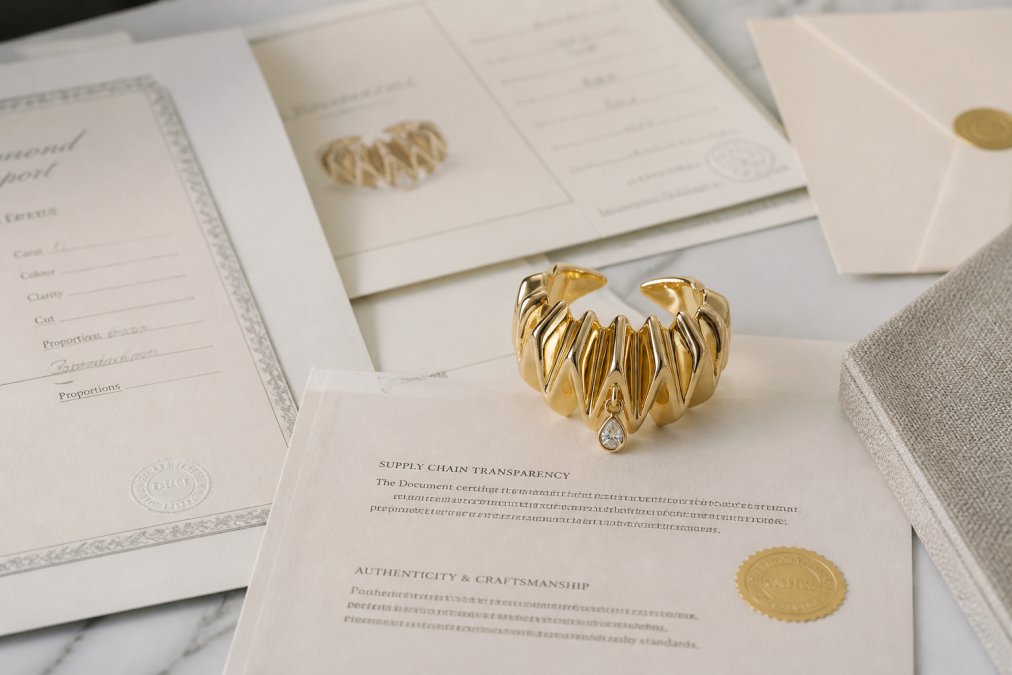
Third-party certification matters. Organizations like Fairmined, Responsible Jewellery Council, and similar bodies audit supply chains and verify claims. A brand that holds these certifications has submitted to independent scrutiny and passed audits. This certification costs money, which is why genuine ethical brands pursue it.
Look for recycled material certifications specifically. Recycled gold and platinum can be tracked through the Responsible Recycled Precious Metals Initiative. These certifications prove that material actually came from recycled sources, not virgin mining misrepresented as recycled.
Ask about gemstone sourcing. Where do diamonds come from? Lab-grown diamonds are inherently more sustainable than mined diamonds because they eliminate mining entirely. Natural diamonds should carry conflict-free certification. Brands like LÖF use ethically sourced gemstones and antique diamonds, which have zero mining footprint since they're already in circulation.
Transparency in pricing is another signal. Ethical brands often break down costs: materials, labor, overhead, profit. This breakdown shows they're not hiding anything and demonstrates why prices are higher.
Check for supply chain audits. Ethical brands commission independent audits of their suppliers and publish results. These audits verify labor practices, environmental compliance, and material sourcing.
The Benefits of Ethical Jewelry: Value Beyond the Price Tag
The premium you pay for ethical jewelry is an investment in something that lasts.
Ethical jewelry is made to last generations. The craftsmanship is superior because artisans are paid fairly and work in safe conditions where quality matters. Recycled gold and platinum are as durable as virgin material, but they're sourced from suppliers who care about quality because their reputation depends on it.
This durability translates to real value over time. A mass-market gold ring might need replacement within five years. An ethical piece from LÖF, crafted from 18k gold or platinum with careful attention to every detail, can be worn daily for decades. When you calculate cost per wear over a lifetime, ethical jewelry often costs less than cheap alternatives replaced repeatedly.
Ethical jewelry is designed to be passed down. The bold, architectural pieces that define contemporary ethical jewelry become more valuable over time as they accumulate history and meaning. They're not trend-dependent.
There's also the intangible value of knowing your jewelry's story. You can trace where the gold came from. You know the gemstones were ethically sourced. You understand that the person who crafted your piece was paid fairly and worked in safe conditions. That knowledge has real value.
Resale value reflects this. Ethical jewelry from established brands holds value better than mass-market alternatives. A piece from LÖF crafted from recycled 18k gold with ethically sourced gemstones retains value because the provenance is documented and the craftsmanship is evident.
Spotting Greenwashing: What Ethical Claims Actually Mean
Not every brand using sustainability language is genuinely ethical. Learning to distinguish real commitment from marketing is essential.
Vague claims are the first warning sign. Words like "eco-conscious," "sustainable," or "responsible" without specifics are meaningless. Real ethical brands use precise language: "recycled gold," "fair-trade certified," "conflict-free," "third-party audited."
Look for the difference between claims and proof. A brand that says it's "committed to sustainability" is making a statement. A brand that publishes a sustainability report with specific metrics, third-party verification, and detailed sourcing information is providing evidence.
Greenwashing often relies on partial truths. A brand might source 10% recycled gold and market itself as a "recycled gold jewelry brand." Ethical brands are transparent about percentages and where they're still working to improve.
Price is a signal too. If an ethical brand's prices are comparable to mass-market jewelry, something's wrong. Real ethical production is expensive. Brands that claim ethics while pricing at conventional levels are either cutting corners or misleading you.
Check for certifications from recognized organizations. Fairmined, Responsible Jewellery Council, and similar bodies have rigorous standards and audit suppliers. A brand with these certifications has proven its ethics through independent verification.
Real ethical jewelry addresses both people and planet. If sustainability messaging focuses only on environmental impact and ignores labor practices, that's incomplete.
Longevity and Value Retention in Ethical Jewelry
The most overlooked aspect of ethical jewelry pricing is longevity. A piece designed and crafted to last generations is fundamentally different from something designed to be replaced.
Ethical jewelry is built for daily wear. The materials are premium, 18k gold, platinum, ethically sourced gemstones. The construction reflects this quality. Joints are reinforced. Settings are secure. Proportions are considered for long-term durability. These pieces age beautifully rather than deteriorate.
This contrasts with mass-market jewelry designed for disposability. Thin gold plating over base metal. Settings that loosen over time. Designs that follow trends and become dated. These pieces are meant to be worn briefly and replaced.
When you calculate true cost of ownership, ethical jewelry is often cheaper. A piece that costs more upfront but lasts a lifetime costs less per year than cheaper pieces replaced every few years. A piece you wear daily for 20 years costs pennies per wear.
Value retention is another factor. Ethical jewelry from established brands holds resale value because the market recognizes quality and ethics. A piece from LÖF, crafted from recycled 18k gold with documented provenance and skilled artisanship, retains value. You can sell it years later and recover a significant portion of your investment.
A piece worn daily for decades accumulates meaning. It becomes part of your personal history. It's something you pass down. That narrative value is real and part of why people invest in ethical jewelry.
Ethical jewelry costs more because it reflects the true cost of responsible production. Supply chain transparency, fair wages, safe working conditions, and quality materials all add expense. When you understand what you're paying for, the premium makes sense. You're not just buying jewelry, you're investing in craftsmanship, ethics, and longevity.
LÖF's approach to sustainable luxury jewelry demonstrates this commitment. Every piece is crafted from 18k gold or platinum, often using recycled materials and ethically sourced gemstones. The bold, architectural designs are built to last generations. The documentation and traceability are complete. The pricing reflects the actual cost of doing business the right way. When you choose LÖF, you're choosing pieces that honor both the wearer and the planet, and you're supporting the systems that make ethical jewelry possible.
Frequently Asked Questions
Are ethical diamonds more expensive than mined diamonds?
Ethical diamonds, whether lab-grown or responsibly mined with supply chain transparency, typically cost more than conventionally sourced diamonds. The premium reflects third-party certification, conflict-free verification, and fair wages paid throughout the supply chain. Lab-grown diamonds offer a lower-cost ethical option within this premium range. The price difference reflects the real cost of responsible sourcing rather than the artificially low prices of unverified conventional diamonds.
What does ethically sourced gemstones actually mean?
Ethically sourced gemstones come from mines that meet specific standards for fair wages, safe working conditions, and environmental protection. Third-party certification bodies audit these operations to verify compliance. This differs from unverified stones with unknown origins. Ethical sourcing also includes traceability, the ability to track a stone from mine to finished jewelry, ensuring no conflict minerals or human rights violations occurred in the supply chain.
How can I verify if a jewelry brand is truly ethical and not greenwashing?
Look for third-party certifications like Fairmined or Responsible Jewellery Council (RJC) rather than brand-created claims alone. Request supply chain documentation and ask specific questions about where materials originate. Genuine ethical brands provide detailed sourcing information, audit reports, and traceability records. Be skeptical of vague terms like 'sustainable' without supporting evidence. Brands willing to share production costs and labor practices are more likely to be authentic than those making broad ethical claims without documentation.
What factors contribute to the higher price of sustainable jewelry?
Higher prices reflect fair wages for miners and artisans, third-party certification and auditing costs, supply chain transparency infrastructure, recycled material sourcing and refining expenses, and smaller production volumes compared to mass manufacturing. Ethical brands also invest in environmental protection measures and maintain detailed traceability systems. These costs are genuine, they represent the real price of responsible production rather than cost-cutting measures used by conventional jewelry makers.
This article was written using GrandRanker