

Table of Contents
- What Makes Sustainable Jewelry Worth Wearing Every Day
- Recycled Gold vs Mined Gold: What the Difference Actually Means
- Benefits of Antique Diamonds Over Newly Mined Stones
- How to Identify Sustainable Jewelry (and Spot Greenwashing)
- Best Sustainable Jewelry Qualities for Daily Wear
- Lab-Grown Diamonds vs Natural and Antique Diamonds
- Conclusion
Last Updated: August 17, 2026
What Makes Sustainable Jewelry Worth Wearing Every Day
Sustainable jewelry is fine jewelry crafted with deliberate attention to environmental impact, ethical sourcing, and long-term material integrity. It encompasses recycled precious metals, conflict-free gemstones, transparent supply chains, and production methods that minimize harm at every stage.
The LÖF maison was built on exactly this premise: that jewelry worn every day should carry no hidden costs, whether environmental or human. What separates a genuinely sustainable piece from clever marketing lives in the materials, the sourcing, and the certifications.
Recycled Precious Metals and Responsible Mining
Recycled gold is gold recovered from existing sources such as old jewelry, industrial components, or electronics, refined to the same purity as newly mined metal. Choosing recycled gold avoids the land disruption, water use, and community displacement that conventional gold mining causes.
According to the Responsible Jewellery Council's sourcing standards, responsible mining requires documented environmental management plans, fair labor practices, and community consent. Brands using recycled and repurposed gold sidestep these concerns entirely because no new extraction occurs.
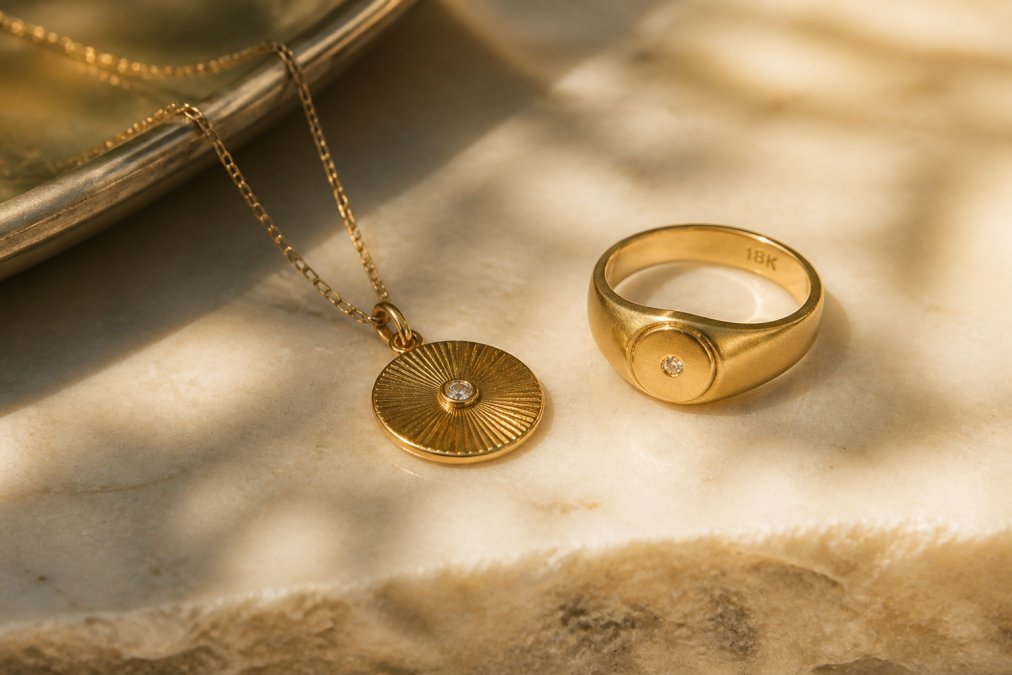
For everyday wear, recycled gold processed to 18k purity is chemically identical to newly mined 18k gold. Durability, luster, and hallmarked purity are the same.
Ethical Gemstone Sourcing and Supply Chain Traceability
Gemstone sourcing is where many "sustainable" brands fall short. Traceability, documenting a stone's journey from mine to setting, is difficult and expensive, which is why few brands invest in it seriously.
Ethical sourcing means knowing the country of origin, confirming fair wages, and verifying no child labor was involved. Conflict-free certification is the baseline, not the ceiling. The Kimberley Process Certification Scheme addresses conflict diamonds but does not cover broader labor or environmental standards.
The most credible approach is using antique diamonds and vintage stones, which have already been mined and traded, removing new extraction from the equation entirely.
Recycled Gold vs Mined Gold: What the Difference Actually Means
Recycled gold and mined gold are metallurgically identical once refined to the same karat. The difference is entirely upstream: how the gold entered the supply chain and what damage that entry caused.
Conventional gold mining is one of the most environmentally intensive extraction processes on earth. It disturbs large land areas, uses significant water volumes, and can introduce toxic byproducts into local ecosystems. Recycled gold draws from the existing global gold stock, which is substantial. Refining and recasting that gold requires energy, but the footprint is considerably lower than opening new ground.
For the buyer, a hallmarked 18k recycled gold piece and a hallmarked 18k mined gold piece look identical, wear identically, and hold value identically. The choice is about what your purchase funds downstream.
Allergy-Friendly Metals: Why 18k Gold and Platinum Win
Skin reactions to jewelry are more common than expected, and the culprit is almost never gold or platinum itself. It is the alloy metals mixed in to adjust hardness. Lower karat golds, particularly 9k and 10k, contain higher proportions of nickel, copper, and zinc, which drive contact dermatitis.
18k gold contains 75% pure gold by weight, leaving less room for reactive alloy metals. Platinum is naturally hypoallergenic at high purity and is often alloyed only with other platinum-group metals. For anyone with sensitive skin, these are practical choices.
Pieces made from high-purity recycled gold or platinum are built to last decades without degradation, which means fewer replacements and a lower long-term carbon footprint per wear.
Benefits of Antique Diamonds Over Newly Mined Stones
Antique diamonds are the most sustainable gemstone choice available. They have already been extracted, cut, and traded. Choosing an antique stone adds no new demand to the mining industry.
Beyond the environmental case, antique diamonds offer character that newly mined stones cannot. Old mine cuts, rose cuts, and European cuts were shaped by hand, often with slightly asymmetric facets that catch light differently from modern brilliant cuts.
From a sustainability standpoint, choosing pre-owned or antique stones keeps materials in use, reduces waste, and supports a circular economy model that does not depend on continuous extraction.
How to Identify Sustainable Jewelry (and Spot Greenwashing)
Greenwashing in the jewelry industry is widespread. The word "ethical" costs nothing to print on a website. Identifying sustainable jewelry requires looking past language and into evidence.
The most reliable signals are documentation and specificity. A brand claiming recycled gold should name their refinery and show certification. A brand claiming ethically sourced gemstones should provide country of origin and, ideally, mine-level traceability. Vague commitments like "we care about the planet" without supporting documentation indicate greenwashing.
Watch for these red flags:
- Sustainability claims with no third-party verification
- "Conflict-free" as the only gemstone claim
- Recycled metal claims with no refinery name or audit trail
- No hallmarking information on precious metal pieces
Genuine sustainable jewelry brands welcome scrutiny. They publish supply chain partners, display certifications, and answer specific questions about any piece.
Third-Party Certifications That Actually Matter
Responsible Jewellery Council (RJC) Certification: The RJC sets and audits standards for responsible business practices across the jewelry supply chain, covering human rights, labor rights, environmental impact, and business ethics. RJC membership requires independent audits.
Fairmined Certification: Issued by the Alliance for Responsible Mining, Fairmined certification applies to gold from artisanal and small-scale mining organizations meeting rigorous social and environmental standards.
Kimberley Process Certification: The baseline for conflict-free diamonds, though limited to diamonds financing rebel movements. It does not address labor conditions or environmental practices.
B Corp Certification: A broader business certification covering environmental and social performance, transparency, and accountability.
According to the Alliance for Responsible Mining's Fairmined standards, certified gold producers must meet environmental management requirements and provide fair wages and safe working conditions.
Best Sustainable Jewelry Qualities for Daily Wear
The best sustainable jewelry for everyday wear combines material integrity, structural durability, and timeless design. These qualities determine whether a piece earns daily rotation or remains unworn.

LÖF designs specifically for this intersection. Every piece is crafted from 18k gold or platinum with ethically sourced gemstones and antique diamonds, materials chosen because they perform over decades.
| Quality | Why It Matters for Daily Wear | What to Look For |
|---|---|---|
| 18k gold or platinum | Allergy-friendly, tarnish-resistant, durable | Hallmark stamp, karat or purity marking |
| Recycled precious metals | Lower environmental footprint, same performance | Refinery certification, audit documentation |
| Antique or ethically sourced stones | No new mining demand, traceable origin | Country of origin, certification or provenance |
| Solid construction | Withstands daily movement and contact | Solid gold vs. vermeil or gold-filled |
| Repairability | Extends lifespan across generations | Brand repair policy, lifetime warranty |
Durability, Repairability, and Lifetime Value
A piece of fine jewelry is only as sustainable as its lifespan. A ring needing replacement every three years generates more material demand than one lasting thirty years and repairable when needed.
Solid 18k gold and platinum enable multigenerational wear. Unlike gold vermeil or gold-filled, solid gold is the same material throughout and can be resized, re-polished, re-set, and repaired indefinitely.
Repairability is a quality most jewelry marketing ignores. It is also one of the strongest sustainability arguments available. A piece that can be repaired rather than replaced keeps materials in use and honors original craftsmanship. Ask any brand about their repair policy before purchasing.
Cost-Per-Wear: Why Heirloom Pieces Outperform Fast Jewelry
Cost-per-wear divides purchase price by the number of times you wear the piece. Fast jewelry appears attractive initially but changes completely when accounting for lifespan.
A fast jewelry piece costing less but tarnishing or breaking within a year, worn perhaps 50 times, has high cost-per-wear. An heirloom-quality piece in solid 18k gold, worn daily for twenty years and thousands of times, has negligible cost-per-wear.
The math consistently favors investment pieces for anyone who actually wears jewelry regularly. The Ellen MacArthur Foundation's circular economy research demonstrates that durable, repairable goods outperform disposable alternatives on total cost of ownership.
Pricing for LÖF pieces reflects the materials, craftsmanship, and sourcing standards involved. Visit the LÖF website for current pricing and to explore specific pieces.
Lab-Grown Diamonds vs Natural and Antique Diamonds
Lab-grown diamonds are real diamonds, chemically and physically identical to mined stones. They are produced in controlled environments using high-pressure high-temperature or chemical vapor deposition processes. Their environmental footprint is lower than conventional mining, though not zero: the process requires significant energy.
The case for lab-grown diamonds is strongest when compared to newly mined natural diamonds. The supply chain is shorter, origin is verifiable, and no land is disturbed. Antique diamonds require no new energy for production because they already exist. Their carbon footprint is effectively zero at purchase.
Lab-grown diamonds are a better choice than newly mined natural diamonds on most sustainability metrics. Antique diamonds are a better choice than lab-grown diamonds if the goal is genuinely minimizing new resource consumption. They sit at different points on the sustainability spectrum.
For buyers seeking the most credible sustainability position, antique diamonds paired with recycled precious metals represent the clearest expression of circular economy principles. This is the approach LÖF takes, using antique diamonds and repurposed gold to create pieces making no new demands on the earth.
| Stone Type | Environmental Impact | Traceability | Character | Best For |
|---|---|---|---|---|
| Antique diamond | Lowest (no new extraction) | Provenance-based | High, individual | Circular economy priority |
| Lab-grown diamond | Low (energy-dependent) | High, verifiable | Uniform | Conflict-free priority |
| Ethically mined natural | Moderate (responsible mining) | Variable | High, natural | Certified origin priority |
| Conventionally mined | Highest | Often limited | High, natural | Not recommended |
The challenge with sustainable jewelry is not finding brands that claim to be ethical. It is finding brands where the claim holds up under scrutiny. LÖF was founded on the conviction that fine jewelry should be accountable at every stage, from the recycled and repurposed gold used in every piece to the antique diamonds and ethically sourced gemstones set within them. The result is jewelry built to be worn every day, repaired when needed, and passed down when the time comes. Explore the LÖF collection and choose pieces that honor both the craft and the planet.
Frequently Asked Questions
What makes jewelry sustainable?
Sustainable jewelry is made from materials that reduce environmental and social harm. This typically means recycled or upcycled precious metals, conflict-free or antique diamonds, and ethically sourced gemstones with traceable origins. Responsible brands also prioritize fair wages for artisans, low-impact production methods, and designs built to last decades rather than seasons. Certifications from bodies such as the Responsible Jewellery Council add a further layer of verified accountability beyond a brand's self-reported claims.
Is 18k gold considered sustainable?
18k gold is widely regarded as one of the most practical sustainable jewelry metals when it comes from recycled sources. It contains 75% pure gold, making it durable enough for everyday wear while remaining free from the environmental damage associated with new mining. Recycled 18k gold carries the same hallmarked purity as newly mined material but without the carbon footprint. For allergy-prone wearers, 18k gold is also far less likely to cause reactions than lower-karat alloys.
How can I tell if a jewelry brand is truly ethical?
Ask for specific evidence rather than accepting marketing language at face value. Ethical brands can name their metal refiners, show gemstone origin documentation, and point to recognised third-party certifications such as Fairtrade Gold or Responsible Jewellery Council membership. Greenwashing is common in this category: vague terms like 'responsibly sourced' without supporting documentation are a warning sign. Transparency about supply chain traceability, repair policies, and material composition are the clearest signals of genuine commitment.
Why choose recycled gold and antique diamonds for daily wear?
Recycled gold requires no new mining, which dramatically reduces land disruption, water use, and carbon emissions compared to virgin extraction. Antique diamonds are the most circular option in the gemstone category: they already exist, so choosing one removes demand for new mining entirely. Both materials are also proven performers for everyday wear. Antique stones have survived decades or centuries of use, and recycled 18k gold or platinum maintains the same durability and tarnish-resistance as newly refined metal.
What are the best materials for everyday sustainable jewelry?
Recycled 18k solid gold and platinum are the top choices for durable, sustainable everyday jewelry. Both are hallmarked, tarnish-resistant, and allergy-friendly. Avoid gold-filled or vermeil pieces for daily wear: the thin gold layer wears through with regular contact. For stones, antique and pre-owned diamonds or ethically sourced, traceable gemstones offer the strongest sustainability credentials. Solid construction and repairability matter as much as material: a piece you can have serviced and worn for generations has the lowest cost-per-wear of any option.
This article was written using GrandRanker