

Table of Contents
- What Makes Recycled Gold Durable for Daily Wear
- Recycled Gold vs Mined Gold Durability: The Metallurgical Truth
- The Benefits of 18k Recycled Gold for Heirloom Pieces
- How to Care for Recycled Gold Jewelry: Maintenance That Lasts Generations
- Debunking Myths About Recycled Gold Quality and Longevity
- Verification and Certification: How to Know Your Recycled Gold Is Authentic
- Frequently Asked Questions
Last Updated: September 27, 2026
What Makes Recycled Gold Durable for Daily Wear
Recycled gold durable for everyday wear is equivalent to newly mined gold in performance. The durability of gold depends on its purity and alloy composition, not its origin. When gold is refined from recycled sources, it undergoes the same metallurgical processes as virgin gold, resulting in identical physical properties: tensile strength, scratch resistance, and resistance to oxidation.
At LÖF, we craft heirloom pieces from 18k recycled gold specifically because this purity standard delivers both durability and workability. The "18k" designation means 75% pure gold, with the remaining 25% comprising alloy metals like copper, silver, or palladium. These alloys provide the structural integrity that makes daily-wear jewelry possible. Pure 24k gold, by contrast, is too soft for rings and bracelets that endure constant contact.

The confusion around recycled gold often stems from a fundamental misunderstanding: people assume the recycling process weakens the metal. It doesn't. Refining breaks down old jewelry into its base elements, then rebuilds it into new pieces. The gold atoms themselves are unchanged. A ring made from recycled gold will perform identically to one made from freshly mined gold, assuming both are the same karat weight and alloy composition.
What determines longevity is maintenance and design. A poorly designed 18k recycled gold ring with thin walls will fail faster than a well-engineered piece, regardless of whether the gold came from a mine or a refinery. The metallurgical truth is straightforward: recycled gold durability depends on purity, alloy selection, and craftsmanship, not on where the gold originated.
Recycled Gold vs Mined Gold Durability: The Metallurgical Truth
The durability comparison between recycled and mined gold reveals no meaningful difference in performance. Both undergo identical metallurgical properties once refined to the same purity level. The distinction lies entirely in supply chain origin, not in material science.
When gold is recycled, it is melted at approximately 1064°C, separating it from other metals and impurities. This refining process is chemically identical to refining virgin ore. The resulting gold has the same atomic structure, the same crystalline lattice, and the same resistance to mechanical stress. Tensile strength, the ability of a material to withstand pulling forces, is determined by karat weight and alloy composition, not by whether the gold came from the earth or a jewelry box.
18k recycled gold contains 75% gold by weight, with 25% alloy metals. This formulation provides the optimal balance: enough pure gold to resist tarnishing and oxidation, enough alloy to prevent deformation under daily stress. The alloy metals, typically copper, silver, or palladium, are what give gold its working strength. Without them, gold would bend and scratch constantly.
Here's where many guides get it wrong: they treat recycled gold as inherently suspect. The reality is that recycled gold is often more traceable than mined gold. You know exactly where it came from. With virgin gold, the supply chain opacity can mask ethical concerns. Recycled gold offers both durability and transparency.
The one real difference is cost. Recycled gold typically costs less to produce than mined gold because it skips the extraction and initial refining phases. This cost advantage allows jewelers to invest more in design and craftsmanship while maintaining sustainability.
The Benefits of 18k Recycled Gold for Heirloom Pieces
18k recycled gold is the standard for heirloom jewelry because it balances durability with workability in ways lower karats cannot match. A piece intended to pass through generations must withstand decades of daily wear, yet still allow jewelers to create intricate designs that define modern luxury.
14k gold, by comparison, contains only 58% pure gold. 24k gold, at the other extreme, is too malleable for structural integrity in complex designs. 18k gold, at 75% purity, occupies the precise middle ground where artisans can craft bold, architectural pieces that endure.
The benefits extend beyond durability. 18k recycled gold from responsible sources carries supply chain transparency. This traceability matters for conscious consumers who want proof that their investment aligns with their values.
Recycled gold also ages beautifully. 18k gold develops a subtle patina that many collectors prefer. The metal doesn't degrade, it simply tells the story of its wear. A ring worn daily for 30 years will show character marks that reflect its history, not weakness in its construction.
For pieces designed as family heirlooms, 18k recycled gold offers one additional advantage: it can be reshaped and repurposed. If a future generation wants to redesign a piece, the gold retains its full value and workability. This flexibility extends the lifecycle of the metal itself, deepening its sustainability story.
How to Care for Recycled Gold Jewelry: Maintenance That Lasts Generations
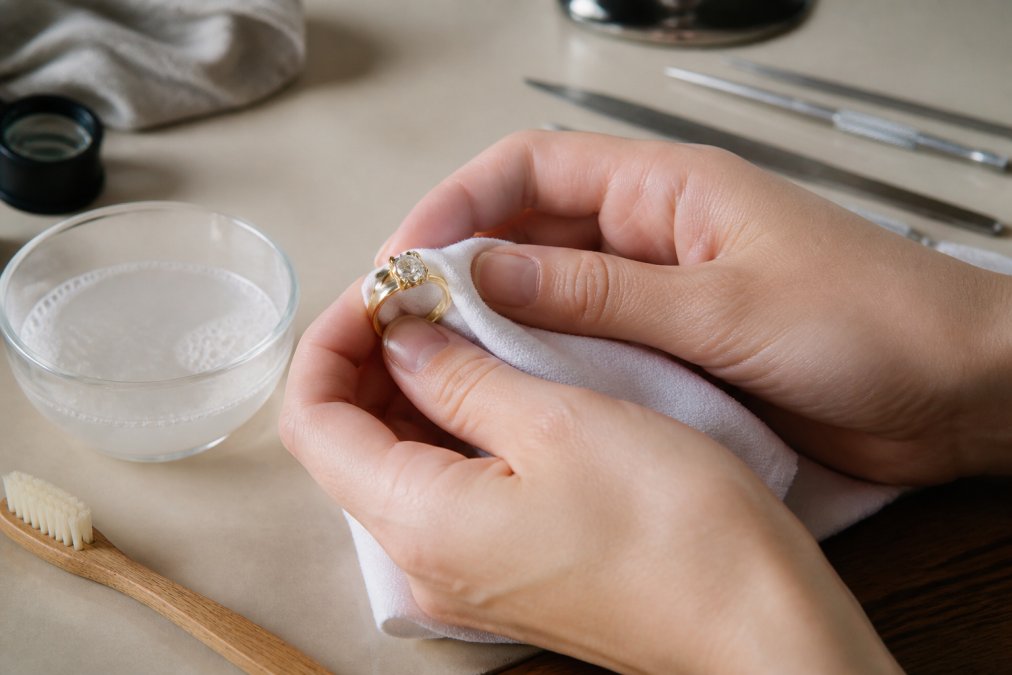
Proper maintenance is what separates jewelry that lasts generations from pieces that deteriorate within years. Recycled gold jewelry requires the same care as any fine gold piece, but understanding the specific risks helps you preserve both the metal and any gemstones set within it.
The foundational rule is simple: avoid prolonged exposure to harsh chemicals and extreme temperature shifts. Chlorine, found in pools and cleaning products, can weaken the alloy structure over time. Remove your pieces before swimming or using bleach-based cleaners. Heat stress, such as leaving a ring near a radiator or in direct sunlight for extended periods, can cause micro-fractures in the metal, particularly at stress points like prongs holding gemstones.
Cleaning at home requires only three items: lukewarm water, mild dish soap, and a soft microfiber cloth. Create a gentle solution, soak your piece for 10-15 minutes, then use a soft brush (a child's toothbrush works well) to gently remove buildup around settings and crevices. Rinse thoroughly under running water and dry immediately with the microfiber cloth. This monthly routine maintains the metal's luster without risk.
For pieces with gemstones, like LÖF's emerald or diamond settings, avoid ultrasonic cleaners and steam cleaning machines. These devices can dislodge stones or damage delicate settings. Stick to the gentle soap-and-water method for all gemstone-set pieces.
Storage matters as much as cleaning. Keep recycled gold jewelry in a cool, dry place away from direct sunlight. Humidity accelerates oxidation of the alloy metals, particularly copper-based alloys. A jewelry box with a soft lining or a cloth pouch prevents scratching when pieces are stored together. Never store jewelry in plastic bags, which trap moisture.
Annual professional inspection catches problems early. A jeweler can check prong security, assess metal wear at stress points, and perform professional cleaning that restores brilliance without risk. This preventive approach costs far less than repairing damage from neglect.
Debunking Myths About Recycled Gold Quality and Longevity
The most persistent myth is that recycled gold is somehow "weaker" or "lower quality" than mined gold. This is metallurgically false. Gold atoms are gold atoms, regardless of source. A recycled gold ring and a mined gold ring of identical karat weight will have identical hardness, scratch resistance, and oxidation resistance.
Another common misconception is that recycled gold tarnishes faster. It doesn't. Tarnishing depends on alloy composition and environmental exposure, not origin.
Some consumers worry that recycled gold is "used" and therefore less desirable. This reflects a luxury psychology rather than a material reality. The metal in your recycled gold ring might have been part of a 1950s brooch, a 1980s chain, or raw ore refined last year. Once refined, it's indistinguishable from virgin gold. The "used" status is a marketing narrative, not a physical property.
The greenwashing concern is legitimate. A brand claiming recycled gold is sustainable without verifying supply chain transparency or refining practices is making an empty promise. The key is verification, not the recycled/mined binary.
A final myth worth addressing: that recycled gold cannot achieve the same purity standards as mined gold. False. Recycled gold can be refined to 99.99% purity, identical to the highest mined gold standards.
Verification and Certification: How to Know Your Recycled Gold Is Authentic
Authenticity verification protects both your investment and your values. If you're paying for recycled gold, you deserve proof that the metal actually came from recycled sources and meets the purity standards claimed.
Frequently Asked Questions
Does recycled gold lose its quality over time?
No. Recycled gold retains the same physical properties as newly mined gold once refined. The purity and karat rating remain unchanged, 18k recycled gold is 75% pure gold by weight, regardless of its origin. What matters for longevity is the alloy composition and how well you maintain the piece. Proper care prevents oxidation and metal fatigue, keeping your recycled gold jewelry looking pristine for decades.
Is recycled gold the same as new gold?
Chemically and metallurgically, yes. Recycled gold undergoes refining and assay processes that restore it to the same purity standards as virgin gold. The difference lies in supply chain transparency and environmental impact, recycled gold eliminates mining's carbon footprint and ethical concerns. For durability and everyday wear, recycled gold performs identically to newly mined gold when crafted with quality alloys and proper tensile strength.
Why is 18k gold considered the best for everyday jewelry?
18k gold contains 75% pure gold and 25% alloy metals, creating the ideal balance between durability and purity. Pure 24k gold is too soft for daily wear and scratches easily. 18k gold's alloy composition increases scratch-resistant properties and tensile strength while maintaining the richness and prestige of high gold content. This karat standard is preferred for heirloom pieces because it withstands daily wear without compromising longevity or aesthetic value.
How is recycled gold processed for luxury jewelry?
Recycled gold is melted down from pre-loved or scrapped jewelry, then refined through assay to verify purity and remove impurities. The refined metal is tested for karat accuracy and hallmark certification before being reused in new designs. This process restores the gold to virgin-grade quality. Luxury manufacturers like LÖF ensure each piece meets strict metallurgical standards, so recycled gold in fine jewelry maintains the same durability and aesthetic quality as newly mined alternatives.