

Table of Contents
- What Defines Sustainable Heirloom Quality Jewelry?
- The Building Blocks: Recycled Gold, Platinum, and Ethical Gemstones
- Is 18k Gold Better Than Platinum for Heirloom Pieces?
- How to Identify Heirloom Quality Jewelry Construction
- LÖF's Sustainable Statement Pieces: Rings That Last Generations
- Beyond the Purchase: Resale Value and Circularity
- Choosing Your Legacy: Matching Design to Daily Wear
- Conclusion
- Frequently Asked Questions
Last Updated: September 9, 2026
Sustainable heirloom jewelry is a standard that demands recycled precious metals, ethically sourced stones, and construction built to survive daily wear for decades. At LÖF, we craft pieces that meet this standard, balancing three non-negotiables: material provenance, durable construction, and timeless design.
What Defines Sustainable Heirloom Quality Jewelry?
Sustainable heirloom quality jewelry is defined by three pillars: the ethical origin of its materials, the physical durability of its construction, and the timelessness of its design. A piece fails the test if any pillar is weak.
Recycled gold and platinum eliminate the need for new mining, while antique diamonds carry no modern conflict footprint. The durability pillar requires solid metal construction and secure stone settings. The design pillar demands a silhouette that remains compelling across changing trends.
The FTC's Green Guides on environmental marketing claims clarify that terms like "recycled" and "sustainable" carry legal weight, meaning brands must substantiate their sourcing claims. When a jeweler cannot trace a metal back to its refinery or a stone to its cutter, treat their sustainability language with skepticism.
The Building Blocks: Recycled Gold, Platinum, and Ethical Gemstones
The foundation of any sustainable heirloom piece is its material. But 'recycled' and 'ethical' are not monolithic terms; they carry distinct technical meanings and environmental footprints depending on the metal and the stone.
The Environmental Footprint of Gold vs. Silver vs. Platinum Mining
- Gold: Traditional gold mining is the most destructive per ounce. Extracting a single ounce of gold can move over 250 tons of ore and uses significant cyanide and mercury in processing (the EPA). This is why recycled gold, refined from old jewelry, industrial scrap, or electronic waste, carries a substantially lower environmental burden. The carbon footprint of recycled gold is estimated to be roughly 90-95% lower than that of mined gold, though exact figures vary by refinery (pubs.acs.org).
- Platinum: Platinum mining is more geographically concentrated (primarily South Africa) and has a higher energy intensity per ounce due to the depth of the mines and the complex extraction process. While less publicized than gold mining, its environmental and social footprint is significant. Recycled platinum avoids these deep-mining impacts entirely.
- Silver: Silver is often a byproduct of other mining operations (lead, zinc, copper), which complicates its supply chain. While recycled silver is available, its lower intrinsic value means traceability is less rigorous than for gold or platinum. For heirloom purposes, the durability of silver (typically 925 sterling) is also lower, making it a less common choice for pieces meant to last centuries.
Choosing recycled platinum avoids the deep-mining impacts of the Bushveld Igneous Complex. Choosing recycled gold counters the artisanal and small-scale gold mining (ASGM) sector, which accounts for nearly 20% of global gold supply and is the largest source of mercury pollution worldwide.
The Technical Reality of Recycled Metals
Recycled gold and platinum are refined to the exact same purity standards (e.g., 18k, 22k, 950 platinum) as newly mined metals. The refining process removes impurities, making the final alloy chemically identical to virgin metal; the sustainability benefit comes from avoiding the mining step.
There is no universal certification for 'recycled gold' in the way there is for organic food. Responsible jewelers often work with refineries that are RJC (Responsible Jewellery Council) Chain-of-Custody certified, providing an auditable trail from scrap intake to finished ingot. When a brand cannot name its refinery or certification, its 'recycled' claim is unverifiable.
Ethical Gemstones: Beyond the Binary of Lab-Grown vs. Mined
- Antique and Estate Diamonds: These stones carry the lowest possible environmental footprint because no new mining or manufacturing occurred for their creation. They are inherently conflict-free, predating the Kimberley Process by decades. Their value is also stable, as they are not subject to the same market fluctuations as newly mined stones. The trade-off is availability: antique diamonds are a finite resource, and their unique cuts (Old European, Rose, Mine) require a specific design aesthetic.
- Lab-Grown Diamonds: Chemically and physically identical to mined diamonds, lab-grown stones are created via High-Pressure High-Temperature (HPHT) or Chemical Vapor Deposition (CVD) processes. Their carbon footprint is significantly lower than mined diamonds, though it is not zero, they require substantial energy for the growth process. A key consideration for heirloom purposes is resale value: lab-grown diamonds currently have a lower resale value than mined or antique diamonds, which is a factor to weigh if you view the piece as a financial asset.
- Colored Gemstones: The term 'conflict-free' rarely applies to colored stones like sapphires, rubies, or emeralds. The Kimberley Process covers only rough diamonds. For colored stones, the most robust standard is the 'traceable origin' model, where a brand can document the specific mine and cutting facility. This is rare and adds cost, but it is the only way to verify that a sapphire was not mined under exploitative conditions.
Is 18k Gold Better Than Platinum for Heirloom Pieces?
Neither metal is universally superior; the right choice depends on how the piece will be worn. Platinum is denser and stronger than 18k gold, making it the default for engagement rings with large center stones, because it holds prongs securely for decades. However, platinum develops a matte patina over time, which some wearers love and others find dull.
18k gold, at 75% pure gold content, offers a warmer color and greater scratch resistance than platinum in daily wear. The tradeoff is that gold prongs may need re-tipping after years of use, a routine maintenance task for any jeweler. For rings worn every day, many collectors prefer 18k gold for its warmth, while reserving platinum for high-impact settings.
How to Identify Heirloom Quality Jewelry Construction
'Heirloom quality' is a set of measurable technical standards that determine whether a piece can survive decades of daily wear, resizing, and professional cleaning. This section provides the concrete markers you can inspect to differentiate a true legacy piece from a fashion accessory.
Metal Purity and Alloy Selection: The Karat Threshold
For gold, the heirloom standard is 18k (75% pure gold) or higher. 14k gold is harder and more scratch-resistant, but its higher alloy content can cause allergic reactions and is considered less prestigious. 18k gold strikes the optimal balance between purity, color depth, and durability for daily wear.
Higher karat is not always better. 22k gold (91.7% pure) is too soft for stone settings and daily wear, it bends easily and can lose stones. For a piece meant to be worn every day and passed down, 18k is the industry standard.
Platinum is typically 950 platinum (95% pure) or 900 platinum (90% pure). The higher purity is possible because platinum is naturally harder and more durable than gold. The remaining 5-10% is usually iridium or ruthenium, which add hardness without compromising color.
Setting Types: The Engineering of Stone Security
The setting is the most failure-prone part of any ring. A well-constructed setting is engineered to distribute stress and protect the stone. Here are the specific types and their heirloom viability:
- Prong Setting (4 or 6 prongs): The most common for solitaires. Heirloom quality requires rounded, polished prongs that are tightly pressed against the stone's girdle. A 6-prong setting offers more security than a 4-prong because it provides redundancy, if one prong is damaged, the stone is still held by the remaining five. The prongs should be cast as part of the ring shank or welded securely, not glued.
- Bezel Setting: A metal rim that encircles the stone. This is the most secure setting type for daily wear because it protects the stone's edges from impact. A full bezel is preferable to a half-bezel for heirloom purposes. The bezel should be flush with the stone's crown, not raised or uneven.
- Pavé Setting: Small diamonds set closely together. Heirloom quality pavé requires each stone to be held by tiny beads of metal that are visible under magnification. If the beads are absent or the stones are merely glued in, the piece will lose stones within months. The metal between the stones should be smooth, not sharp, to avoid catching on fabric.
- Channel Setting: Stones set in a groove between two metal walls. This is a secure setting for bands, but the channel walls must be thick enough to withstand bending. A thin channel wall will warp, releasing the stones.
Metal Weight and Structural Integrity
Heirloom construction is defined by mass. A 2.0mm band is the minimum for daily wear. For a statement ring or a piece with a large center stone, a 2.5mm to 3.0mm band is recommended. The shank should feel substantial in the hand, a genuine heirloom ring has a noticeable weight that signals solid metal, not hollow construction.
Inspect the underside of the ring. Heirloom quality pieces are finished on the inside as well as the outside. Rough casting marks, pits, or a grainy texture indicate a lower-quality casting process. High-end jewelers hand-finish the interior of the band, creating a smooth surface comfortable for daily wear.
Hallmarks and Testing: What to Look For
A hallmark is a legal guarantee of metal content. In the United States, the FTC requires a quality mark (e.g., '18k' or '750') but does not require a registered trademark. In the UK and Europe, hallmarks are more rigorous, requiring an assay office stamp. For heirloom purposes, look for:
- A quality mark (e.g., '18k', '750', '950 Pt')
- A maker's mark (identifies the jeweler)
- A country of origin mark (if imported)
If a piece has no hallmark, it is either custom-made (which should come with a certificate of authenticity) or of questionable quality. A reputable jeweler will provide documentation of the metal's purity and the stone's origin.
The Maintenance Reality: What 'Durable' Actually Means
No piece of jewelry is indestructible. Heirloom quality means the piece can be repaired and maintained over time. Prongs will eventually wear and need re-tipping. Bands may need re-shanking after decades of resizing. A solid metal band can be resized multiple times; a hollow or plated band cannot. A prong setting can be re-tipped; a glued-in stone cannot be re-secured.
This is the technical definition of heirloom: not a piece that never needs maintenance, but a piece that can be maintained indefinitely. When you evaluate a ring, ask the jeweler: 'Can this be resized? Can the prongs be re-tipped? Can the band be re-shanked if it wears thin?' If the answer to any of these is no, the piece is not heirloom quality.
LÖF's Sustainable Statement Pieces: Rings That Last Generations
LÖF's collection embodies the technical standards outlined above, using only recycled 18k gold and platinum, ethically sourced gemstones, and antique diamonds. Each ring is handcrafted in solid metal, never plated, and designed with an architectural boldness that reads as timeless rather than trendy. The result is sustainable heirloom jewelry that functions as both a daily statement and a future family asset.
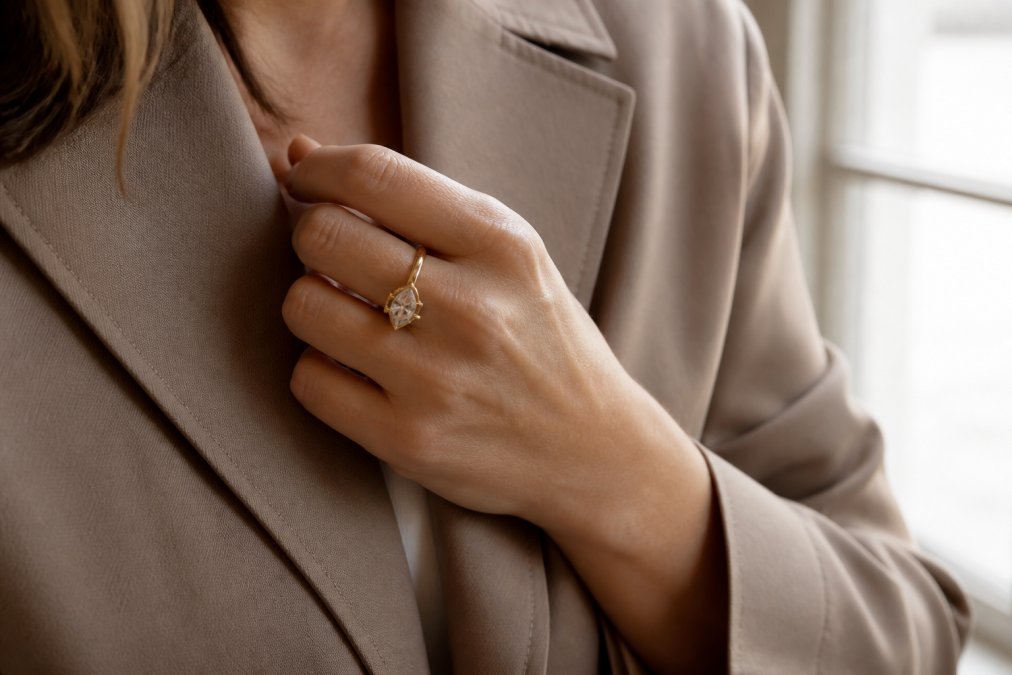
The Maze Ring: Antique Diamond in 18k Gold
The Maze Ring is LÖF's signature statement piece, handcrafted in 18k solid yellow gold and set with an antique marquise diamond. Priced at $18,000, this ring features a maze motif that is available in plain gold or with black enamel, with further customization offered. The antique diamond carries a unique cut that cannot be replicated by modern machines, making each Maze Ring a one-of-a-kind heirloom.
The Tillie Ring: Platinum and Old European Cut Diamonds
The Tillie Ring, at $20,000, is a statement domed ring set with Old European Cut diamonds, handcrafted in platinum and white gold or yellow gold. Old European Cut diamonds, popular in the early 20th century, feature a high crown and small table that creates a distinctive, romantic sparkle. The platinum setting provides maximum security for the multiple stones, making this ring a durable choice for daily wear or special occasions.
Beyond the Purchase: Resale Value and Circularity
Heirloom quality jewelry retains significant resale value because the materials, recycled gold, platinum, and natural diamonds, hold intrinsic worth independent of brand trends. A well-constructed piece can be sold, reset, or passed down, keeping its materials in circulation for another century.
Rather than buying new, conscious collectors increasingly seek pieces with provenance, antique diamonds and vintage settings that carry history. This shift reduces demand for newly mined stones and rewards the durability that heirloom construction provides.
A plated fashion ring loses all value within a year, while a solid gold heirloom ring retains its metal value indefinitely. When you invest in sustainable heirloom jewelry, you are not consuming a product; you are storing wealth in a wearable form that can be liquidated, redesigned, or bequeathed.
Choosing Your Legacy: Matching Design to Daily Wear
The best sustainable heirloom jewelry is the piece you actually wear, so design must match your lifestyle. For those who prefer classic, understated pieces, a simple 18k gold band or a low-profile diamond ring offers daily wearability without catching on clothing. For the bold collector, architectural silhouettes like LÖF's maze and triple-bar motifs make a statement while remaining comfortable for all-day wear.
Consider the metal's maintenance in your decision. Platinum develops a patina that some find elegant and others find dull; 18k gold maintains its polish with occasional professional cleaning. Both metals are suitable for daily wear, but your tolerance for maintenance should guide the choice.
| Consideration | 18k Gold | Platinum |
|---|---|---|
| Color | Warm yellow | Cool white |
| Patina | Retains polish | Develops matte finish |
| Strength | Good for daily wear | Superior for large stones |
| Resizing | Easier | More difficult |
| Best For | Everyday rings, warm tones | Engagement rings, cool tones |
Conclusion
Choosing sustainable heirloom jewelry requires looking past marketing claims to verify recycled metals, ethical stones, and durable construction. The pieces that pass this scrutiny, like LÖF's Maze Ring and Tillie Ring, reward their owners with decades of wear and lasting value. Start your legacy with a piece that honors both your values and your future generations, and get started with LÖF to explore rings crafted from recycled gold, platinum, and antique diamonds that are designed to be passed down.

Frequently Asked Questions
What makes jewelry truly heirloom quality?
Heirloom quality jewelry is defined by its materials, construction, and timeless design. It is made from durable precious metals like 18k gold or platinum and uses secure settings that hold stones firmly. The design transcends trends, allowing it to be worn for decades and passed down. Look for solid metal construction, not plated, and hand-finished details. This level of craftsmanship ensures the piece can be repaired, resized, and maintained over a lifetime and beyond.
Is 18k gold better than platinum for an heirloom ring?
Both are excellent choices. 18k gold is warmer in color, more malleable, and easier to resize over time. Platinum is denser, more durable, and develops a patina that many collectors love. Your choice depends on aesthetic preference and skin sensitivity.
How can you tell if jewelry is ethically sourced?
Look for transparency from the jeweler. Reputable maisons will disclose their supply chain, including where metals are recycled and how gemstones are traced. Ask about third-party certifications or documentation for stones. Ethical sourcing means the brand can verify that materials are conflict-free and that mining or recycling practices meet environmental and labor standards. A commitment to using recycled gold and antique diamonds is a strong indicator of ethical sourcing.
Why is recycled gold considered sustainable?
Recycled gold avoids the environmental damage caused by new mining operations. Mining has a significant carbon footprint and can lead to habitat destruction and water pollution. By refining and reusing existing gold, the demand for newly mined metal decreases. This process preserves the quality of the gold while reducing environmental impact. Choosing recycled gold is a direct way to lower the carbon footprint of your jewelry purchase without compromising on quality or purity.