

Table of Contents
- What Actually Makes a Jewelry Brand Ethical?
- The 2026 Shortlist: Ethical Jewelry Brands Leading the Market
- Feature Comparison: Sustainable Fine Jewelry for Everyday Wear
- Recycled Gold vs Ethically Sourced Gemstones: Know the Difference
- How to Identify Ethical Jewelry Brands and Avoid Greenwashing
- Which One Should You Pick? A Decision Framework
- Conclusion: Investing in a Legacy That Aligns With Your Values
- Frequently Asked Questions
Last Updated: September 6, 2026
What Actually Makes a Jewelry Brand Ethical?
The term "ethical jewelry brands" gets thrown around so often that it has nearly lost its meaning. For millennials, the question is no longer just about aesthetics but whether a piece aligns with your values regarding human rights, environmental stewardship, and supply chain transparency.
A genuinely ethical jewelry brand must address the origin of its precious metals, the sourcing of its gemstones, labor practices, and its environmental footprint. Recycled gold and silver are the gold standard because they bypass new mining. Ethical jewelry is a spectrum of practices, and understanding that nuance is the first step toward a purchase you will not regret.
The 2026 Shortlist: Ethical Jewelry Brands Leading the Market
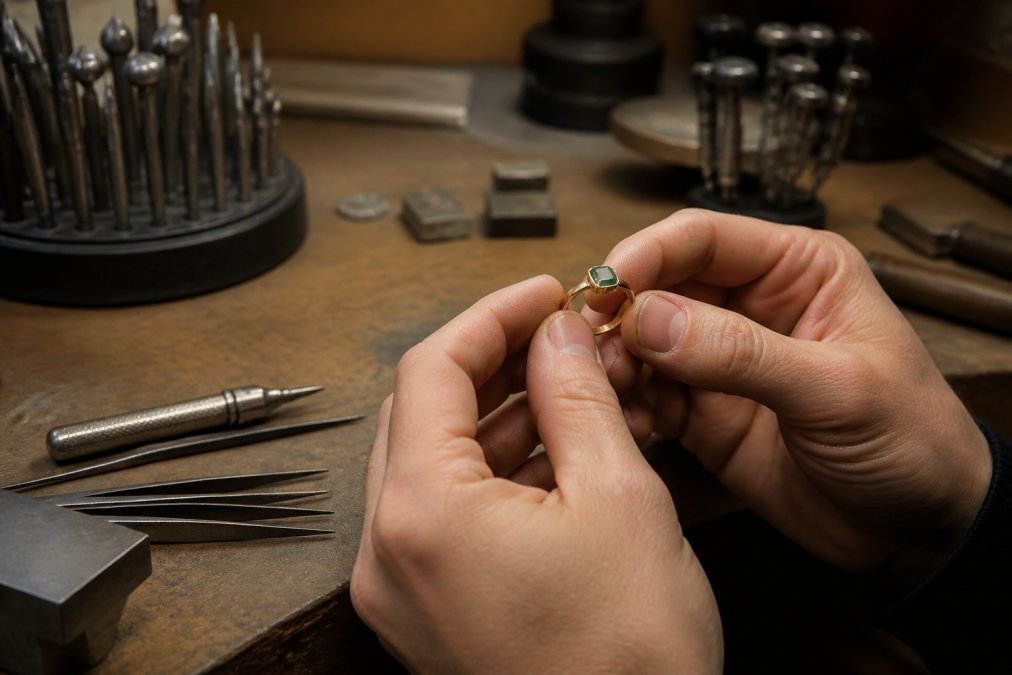
While many brands claim to offer sustainable fine jewelry, very few deliver heirloom-quality pieces from certified recycled materials. Our shortlist prioritizes verifiable supply chain transparency and production ethics beyond marketing language.
LÖF: Heirloom-Quality Pieces in Recycled 18k Gold
LÖF, founded by jeweler and designer Morgan Mackintosh, crafts bold, architectural pieces exclusively from 18k gold, platinum, and ethically sourced gemstones and antique diamonds. LÖF repurposes gold and integrates vintage diamonds, giving each piece a unique history and reducing its carbon footprint.
Pieces like The Astor Ring, set with 0.6 carats of baguette diamonds, or The Poiret Ring with its diagonal emerald bars, are designed as modern heirlooms. The Édith Stick Ring starts at $3,000, while signature pieces like The Barbette Ring represent a more substantial investment at $20,000.

Comparing Price Points and Design Philosophies
When comparing LÖF to other providers, the price difference often raises questions. You are paying for a fully traceable supply chain and artistry that will not look dated in five years. LÖF’s collection, from the Margueritte Hoops at $7,500 to the Griffith Bracelet at $25,000, focuses on solid, substantial gold.
Feature Comparison: Sustainable Fine Jewelry for Everyday Wear
Sustainable fine jewelry for everyday wear must be durable enough to withstand constant use while remaining versatile enough to match your wardrobe. The following table compares key LÖF offerings to help you identify which piece aligns with your lifestyle and budget.
| Piece | Price | Best For | Design Style | Key Feature |
|---|---|---|---|---|
| The Édith Stick Ring | $3,000 | Everyday stacking | Delicate, textured | 1.5mm band, subtle texture |
| The Astor Ring | $5,000 | Statement/Stacking | Art Deco geometry | Triple bar, baguette stones |
| The Margueritte Hoops | $7,500 | Daily wear | Chunky, bold | Solid yellow gold |
| The Josephine Ring | $13,000 | Statement | Textured, enamel | Chrysoprase center stone |
| The Barbette Ring | $20,000 | Statement/Engagement | Cigar band, enamel | 1.5ct baguette diamonds |
| The Griffith Bracelet | $25,000 | Statement | Art Deco chain | Custom geometric links |
Recycled Gold vs Ethically Sourced Gemstones: Know the Difference
A common misconception is that "recycled gold" and "ethically sourced gemstones" are interchangeable. They address different parts of the supply chain, and within each category there are further distinctions. Understanding these labels is the difference between supporting genuine change and falling for marketing spin.

Decoding the Labels: Recycled, Fairmined, and Conflict-Free
The jewelry industry is crowded with terms that sound similar but mean very different things. Here is a plain-language breakdown of the labels you will encounter most often.
Recycled Gold refers to the re-use of precious metals from old jewelry, industrial scrap, or electronic waste, avoiding the environmental devastation of new mining. However, the term is not regulated. The most rigorous standard is SCS Global Services Recycled Content Certification, which requires third-party auditing of the entire chain of custody (scsglobalservices.com).
Fairmined Gold is a certification standard administered by the Alliance for Responsible Mining (fairmined.org). It applies to artisanal and small-scale mining, guaranteeing fair wages, safe conditions, and responsible environmental practices. Fairmined gold is newly mined but under ethical conditions, so a brand using 100% recycled gold is not supporting artisanal mining communities.
Conflict-Free is the narrowest and most misunderstood term (kimberleyprocess.com). It originates from the Kimberley Process, which certifies that rough diamonds do not fund rebel movements in specific conflict zones, but it has well-documented loopholes and does not address human rights abuses or environmental damage. This is why many ethical brands, including LÖF, prefer antique or vintage diamonds, stones cut decades or even a century ago that carry no modern mining footprint.
Why the Distinction Matters in Practice
A brand can use recycled gold while still setting it with newly mined, potentially problematic stones, or use Fairmined gold with uncertified gemstones. When evaluating a piece, ask about both the metal and the stones separately.
Here is a quick reference for what each label does and does not tell you:
| Label | What It Guarantees | What It Does NOT Guarantee |
|---|---|---|
| Recycled Gold | Metal is reclaimed from prior use | Ethical labor practices in the recycling chain |
| Fairmined Gold | Ethical mining conditions for artisanal miners | The gold is recycled or low-impact |
| Conflict-Free Diamond | Diamond does not fund specific rebel groups | No child labor, no environmental harm, no broader human rights abuses |
| Antique/Vintage Diamond | No modern mining impact at all | The original mining conditions (often unknowable) |
The Circular Economy Angle Most Articles Miss
Beyond the initial purchase, the circular economy asks what happens to your jewelry at the end of its life. Some ethical brands have an answer for when your tastes change or a piece breaks.
Look for brands that offer end-of-life jewelry recycling programs. Some accept your old gold and offer credit toward a new piece; others partner with refiners who reclaim the metal. LÖF integrates vintage and antique diamonds into new designs, giving old stones a second life. If a brand cannot tell you what happens to your piece after you no longer want it, its sustainability story is incomplete.
How to Identify Ethical Jewelry Brands and Avoid Greenwashing
The rise of conscious consumerism has given way to greenwashing, where brands exaggerate their environmental efforts. Look beyond "eco-friendly" buzzwords and demand specifics about the supply chain, material origins, and labor practices.
A Practical Verification Checklist
Rather than relying on gut feeling, use this five-point checklist when evaluating any brand. It will help you separate substantiated claims from vague marketing language.
1. Ask for the Refinery Name. Any brand using recycled gold should be able to tell you which refinery processed it. Reputable refiners provide chain-of-custody documentation. If a brand cannot name its refinery, its recycled claim is unverifiable.
2. Look for Third-Party Certification on the Product Page. Certifications should appear on individual product listings, not just on a buried "Sustainability" page. The Responsible Jewellery Council (RJC) audits members on ethical, human rights, and social practices. SCS Global Services provides scientific standards for recycled content claims. If a brand is certified, it will display the seal prominently.
3. Check for Hallmarking. In the UK and many other jurisdictions, an official hallmark on gold and platinum items guarantees the purity of the metal. This protects you from misrepresentation, but it does not verify ethical sourcing. A hallmark tells you what the metal is, not where it came from. Use it as a baseline, not a substitute for supply chain transparency.
4. Examine the Gemstone Story. For diamonds, ask whether they are antique, lab-grown, or newly mined. For colored gemstones, ask about the specific mine or cutter. Brands that use antique stones, like LÖF, can tell you the approximate era of each diamond. Brands that use newly mined stones should be able to name the mine and the certification standard applied. Vague answers like "responsibly sourced" without a named standard are a warning sign.
5. Look for the Manufacturing Location. Transparent brands are proud of their ateliers and artisans. They will name the city or country where pieces are made and often the specific workshop.
Red Flags to Watch For
Several warning signs should trigger skepticism. Be wary of "conflict-free" used without context, as it often ignores broader human rights abuses. A lack of information about manufacturing location is a major red flag. Be cautious of "fast fashion" style jewelry at low price points; true ethical craftsmanship is inherently more expensive. If a price seems too good to be true, it likely is.
The Budget Question: Ethical Jewelry Under $100
Most guides focus on fine pieces costing thousands of dollars, but many millennials want everyday, affordable pieces that align with their values. Ethical options exist at lower price points, provided you adjust your expectations about materials.
At the sub-$100 level, you will not find solid 18k gold. Look for brands using recycled sterling silver or gold vermeil (a thick layer of gold over sterling silver). These pieces are more affordable because they use less precious metal, but sourcing standards can still be rigorous. Ask the same questions: Where is the silver from? Is the vermeil plating done with fair labor practices? Is the packaging plastic-free?
Several brands offer recycled silver pieces in the $50-$100 range with transparent supply chains and carbon-neutral shipping. These are not heirloom pieces but a legitimate entry point without a significant commitment. Avoid brands that use "sustainable" as a license to charge a premium for low-quality materials.
Which One Should You Pick? A Decision Framework
Selecting the right piece can feel overwhelming. Narrow down your choices by considering your priorities: the lowest environmental impact, the most unique design, or the longevity of the piece.
- If you prioritize maximum sustainability: Choose a brand that exclusively uses recycled gold and antique or lab-grown stones. LÖF’s use of antique diamonds and recycled 18k gold demonstrates a strong commitment in this area.
- If you prioritize unique design and craftsmanship: Look for artisanal craftsmanship that you cannot find on the high street. LÖF’s architectural, Deco-inspired silhouettes offer a distinctive aesthetic.
- If you prioritize durability and everyday wear: Opt for solid gold pieces rather than gold vermeil or gold-filled options. The Édith Stick Ring or The Margueritte Hoops are strong enough for daily wear without fear of tarnishing.
- If you are working with a budget: Consider starting with a smaller piece, like The Édith Stick Ring at $3,000, from a top-tier brand rather than a larger piece from a less transparent one. Quality and provenance matter more than size.
Conclusion: Investing in a Legacy That Aligns With Your Values
The search for the best ethical jewelry brands leads to a deeper question about the kind of world you want to support. Choosing a piece that is conflict-free, made from recycled metals, and crafted under fair labor conditions is a powerful act of conscious consumerism.

We invite you to explore the LÖF collection, where award-winning luxury fine jewelry meets uncompromising ethical standards. Each piece is meticulously handcrafted in 18k recycled gold and platinum, often featuring ethically sourced gemstones and antique diamonds. Discover timeless elegance that honors both the wearer and the planet.
Frequently Asked Questions
What are the most ethical jewelry brands?
The most ethical jewelry brands combine recycled precious metals with certified, traceable gemstones and transparent labor practices. Look for brands like LÖF that use recycled 18k gold and antique diamonds, publish their supply chain details. A brand's commitment shows in its materials, its certifications, and its willingness to answer sourcing questions directly.
What is the difference between recycled gold and ethically mined gold?
Recycled gold comes from existing sources like old jewelry or industrial scrap, then is refined and reused, avoiding new mining entirely. Ethically mined gold comes from mines with responsible labor and environmental standards. Both reduce harm compared to unregulated mining. Brands like LÖF primarily use recycled 18k gold, which carries a lower carbon footprint and supports a circular economy.
How can I verify if a jewelry brand is truly ethical?
Start by checking for third-party certifications, which audit supply chains and labor practices. Ask the brand directly about its gold source, gemstone origin, and manufacturing partners. A transparent brand will answer with specifics, not vague marketing terms. Look for detailed 'About' pages, sourcing policies, and clear information about recycled metal content and artisan partnerships.
What criteria define sustainable fine jewelry?
Sustainable fine jewelry uses recycled or responsibly mined precious metals, ethically sourced or lab-grown gemstones, and transparent supply chains. It involves fair wages and safe conditions for artisans, minimal environmental impact, and often eco-friendly packaging. Heirloom-quality construction matters too: pieces designed to last generations reduce waste. Brands like LÖF exemplify this by crafting from recycled 18k gold and antique diamonds meant for daily wear and eventual passing down.
Choosing jewelry that reflects your values is a challenge, but it is one worth meeting with intention. At LÖF, we have built our maison on the principles of sustainable luxury, ensuring that every piece you wear tells a story of responsibility and artistry. Get started with LÖF and invest in a heirloom-quality piece that embodies your commitment to a better future.