

Table of Contents
- What is Greenwashing in Fashion
- Common Greenwashing Red Flags in Jewelry
- Ethical Jewelry Certifications to Look For
- How to Verify Traceability in Jewelry Supply Chains
- Step-by-Step Guide to Spot Greenwashing When Buying Jewelry
- What to Avoid: Buzzwords and Marketing Tactics
- Conclusion
Last Updated: August 29, 2026
What is Greenwashing in Fashion
Greenwashing in jewelry is the practice of making misleading claims about a brand's environmental or ethical practices to attract conscious consumers without backing those claims with verifiable action. A brand might tout "sustainable sourcing" or "eco-friendly production" while concealing opaque supply chains, undisclosed material origins, or minimal actual environmental investment.
The jewelry industry is particularly vulnerable to this deception. Precious metals and gemstones carry genuine environmental and human rights implications, mining operations can devastate ecosystems, displace communities, and fuel conflict. When brands obscure these realities behind vague marketing language, they exploit the growing segment of affluent consumers who want to align purchases with their values.
What makes greenwashing insidious is that it's not always outright lying. It's selective truth-telling. A brand might genuinely use recycled gold in one collection while sourcing new-mined diamonds from undisclosed origins in another. They might highlight a single third-party certification while ignoring gaps elsewhere in their supply chain. They might use language so vague, "ethically sourced," "responsibly mined," "sustainable practices", that it sounds credible without meaning anything specific.
At LÖF, we've built our entire practice around the opposite approach: radical transparency. Every piece is crafted from 18k gold and platinum, with verifiable sourcing documentation for ethically sourced gemstones and antique diamonds. This commitment isn't marketing. It's the foundation of how we work.
Understanding how to spot greenwashing protects you from wasting money on pieces that don't deliver on their promises. More importantly, it ensures your investment actually supports the ethical practices you believe in.
Common Greenwashing Red Flags in Jewelry
The jewelry industry has developed a sophisticated vocabulary of greenwashing. Learning to recognize these patterns is your first defense against misleading claims.
Vague or Unverifiable Claims
"Ethically sourced." "Sustainably produced." "Responsibly mined." These terms sound meaningful until you try to pin them down.
The problem: there's no legal definition for any of them. A brand can use "ethically sourced" to mean anything from full supply chain transparency to a single conversation with a supplier. No verification required. No third-party audit. No accountability.
When a brand uses vague language, ask a direct question: What specific standards define "ethical" in your sourcing? Which certifications back this claim? If they can't answer with concrete details, specific certifications, audited processes, named suppliers, the claim is essentially marketing noise.
Real specificity sounds different. It includes names: "Certified by the Responsible Jewellery Council," "Antique diamonds sourced from estate collections," "18k recycled gold from certified refineries." If you're seeing adjectives without mechanisms, you're seeing greenwashing.
Missing Third-Party Certifications
A brand's own sustainability report is not evidence. It's marketing material.
Third-party certifications exist because independent auditors verify claims that companies make. They're not perfect, but they're infinitely more credible than self-reported data. A brand claiming to be "ethical" without certification is like a restaurant claiming to be "clean" without a health inspection.
The absence of certification doesn't automatically mean a brand is greenwashing. Small independent jewelers may not have the resources for formal certification. But they should be transparent about that limitation. They should explain their sourcing practices in detail, introduce you to their suppliers if possible, and acknowledge what they can't verify independently.
Large brands with significant marketing budgets? If they're not certified, they're making a choice. That choice is usually worth noticing.
Lack of Supply Chain Transparency
Greenwashing thrives in opacity. The less you know about where materials come from and how they're processed, the easier it is for a brand to claim anything.
Legitimate jewelry brands can tell you: Which mines or sources their gemstones come from. Which refineries process their metals. Which laboratories cut or treat stones. How many hands touch a piece before it reaches you.
This information should be available on their website, in product documentation, or through direct communication. If a brand deflects these questions or claims they "can't disclose suppliers for competitive reasons," they're hiding something. Competitive advantage doesn't require secrecy about ethical sourcing, it requires operational excellence.
The most transparent brands provide what's called a "chain of custody" document: a traceable record of material movement from source to finished product. This is the gold standard of verification. If a brand offers this, they're serious about transparency.
Ethical Jewelry Certifications to Look For
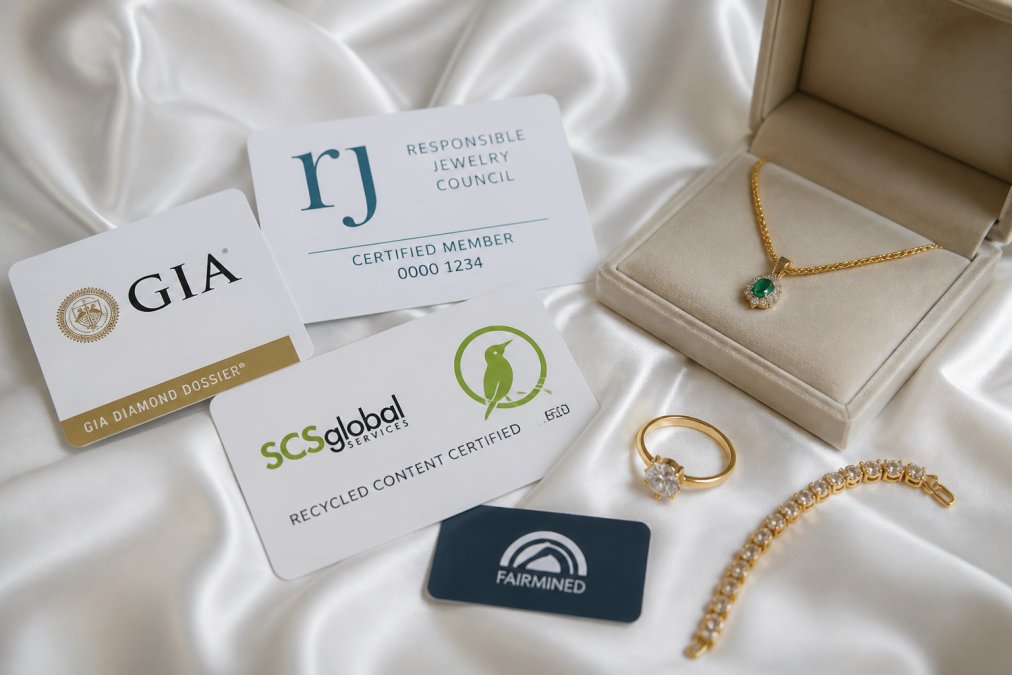
Certifications aren't flawless, but they're the closest thing to objective verification in the jewelry industry. A few certifications have genuine credibility because they involve independent audits and meaningful standards.
Responsible Jewellery Council (RJC) Certification is the most widely recognized standard for ethical jewelry. RJC certification requires audited supply chains, conflict-free sourcing verification, and environmental management practices (responsiblejewellery.org). A brand displaying the RJC logo has undergone third-party assessment. It's not perfect, the standards have been criticized for not going far enough, but it's real verification.
Fairmined Certification focuses on artisanal and small-scale gold mining. If you see this label on gold jewelry, it means the gold was sourced from certified mining cooperatives that meet environmental and labor standards. This certification is particularly relevant for gold, since it traces material back to specific communities.
Kimberly Process Certification applies to diamonds and verifies conflict-free sourcing. It's less rigorous than RJC but still meaningful. The catch: Kimberly Process focuses only on conflict diamonds and doesn't address broader environmental or labor concerns. A diamond with Kimberly Process certification is conflict-free, but that doesn't mean it was mined responsibly.
SCS Global Services and Scientific Certification Systems provide third-party auditing for sustainability claims. If a brand uses SCS to verify environmental practices, they've submitted to independent inspection.
When evaluating certifications, check three things: Is it from an independent organization? Does it require ongoing audits? Can you verify the brand's current status on the certifying body's website?
The absence of these certifications doesn't automatically disqualify a brand. But their presence is a strong credibility signal. Brands that invest in certification are putting their reputation on the line.
How to Verify Traceability in Jewelry Supply Chains
Traceability is the antidote to greenwashing. It's the ability to track a piece of jewelry back to its material origins, knowing not just that gold was used, but where that gold came from, how it was refined, and by whom.
True traceability requires documentation at every step. A brand serious about transparency will provide:
- Mine or source origin: Where did the raw material come from? For diamonds and gemstones, this should include the mine name or, for recycled/antique materials, the collection source.
- Refinery records: If the material was refined or processed, which refinery handled it? Reputable refineries maintain detailed records.
- Certification chain: Each step should include certification or audit documentation proving the material met stated standards.
- Finished product documentation: The final piece should come with a certificate or documentation that ties it back to the sourced materials.
When you're evaluating a brand's traceability claims, ask for documentation. Not a marketing brochure, actual records. Certificates of authenticity. Refinery certifications. Audit reports.
Many brands now use blockchain or digital product passports to track materials. This emerging technology creates immutable records of material movement through supply chains. If a brand offers this, it's a strong transparency signal.
The realistic standard: You should be able to trace at least 80% of the material journey. Some steps may be proprietary or confidential for legitimate business reasons, but the major waypoints, source, refinery, finished product, should be verifiable.
Step-by-Step Guide to Spot Greenwashing When Buying Jewelry
Use this process when evaluating any jewelry brand's sustainability claims. It works whether you're shopping online or visiting a physical store.
Step 1: Request Material Documentation
Before you commit to a purchase, ask the brand for written documentation of material sourcing. This is the most direct test of transparency.
What to ask for: A product sheet or certificate that specifies the gold purity and source (recycled vs. new-mined, and if recycled, from where), the gemstone origin and any treatments, and any relevant certifications.
A brand that can provide this immediately is serious. A brand that delays, deflects, or provides vague responses is likely greenwashing. Legitimate brands have this documentation ready because they're proud of it.

Step 2: Verify Certifications Independently
Don't take a brand's word for certifications. Verify them yourself.
Go directly to the certifying body's website. For RJC, visit responsiblejewellery.org and search their member directory. For Fairmined, check fairmined.org. For Kimberly Process, verify on the official registry.
If a brand claims a certification that doesn't appear in these official databases, they're either lying or the certification has lapsed. Either way, that's a red flag.
Many greenwashing brands will display certification logos without actually holding current certification. Independent verification takes 30 seconds and eliminates this risk entirely.
Step 3: Examine Marketing Language Carefully
Read the brand's sustainability claims word by word. Look for specificity.
Red flags in marketing language:
- Passive voice without named actors: "Our diamonds are sourced responsibly" (by whom? how?)
- Adjectives without mechanisms: "Sustainable practices" (what practices?)
- Emotional language without data: "We care deeply about the planet" (what does that mean operationally?)
- Percentages without context: "80% recycled materials" (in which products? which materials?)
Good marketing language includes names, processes, and measurable commitments: "Our 18k gold is refined by certified facilities in Switzerland," "All gemstones are purchased from suppliers audited by the RJC," "We source antique diamonds exclusively from estate collections."
The difference is not subtle. One approach invites scrutiny. The other hides behind vagueness.
Step 4: Assess Transparency on Their Website
A brand's website reveals how much they're willing to disclose.
Look for:
- A dedicated sustainability or ethics page with specific information (not just marketing language)
- Supplier names or at least supplier locations
- Certification details and links to verify
- Environmental impact data or goals
- Labor practice information
- Supply chain diagrams or documentation
Brands hiding sustainability information typically bury it or don't address it at all. Transparent brands make it easy to find and understand.
Check whether they address the full supply chain or just highlight the parts that look good. A brand that talks about recycled gold but ignores gemstone sourcing is selective in what they disclose. That selectivity is itself a warning sign.
Step 5: Contact the Brand Directly
Call, email, or message the brand with specific questions. Their responsiveness and the quality of their answers matter enormously.
Ask: "Can you provide documentation of where your gemstones are sourced?" "Which certifications apply to this specific piece?" "How do you verify your suppliers' labor practices?"
A transparent brand will answer these questions directly, provide documentation, and welcome the scrutiny. A greenwashing brand will deflect, provide vague responses, or become defensive.
The tone of the response matters too. Brands confident in their practices are patient and detailed. Brands hiding something get evasive or dismissive.
What to Avoid: Buzzwords and Marketing Tactics
Certain phrases appear repeatedly in greenwashing marketing. Learning to recognize them helps you cut through the noise.
"Eco-friendly", This word has no legal definition. It's marketing shorthand that could mean almost anything. Ask what specific environmental practices it refers to.
"Sustainable", Like eco-friendly, sustainability is vague without context. Sustainable in what way? For how long? By whose standards? The word alone is meaningless.
"Ethically sourced", Without certification or specific sourcing details, this is empty language. Every brand claims ethical sourcing. Few can prove it.
"Conflict-free", This refers specifically to diamonds and means they weren't mined in war zones. It doesn't address environmental impact, labor practices, or fair wages. A conflict-free diamond can still be mined destructively.
"Natural", In jewelry marketing, natural often means "not lab-created," but it doesn't guarantee responsible mining. Natural diamonds can be sourced destructively.
"Artisanal", Artisanal mining sounds romantic, but without certification, it often means unregulated mining with poor labor standards and environmental practices.
"Handcrafted", This describes production method, not ethical sourcing. A handcrafted piece can use materials from irresponsible sources.
The pattern: These buzzwords sound good but lack specificity. They're designed to appeal to conscious consumers without requiring actual verification.
Real transparency uses different language. It names sources, certifications, and processes. It provides documentation. It invites scrutiny rather than hiding behind marketing language.
Conclusion
Spotting greenwashing in jewelry requires asking direct questions and demanding specific answers. Vague claims, missing certifications, and opaque supply chains are consistent warning signs. The brands worth supporting are the ones that provide documentation, welcome scrutiny, and explain their practices in concrete detail.
LÖF embodies this transparency standard. Every piece is crafted from 18k gold and platinum with ethically sourced gemstones and antique diamonds, and we provide documentation to verify those claims. When you invest in jewelry that aligns with your values, you deserve to know exactly where your materials come from. Explore The Lepape Studs and our full collection to see what verified ethical luxury looks like.

Frequently Asked Questions
Q: What certifications should I look for when buying ethical jewelry?
A: Seek third-party certifications like Responsible Jewellery Council (RJC), Fairmined, or Cradle to Cradle. These verify ethical sourcing, fair labor practices, and environmental standards. Brands using recycled metals should provide documentation from certified recycling facilities. Avoid brands that mention sustainability without naming specific certifications, vague claims indicate greenwashing. Legitimate jewelers like LÖF clearly display their certifications and supply chain transparency.
Q: How can I verify if a jewelry brand's sustainability claims are legitimate?
A: Request material sourcing documentation directly from the brand. Ask for proof of third-party audits, supply chain maps, and certification numbers you can verify independently. Check if they disclose specific environmental metrics (carbon footprint, water use, waste reduction). Legitimate brands provide detailed answers; greenwashers deflect or offer generic statements. Cross-reference certifications on official registry websites rather than trusting brand websites alone.
Q: What are the most common signs of greenwashing in the jewelry industry?
A: Red flags include vague terms like 'eco-friendly,' 'natural,' or 'conscious' without explanation; missing third-party certifications; no supply chain transparency; beautiful sustainability marketing without verifiable data; and claims about 'ethical sourcing' with no documented proof. Greenwashing also appears as green packaging with no material substance, celebrity endorsements without accountability, or conflicting messages between marketing and actual practices. Brands using recycled metals should provide documentation from certified facilities, not just assertions.
Q: What is the difference between 'ethical' and 'sustainable' in jewelry marketing?
A: Ethical jewelry focuses on fair labor, conflict-free sourcing, and responsible mining practices, it addresses human impact. Sustainable jewelry emphasizes environmental responsibility: recycled materials, reduced carbon footprint, and minimal waste. A truly responsible brand addresses both. Many greenwashers use these terms interchangeably to appear comprehensive while addressing neither properly. Legitimate jewelers specify which practices they follow: 'We use 18k recycled gold and source gemstones through Fairmined-certified suppliers,' not just 'We're ethical and sustainable.'
This article was written using GrandRanker