

Table of Contents
- Understanding Ethical Gemstone Sourcing
- Ethical Gemstone Certifications: What to Look For
- How to Trace Gemstone Origin Through Supply Chain Documentation
- Responsible Jewelry Sourcing Practices and Verification
- Questions to Ask Your Jeweler About Gemstone Sourcing
- Spotting Greenwashing in Ethical Jewelry Claims
- Post-Purchase Verification Steps
- Frequently Asked Questions
Last Updated: August 31, 2026
Understanding Ethical Gemstone Sourcing
Ethical gemstone sourcing refers to the practice of acquiring precious and semi-precious stones through responsible mining, fair labor practices, environmental stewardship, and transparent supply chains. The term encompasses everything from the initial extraction to the final sale, ensuring that no gemstone reaches your jewelry box without documented proof of its origin and the conditions under which it was mined.
The distinction matters more than most people realize. When you purchase a gemstone without verification, you're buying a story you can't verify. You might be supporting child labor, financing conflict, or contributing to environmental degradation. At LÖF, we believe that luxury should never come at the expense of human dignity or planetary health. Every gemstone in our collection is ethically sourced and traceable, not as a marketing claim, but as a foundational principle.
The challenge is that "ethical" has become an industry buzzword. Some jewelers use the term loosely, while others have built their entire business model around genuine verification. Understanding the difference between certified ethical sourcing and greenwashing is the first step toward making an informed purchase.
Ethical Gemstone Certifications: What to Look For
Responsible jewelry sourcing practices depend on third-party certification systems that verify claims at multiple points in the supply chain. A legitimate certification means an independent organization has audited the gemstone's origin and the mining practices involved.
The most recognized certification frameworks include the Kimberley Process, which focuses specifically on conflict-free diamonds, though it has limitations in scope (kimberleyprocess.com). For colored gemstones, look for certifications from gemological laboratories and organizations that conduct due diligence on mining operations. These certifications should document the gemstone's journey from extraction through to sale.
A legitimate certification includes:
- Written documentation of the mine location and mining method
- Verification that labor practices meet international standards
- Environmental management policy compliance records
- Third-party audit trails confirming each step of the supply chain
- Laboratory confirmation of gemstone authenticity and origin
When you ask a jeweler about certifications, they should provide specific documentation, not vague assurances. LÖF maintains full certification records for every ethically sourced gemstone, available upon request. This transparency is what separates genuine commitment from hollow claims.
The catch: not all gemstones can be certified through the same framework. A ruby sourced from Myanmar requires different verification than a lab-grown diamond. A colored gemstone from a small-scale mining cooperative needs different documentation than one from an industrial operation. Understanding these nuances prevents you from expecting the wrong type of certification.
How to Trace Gemstone Origin Through Supply Chain Documentation
Supply chain transparency is the backbone of ethical gemstone verification. Every gemstone should have a documented chain of custody, a paper trail showing exactly where it came from and who handled it at each step.
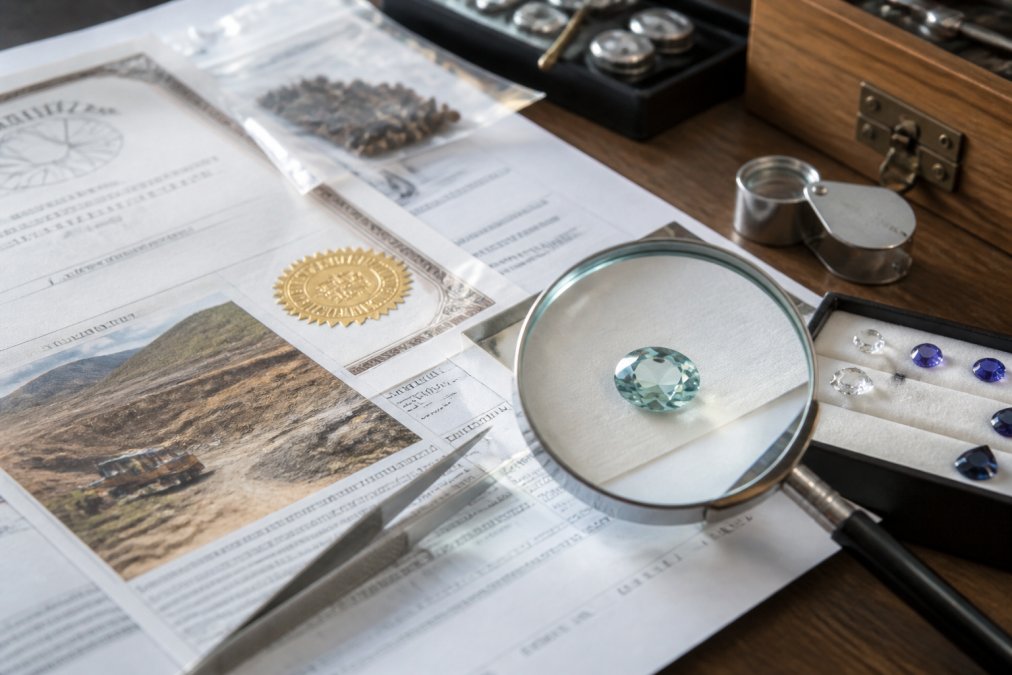
Chain of Custody Records
A chain of custody record documents the gemstone's journey from the mine to your hands. This record should include:
- Mine location and extraction date
- Initial buyer information and transaction details
- Each subsequent sale or transfer with dates and parties involved
- Final jeweler or retailer who set the stone
- Certification or verification at each handoff
When tracing gemstone origin, you're looking for unbroken documentation. If there's a gap, a period where no one can account for the stone's location, that's a red flag. Gaps create opportunities for conflict stones or unethically sourced materials to enter the supply chain undetected.
The most rigorous chain of custody systems use digital ledgers or blockchain verification to create immutable records. This technology makes it nearly impossible to falsify documentation or insert stones from unknown sources. Some luxury jewelers, including LÖF, are moving toward these systems to provide clients with post-purchase verification capabilities.
Gemological Laboratory Reports
A gemological laboratory report is an independent assessment of a gemstone's characteristics and origin (peer-reviewed research). Reputable laboratories examine the stone's physical properties and, in some cases, can determine its geographic origin based on trace elements and formation patterns.
Look for reports from established gemological laboratories that follow international standards (gia.edu). These reports should include:
- Gemstone type, weight, and measurements
- Color, clarity, and cut assessment
- Treatment disclosure (if the stone has been enhanced or treated)
- Origin determination based on scientific analysis
- Laboratory certification number for verification
The gemological report doesn't tell you whether the stone was ethically sourced, it confirms the stone is authentic and describes its qualities. Combined with chain of custody documentation, it forms part of a comprehensive verification system.
One common mistake is confusing a gemological report with an ethical sourcing certification. They serve different purposes. The lab report verifies the stone's authenticity and characteristics. The certification verifies the sourcing practices. You need both.
Responsible Jewelry Sourcing Practices and Verification
Responsible jewelry sourcing practices extend beyond individual gemstones to encompass the entire operation. A truly ethical jeweler implements systems that verify not just the gemstones, but also the metals, the labor practices, and the environmental impact.
When evaluating a jewelry brand's commitment to responsible sourcing, look for evidence of:
- Supplier code of conduct: Written standards that all suppliers must meet regarding labor, safety, and environmental practices
- Audited supply chain: Third-party audits of mining operations, refineries, and manufacturing facilities
- Recycled materials program: Use of recycled precious metals to reduce mining impact
- Conflict-free commitment: Documented systems to prevent conflict stones from entering the supply chain
- Environmental stewardship: Policies addressing water use, waste management, and habitat restoration at mining sites
The difference between a brand that claims responsibility and one that practices it shows up in documentation. Ask for audit reports, supplier certifications, and specific metrics, not general statements about sustainability.
LÖF's approach includes working exclusively with suppliers who meet rigorous standards for labor practices and environmental management. We use 18k gold and platinum, with a significant portion sourced from recycled materials to reduce mining pressure. Our gemstones come with full traceability documentation.
Small-scale and artisanal mining operations present a particular challenge. These operations often produce ethically sourced stones, miners work for fair wages in communities where mining is a legitimate livelihood. However, documentation can be less formal than in industrial operations. Legitimate small-scale mining should still have chain of custody records, even if they're less elaborate than those from large operations.
Questions to Ask Your Jeweler About Gemstone Sourcing
The conversation with your jeweler is where verification begins. The right questions separate genuine commitment from surface-level marketing.

Start with the fundamentals:
-
"Can you provide the chain of custody documentation for this gemstone?", Their answer should be yes, immediately, with specific details. If they hesitate or offer vague reassurances, that's a warning sign.
-
"What certification does this stone have, and from which organization?", Listen for specific names: Kimberley Process, Responsible Jewellery Council, or other recognized bodies. Generic answers like "it's certified" aren't sufficient.
-
"Where was this gemstone mined, and do you have documentation of the mining operation?", A reputable jeweler should know the mine location and be able to discuss the mining practices there.
-
"Are the precious metals in this piece recycled or newly mined?", This matters for environmental impact. Recycled metals require no new extraction.
-
"Can you show me the gemological laboratory report?", This confirms the stone's authenticity and characteristics. It's a standard document for fine gemstones.
-
"What happens if I want to verify this information after purchase?", This tests whether they've built verification into their post-sale relationship. LÖF provides clients with full documentation and verification access.
-
"How do you ensure your suppliers meet labor and environmental standards?", Listen for specifics about audits, certifications, or direct relationships with mining operations.
The jeweler's willingness to answer these questions, and to provide documentation, reveals their actual commitment to ethical sourcing. A jeweler who becomes defensive or dismissive about verification isn't operating with transparency.
Spotting Greenwashing in Ethical Jewelry Claims
Greenwashing in the jewelry industry takes many forms. A brand might use terms like "conflict-free," "sustainable," or "ethical" without any supporting documentation. They might highlight one positive practice while hiding problematic ones. They might partner with recognized organizations without actually meeting their standards.
Common greenwashing tactics include:
- Vague terminology: Using words like "responsibly sourced" or "sustainably mined" without defining what those terms mean or providing evidence
- Selective transparency: Highlighting recycled metals while remaining silent about gemstone sourcing practices
- Unverified certifications: Claiming certifications from organizations without providing documentation or audit trails
- Marketing-first claims: Emphasizing sustainability in advertising while offering no verification mechanism for customers
- Partnership exploitation: Claiming alignment with ethical organizations without demonstrating actual compliance with their standards
- Origin ambiguity: Refusing to disclose the specific mine location or mining practices
The greenwashing checklist helps you identify false claims:
- Does the brand provide specific documentation, or only marketing language?
- Can they name the certification organizations and provide audit reports?
- Do they disclose mine locations and mining practices?
- Are their environmental and labor claims backed by third-party verification?
- Do they offer post-purchase verification options?
- Can they explain the difference between their practices and industry standards?
If a brand scores poorly on these points, their ethical claims are likely marketing rather than practice.
Post-Purchase Verification Steps
Verification doesn't end at purchase. The most comprehensive approach to ethical gemstone ownership includes steps you can take after bringing the piece home.
First, organize all documentation provided with your gemstone: the gemological report, chain of custody records, certification documents, and any correspondence with the jeweler about sourcing. Store these securely, they're part of the gemstone's permanent record and will matter if you ever resell or pass the piece to an heir.
Request additional documentation if you don't have complete records. Reach out to the jeweler and ask for any missing pieces: the specific mine location, mining operation details, or environmental management policies from the supplier. Legitimate jewelers maintain these records and can provide them on request.
If your gemstone came with a gemological report, verify the laboratory's credentials independently. Check that the lab is recognized and operates according to international standards. You can often verify report authenticity directly with the laboratory using the certification number.
For gemstones purchased through luxury jewelry maisons like LÖF, digital verification systems are becoming standard. These systems allow you to confirm the gemstone's documentation online using a unique identifier. This technology creates a permanent, tamper-proof record that you can access throughout the stone's ownership.
Consider having the gemstone re-examined by an independent gemological laboratory if you have questions about its authenticity or origin. This costs more but provides definitive verification, especially for significant purchases.
Document your own chain of custody going forward. If you have the piece repaired, resized, or reset, keep records of that work. If you eventually sell or pass the gemstone to someone else, this documentation adds value and maintains the stone's ethical provenance.
Purchasing ethically sourced gemstones is an investment in your values as much as in the piece itself. It requires asking difficult questions and demanding transparent documentation, not because jewelers are inherently deceptive, but because the industry has historically lacked accountability. LÖF was built on the principle that luxury jewelry should be verifiable at every step. Our 18k gold and platinum pieces, combined with ethically sourced gemstones and antique diamonds, represent a commitment to craftsmanship that honors both the wearer and the communities where these materials originate. When you choose LÖF, you're choosing transparency, responsibility, and heirloom-quality design backed by documentation you can trust.
Frequently Asked Questions
Q: What certifications should I look for when buying ethically sourced gemstones?
A: Look for third-party certifications from recognized bodies. For colored gemstones, certifications from labs that verify ethical sourcing practices are essential. Ask your jeweler for written documentation of all certifications and verify them directly with the issuing laboratory. Reputable jewelers like LÖF provide transparent certification records for every gemstone, ensuring you have proof of ethical sourcing and authenticity.
Q: How can I verify the authenticity of a gemstone?
A: Request a gemological laboratory report from an independent, accredited lab that details the gemstone's origin, treatment history, and physical properties. Verify the report's authenticity by contacting the laboratory directly using information on the report itself. For ethically sourced gemstones, the report should include traceability documentation showing the supply chain from mine to market. Physical examination under magnification by a qualified gemologist can also confirm authenticity, but laboratory certification remains the gold standard for verification.
Q: What is the difference between conflict-free and ethically sourced gemstones?
A: Conflict-free gemstones meet the Kimberley Process standards, which focus primarily on preventing gemstones from funding armed conflict. Ethically sourced gemstones go further, addressing fair wages, safe labor practices, environmental stewardship, and community impact throughout the entire supply chain. Ethical sourcing requires audited supply chains, responsible mining standards, and third-party verification. When buying luxury jewelry, ethically sourced gemstones offer greater assurance of responsible extraction and fair treatment of workers compared to conflict-free alone.
Q: What questions should I ask my jeweler about gemstone sourcing?
A: Ask for written documentation of the gemstone's origin, mining method (artisanal, small-scale, or large-scale operation), and certification details. Inquire about the supplier's code of conduct, environmental management policies, and labor practice standards. Request proof of chain of custody documentation from mine to final sale. Ask whether the jeweler conducts due diligence audits of their suppliers and what third-party certifications they hold. Transparent jewelers will provide comprehensive answers and supporting documentation without hesitation.
This article was written using GrandRanker