

Table of Contents
- What Conflict-Free Means for Colored Gemstones in 2026
- How to Verify Gemstone Origin Before You Buy
- Colored Gemstone Certification: What a Gemological Report Actually Proves
- Ethical Gemstone Sourcing Questions to Ask Every Seller
- Responsibly Mined Gemstones: Traceability, Community Impact, and What Brands Get Wrong
- Where to Buy Conflict-Free Colored Gemstones: Vetted Sources and Price Ranges
- Buyer Protections, Returns, and Red Flags to Watch For
- Frequently Asked Questions
Last Updated: October 13, 2026
What Conflict-Free Means for Colored Gemstones in 2026
A conflict-free gemstone is one whose journey from mine to market is free of documented links to armed conflict, forced labor, or the diversion of proceeds to fund violence.
A "conflict-free" label on a colored gemstone is largely a self-declaration. No single global body certifies a ruby or emerald as conflict-free the way the Kimberley Process handles rough diamonds.
The stakes are real. Colored gemstone mining is concentrated in a few regions, much of it at small-scale operations where traceability is difficult and labor conditions vary widely.
How to Verify Gemstone Origin Before You Buy
Gemstone origin verification starts with documentation, not gut feeling. Ask the seller three things: where the stone was mined, who cut it, and which laboratory issued the report.
Origin matters for more than ethics. A Burmese ruby and a Mozambican ruby can look similar but carry different market values, and some buyers seek or avoid certain sources for political reasons.
A few practical checks we recommend:
- Ask for the gemological report number and verify it directly on the issuing lab's website
- Request the name of the cutter or cutting house, not just the mine
- Ask whether the seller visited the source or works through a known buying office
- Request the claim in writing, not just verbally on a call
The Gemological Institute of America's report verification service lets you confirm that a report number matches the stone it claims to describe. This single step filters out a surprising amount of misrepresentation.
Colored Gemstone Certification: What a Gemological Report Actually Proves
A colored gemstone certification is a laboratory's written opinion on a stone's identity and, where applicable, whether it has been treated.
What a report typically covers:
- Species and variety, such as whether a blue stone is sapphire or spinel
- Whether the stone is natural or lab-grown
- Treatment disclosure, including heat, fracture filling, or diffusion
- Measurements, carat weight, and cut style
- Origin opinion, when the lab offers it
What it does not cover: mining conditions, labor standards, or whether proceeds funded conflict. A report proves the stone is what the seller says it is, not that it was sourced responsibly.
For high-value purchases, an origin opinion from a major lab carries real weight, one of the few independent data points in a market where most claims come from the seller.
Ethical Gemstone Sourcing Questions to Ask Every Seller
Ethical gemstone sourcing questions should be specific enough that a vague answer is obvious. These are the ones we would ask before spending money on a colored stone.
- Which country and region was this stone mined in?
- Can you name the cutting facility, and is it audited?
- Do you have a written responsible-sourcing policy, and can you send it?
- Which third-party lab issued the report, and can I verify the number?
- What is your return policy if the stone's origin claim turns out to be false?
- Do you disclose all treatments, including those not visible to the eye?
If a seller cannot answer at least four of these, that is a signal. Not proof of wrongdoing, but a signal that the sourcing story has gaps.
Responsibly Mined Gemstones: Traceability, Community Impact, and What Brands Get Wrong
Responsibly mined gemstones are stones whose extraction can be traced to a known source and whose production did not rely on forced or child labor. Traceability is the backbone of that claim. Without it, "responsible" is a feeling, not a fact.
What real traceability actually looks like
Traceability is a chain of custody, not a single document. A genuinely traceable stone has a nameable record running from the mine or buying station, through the cutting and polishing house, to the dealer or brand that sells it. In practice, full end-to-end traceability is rare for colored stones because rough material often changes hands several times before cutting, and small-scale mining is dispersed across many independent operators.
A few mechanisms support traceability in the market today:
- Mine-to-market programs run by individual brands or cooperatives that document each stage of the journey.
- Third-party standards and certification schemes that audit mining and trading practices against defined criteria. The Responsible Jewellery Council is one of the best-known bodies setting standards for the jewelry supply chain, and Fairmined certification is used for some artisanal gold and associated mining.
- Blockchain and digital ledger pilots that record transfers of custody, though adoption for colored stones remains limited.
- Buying offices and cutting houses that maintain their own supplier records and can trace a stone back to a region even when the exact mine is unknown.
None of these is a universal guarantee. They are evidence, and evidence is what you are asking a seller to produce.
Why gemstone-specific sourcing differs
Treating colored gemstones as one category hides important differences:
- Rubies are often associated with specific regions such as Myanmar, Mozambique, and Madagascar, and origin can significantly affect both value and buyer preference. Traceability is complicated by the fact that rough ruby is frequently traded through informal channels.
- Sapphires come from many countries, including Sri Lanka, Madagascar, Australia, and the United States (Montana). Some sources, such as Montana, have relatively well-documented local supply chains; others are more opaque.
- Emeralds are frequently treated (oil or resin) and are mined in Colombia, Zambia, Brazil, and elsewhere. Treatment disclosure and origin verification are both important, and the two are separate questions.
- Less common stones such as tourmaline, garnet, spinel, and opal are often mined by small-scale operators, which can make traceability harder but also means buyer pressure can have a direct effect on local practices.
Asking about the specific stone in front of you, rather than colored gemstones in general, produces more useful answers.
Community impact and what brands get wrong
Small-scale mining supports millions of livelihoods globally. The difference between a well-run operation and a poorly run one often comes down to whether miners are paid fairly, whether child labor is excluded, and whether local communities benefit.
Where brands get it wrong is treating traceability as a marketing problem rather than a logistics one.
For buyers who want to move faster, working with a maison that already vets its supply chain removes most of the legwork. LÖF builds its pieces from 18k gold, platinum, and ethically sourced gemstones and antique diamonds.
Where to Buy Conflict-Free Colored Gemstones: Vetted Sources and Price Ranges
The safest places to buy conflict-free colored gemstones are sellers who can produce a verifiable gemological report, name the country and region of origin, and stand behind a written return policy. That combination narrows the field considerably. Below is a guide to the main buying channels and how to vet a seller.
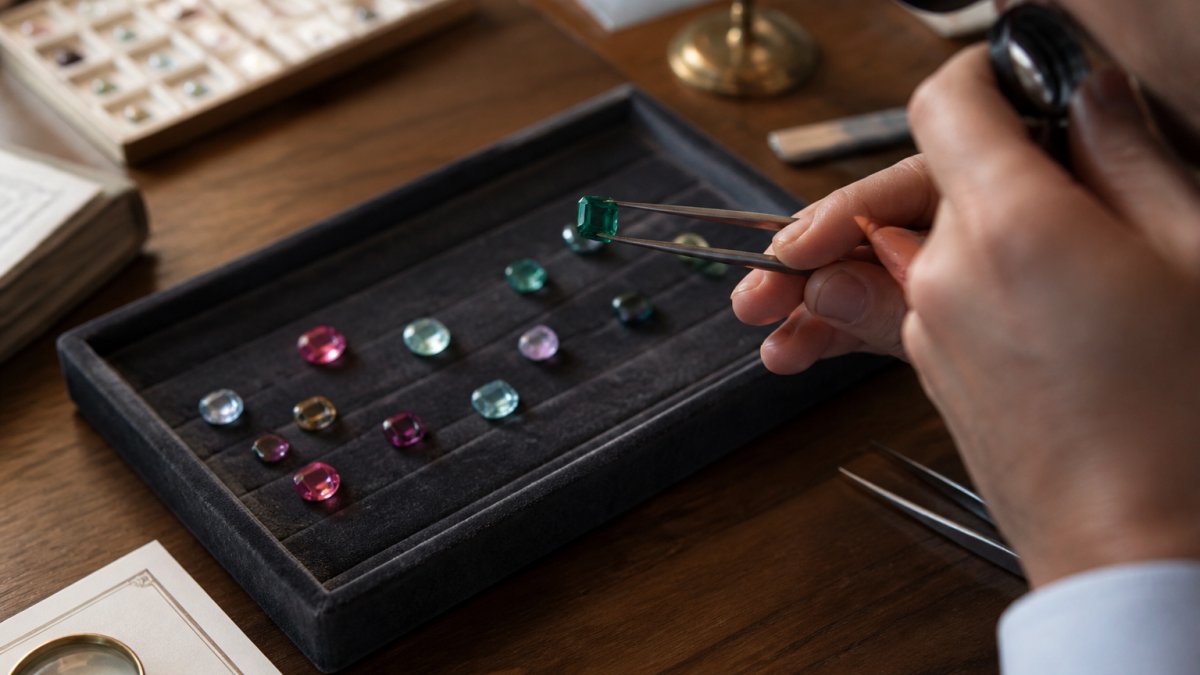
The main buying channels, and what each does well
Independent luxury maisons and heritage jewelers. These houses typically buy through established cutting centers and can often name the region of origin.
Auction houses. The major international auction houses publish provenance and condition reports and are a legitimate route to rare or estate stones.
Bespoke jewelers. Good for custom engagement rings, but traceability varies enormously because it depends on the jeweler's own supplier.
General online marketplaces. Convenient and often inexpensive, but traceability is frequently unverified and listings may not disclose treatments.
How to vet any seller before you buy
- Ask for the gemological report number and confirm it on the issuing laboratory's own website.
- Ask for the country and, if available, the region of mining.
- Ask who cut the stone and whether the cutting facility is audited.
- Request the responsible-sourcing policy in writing.
- Confirm the return window and whether it covers misrepresentation of origin or treatment.
- Pay by a method with chargeback rights for higher-value purchases.
A seller who answers most of these quickly is a different kind of seller from one who deflects. The pattern matters more than any single answer.
What to expect at different price points
Entry-level pieces under a few hundred dollars are usually small stones or accent gems, and full traceability is uncommon at this level. Mid-range pieces in the low thousands are where certified stones and named origins start to appear.
For buyers who want the sourcing work already done, our own collection is built around it. The Valentine Ring pairs a certified tourmaline with 3mm bands of solid yellow gold, and The Rockwell Ring sets a 2ct natural emerald in blackened yellow gold with 1ct of baguette diamonds. Both come with certified gemstones.

Buyer Protections, Returns, and Red Flags to Watch For
Buyer protections on colored gemstones depend almost entirely on the seller, not on any industry-wide guarantee.
What to insist on before paying:
- A written return window, ideally 14 days or longer
- A refund policy that covers misrepresentation of origin or treatment
- Payment through a method with chargeback rights
- A gemological report you can verify independently
- Clear disclosure of any treatments, including fracture filling
Red flags: pressure to buy before you have a report, refusal to put sourcing claims in writing, prices far below market for the stated quality, and sellers who cannot name a single lab they work with.
If you are buying from LÖF, every gemstone comes certified and our team answers sourcing questions directly before purchase.
Buying conflict-free colored gemstones in 2026 comes down to one thing: whether the seller can prove what they claim.
Frequently Asked Questions
Where can I buy conflict-free colored gemstones in 2026?
Buy from jewelers who sell certified stones and can name the country or region of origin. Look for brands that use recycled 18k gold and platinum, provide gemological reports, and disclose treatments. LÖF, for example, sells certified gemstone pieces like The Valentine Ring (a tourmaline in solid yellow gold, $24,000) and states that all gemstones come certified. Ask for the report number before purchase and verify it with the issuing lab.
How can I verify that a colored gemstone is ethically sourced?
Ask the seller for the stone's country of origin, the mine or supplier name, and a gemological report from a recognized lab. Conflict-free and responsibly sourced claims should be backed by traceability documents, not just marketing language. If a seller cannot name where the stone came from or show certification, treat the ethical claim as unverified. Legitimate jewelers will answer these questions without hesitation and provide paperwork.
What does conflict-free mean for colored gemstones?
For colored gemstones, conflict-free means the stone was not mined or traded in a way that funds armed conflict or serious human rights abuses. Unlike diamonds, colored stones like rubies, sapphires, and emeralds often lack a single unified certification scheme, so conflict-free claims depend on the seller's supply chain transparency. Responsible sellers document the stone's journey from mine to market and can show you that documentation on request.
What questions should I ask a gemstone seller about sourcing?
Ask: Which country and mine did this stone come from? Can I see the gemological report? Has the stone been treated, and how? What are your labor and environmental standards? Do you use recycled metals? What is your return policy? A seller who answers these clearly and provides documentation is more trustworthy than one who deflects. Request the certificate number and confirm it with the lab.
Which colored gemstones are considered the most ethically sourced?
There is no single most ethical gemstone, but traceability varies by type. Montana sapphires from the United States and Australian opals often have clearer supply chains. Emeralds from Colombia and sapphires from Sri Lanka can be responsibly sourced when the seller documents origin and labor standards. Tourmaline, spinel, and garnet are also available from vetted sources. What matters most is whether the seller can prove origin and certification, not the gemstone type alone.