

Table of Contents
- What Happens When Jewelry Is Not Ethically Sourced: The Human and Environmental Cost
- What Does Ethically Sourced Jewelry Mean?
- The Environmental Impact of Jewelry Mining
- Ethically Sourced Gold: What Responsible Mining Actually Looks Like
- How to Tell If Jewelry Is Ethically Sourced
- Mined, Recycled, or Lab-Grown: Weighing the Trade-Offs
- Accountability and Remedies When Harm Is Discovered
- Frequently Asked Questions
Last Updated: October 19, 2026
What Happens When Jewelry Is Not Ethically Sourced: The Human and Environmental Cost
When jewelry is not ethically sourced, the consequences reach far beyond the display case: they land on miners, refining communities, rivers, and soil. This guide from LÖF examines what happens if jewelry is not ethically sourced, tracing the damage from mine to finished piece. The short answer is uncomfortable. Unethical sourcing often means unsafe mine shafts, unpaid or underpaid labor, gemstones that finance armed groups, and landscapes left poisoned long after the gold leaves the ground. Below, we break down each consequence, then show you how to verify a piece before you buy it.
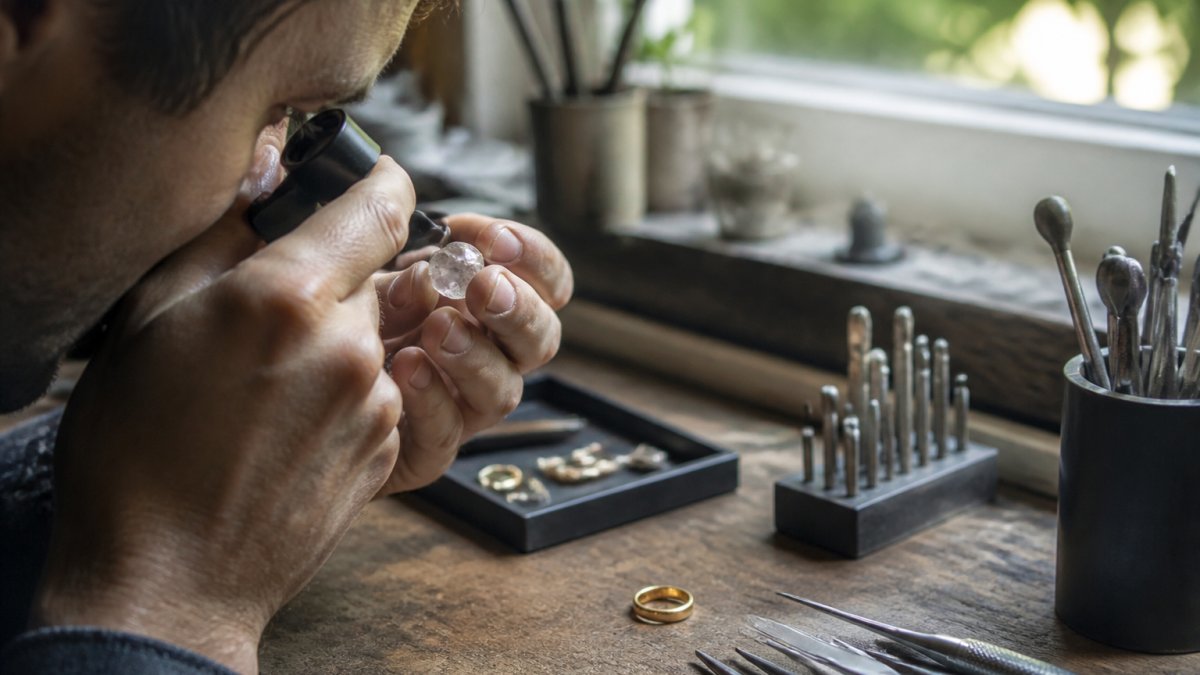
Human Rights and Labor Conditions in Mining and Manufacturing
Human rights abuses are the most direct cost of unethical jewelry. In artisanal and small-scale mining, workers often labor without protective equipment, formal contracts, or a living wage. Child labor and forced labor appear in some gemstone and gold supply chains, and mine collapses remain a real risk where shafts go unregulated. Manufacturing adds its own pressures: polishing, plating, and stone-setting workshops can expose workers to dust and chemicals with weak ventilation. The International Labour Organization on child labour documents how informal mining economies make oversight difficult. For buyers, the practical takeaway is simple: a piece with no traceable origin offers no assurance that anyone in its chain was treated safely or paid fairly.
Conflict Minerals and the Financing of Armed Groups
Some jewelry materials have funded violence. Diamonds and certain minerals mined in conflict zones have historically been traded to finance armed groups, which is why the term "blood diamonds" entered common use. The Kimberley Process overview was created to curb this trade by certifying rough diamond shipments, but its scope is limited and it does not cover every gemstone or every route to market. Gold is harder to trace still, since small volumes are easy to smuggle and blend into legitimate supply. A stone or band with no chain-of-custody documentation cannot be confirmed conflict-free, and that uncertainty is itself the risk.
What Does Ethically Sourced Jewelry Mean?
Ethically sourced jewelry is jewelry whose materials can be traced to origins that respect human rights and minimize environmental harm, with documentation to support the claim. In practice, that means responsible sourcing across the full supply chain: gold from audited or recycled sources, gemstones with known provenance, and manufacturing that meets labor and safety standards. It is not a single certification or a marketing label. Transparency and traceability are the backbone of the definition, because a claim you cannot verify is just a claim. When we assess a piece at LÖF, we ask three questions: where did the metal come from, where did the stone come from, and who can prove it.
The Environmental Impact of Jewelry Mining
Mining's environmental footprint is heavy and long-lasting, and it is best understood by following what extraction actually does to land, water, and air, and how long those effects outlast the mine itself.
Land disturbance. Large-scale gold and gemstone extraction moves enormous volumes of rock. Open-pit operations clear vegetation and topsoil, and the waste rock and tailings have to go somewhere. Habitat damage and land degradation can persist for decades after closure, affecting communities that depend on those lands for farming and drinking water. This is the part of the story that rarely makes it into a jewelry display.
Water use and chemical pollution. Water use and chemical pollution are the sharpest environmental concerns. Gold recovery often relies on cyanide leaching and, in artisanal operations, mercury amalgamation. When these are poorly managed, they contaminate rivers and soil. Artisanal miners frequently release mercury directly into waterways, where it converts to methylmercury and enters the food chain. The U.S. Environmental Protection Agency on mercury explains how mercury persists and accumulates in ecosystems, which is why the damage does not stop when mining does. Cyanide spills and acid mine drainage are the large-scale equivalents: acute events with long tails.
Energy and emissions. Open-pit operations are energy-intensive, and the ore grade for gold is low, meaning large volumes of rock are moved per unit of metal recovered. That energy use, plus the land cleared for tailings and infrastructure, adds up across the cumulative environmental impact of jewelry mining.
Why the damage outlasts the mine. Closure is not the same as cleanup. Tailings facilities, waste rock piles, and contaminated groundwater can require monitoring and treatment for decades, and in many regions the money set aside for reclamation is inadequate. The result is a landscape that keeps imposing costs on the people who live near it long after the gold has left the ground.
What reduces the demand. Recycled metals and reclaimed materials reduce this demand, which is why we build our pieces from 18k recycled gold and platinum. But recycling is a demand-side fix; it does not repair existing damage, and it depends on verification to be meaningful.
Ethically Sourced Gold: What Responsible Mining Actually Looks Like
Ethically sourced gold is gold that can be traced to a responsible source, whether that is an audited mine or a recycled supply. Responsible mining means formalized labor, managed chemical use, water treatment, and community consultation, backed by third-party standards and supplier audits. Recycled gold sidesteps new extraction almost entirely: existing metal is refined and reused, so no fresh ore is dug for that piece. The catch is verification. Certifications and audits are only as strong as their enforcement, and a recycled claim should come with documentation. For a legacy piece, this matters: the metal you pass down carries the story of how it was made.
How to Tell If Jewelry Is Ethically Sourced
You can tell if jewelry is ethically sourced by asking for documentation, not slogans. A credible seller will name their gold source, describe their gemstone provenance, and explain their chain of custody. Use this checklist before you buy:
- Ask whether the gold is recycled, certified, or both, and request proof
- Ask for the country of origin of each gemstone and any certification
- Confirm whether the brand publishes third-party standards or audit results
- Look for a written sourcing policy, not just a homepage badge
- Ask how antique or reclaimed stones are verified
- Request the return policy in case documentation does not match the claim
Verifying Claims and the Limits of Chain of Custody
Chain of custody has real limits, and honest brands will admit them. Once gold or stones pass through refiners, cutters, and setters, records can thin out, and a "conflict-free" label may only cover part of the journey. What you can verify is the quality of a brand's disclosure: named sources, third-party audits, and a willingness to answer specific questions. At LÖF, we use antique diamonds and ethically sourced gemstones precisely because reclaimed and older stones carry a documented history rather than an opaque one. If a seller cannot explain where a stone came from, treat the sourcing claim as unproven.
Mined, Recycled, or Lab-Grown: Weighing the Trade-Offs
Each material path carries trade-offs, and none is automatically the ethical choice. Mined materials support mining communities when operations are responsible, but they carry the labor and environmental risks described above. Recycled gold and reclaimed metals avoid new extraction and its pollution, though they still depend on refining and verification. Lab-grown stones avoid mining entirely, but they raise separate questions about energy use and long-term value. The table below summarizes how the three compare.
| Path | Main Benefit | Main Drawback | Best For |
|---|---|---|---|
| Mined (certified) | Supports responsible mining communities | Requires strong traceability to verify | Buyers who want documented origin |
| Recycled / reclaimed | Avoids new extraction and pollution | Verification depends on the refiner | Heirloom pieces meant to last |
| Lab-grown | No mining footprint | Energy use and resale value questions | Buyers prioritizing mining-free stones |
Our view is that recycled precious metals paired with verified stones offer the strongest balance of beauty, durability, and accountability. The Responsible Jewellery Council on responsible sourcing sets out the standards that credible supply chains are measured against.
Accountability and Remedies When Harm Is Discovered
Accountability starts with disclosure. When harm is discovered in a supply chain, the remedies that matter are concrete: halting purchases from the source, requiring corrective action, compensating affected workers, and publishing what went wrong. Certification bodies and third-party standards provide the audit trail, but enforcement depends on brands treating sourcing as an ongoing obligation rather than a one-time badge. Consumers have use here. Ask brands how they handle a failed audit, and whether they disclose it. A brand that can describe its remedy process is far more trustworthy than one that claims its supply chain is flawless. That is the standard we hold ourselves to at LÖF, and it is the standard worth demanding from anyone selling you an heirloom.
Frequently Asked Questions
What happens to workers when jewelry materials are not ethically sourced?
When sourcing is unregulated, workers can face dangerous conditions, low or unpaid wages, and exposure to mercury and other chemicals in small-scale mining. Child labor and forced labor appear in some artisanal mining regions, and gemstone cutting workshops often lack basic safety protections. These risks concentrate in the early links of the supply chain, where traceability is weakest and oversight thinnest, which is why supplier audits and third-party standards matter.
How can unethical jewelry sourcing harm the environment?
The environmental impact of jewelry mining includes water use, chemical pollution, habitat damage, and land degradation. Large-scale operations can displace soil and vegetation, while artisanal gold mining often relies on mercury, which contaminates waterways and soil. Energy use in refining adds further emissions. Recycled metals and reclaimed materials reduce demand for newly extracted material, which is one reason they are central to sustainable jewelry.
How can I tell whether jewelry is ethically sourced?
Ask specific questions: where the gold and gemstones came from, whether the brand publishes supplier audits, and which third-party standards it follows. Look for traceability and chain of custody documentation rather than a single badge. A jeweler who can explain the origin of a stone and the refining path of the metal is showing transparency. Vague claims about responsible sourcing without evidence are a warning sign.
Are recycled metals and antique diamonds more sustainable choices?
Recycled gold and platinum keep existing metal in circulation, cutting demand for new mining and its associated water use, pollution, and land degradation. Antique diamonds are already above ground, so choosing them avoids new extraction. Neither option is automatically perfect, since refining and resetting still carry impacts, but both reduce the pressure to extract new material and are a practical route to sustainable jewelry.
The challenge is that ethical sourcing is invisible in a finished piece: you cannot see fair wages or clean water in a polished band. That is why we built LÖF around proof rather than promises, using 18k recycled gold and platinum, ethically sourced gemstones, and antique diamonds with a documented past. Explore our rings and cuffs, including The Astor Ring and The Margueritte Cuff, and choose options that let you wear a legacy you can actually stand behind.