

Table of Contents
- What Makes an Antique Cut Diamond Different
- Old Mine Cut vs Old European Cut: Key Visual Differences
- The Culet and Girdle: Your Primary Authentication Markers
- How to Verify Antique Diamond Authenticity
- Antique Diamond Jewelry Appraisal Cost and Certification
- Distinguishing Authentic Antique from Modern Vintage-Style Replicas
- Light Performance Testing and Clarity Assessment
- Conclusion
Last Updated: August 24, 2026
What Makes an Antique Cut Diamond Different
Antique cut diamonds, stones cut before 1920, differ fundamentally from modern brilliant cuts due to hand-cut versus laser-cut production methods. Hand-cut diamonds exhibit asymmetrical proportions and facet arrangements reflecting the artistry of their era, no two are identical. Modern diamonds follow precise mathematical formulas, ensuring consistency but sacrificing the subtle irregularities that give antique stones their distinctive personality.
Hand-cut versus laser-cut production
Hand-cut stones show visible asymmetries in facet patterns and girdle variations in thickness and surface texture. A frosted girdle surface is common in antique diamonds, created by period polishing techniques. Laser-cut diamonds display perfect symmetry, polished mirror-finish girdles, and mathematically precise facets. Hand-cut production also meant longer creation times, cutters spent weeks or months adjusting proportions to suit the rough diamond's natural shape, sometimes sacrificing brilliance to preserve carat weight.
Light performance and refraction characteristics
Antique diamonds typically show more "fire" (colored light dispersion) and less consistent sparkle than modern brilliant cuts. Refraction creates a warmer, more diffused glow with larger, more visible scintillation patterns. This optical signature differs markedly from modern stones and helps distinguish authentic antiques from recent replicas.
Old Mine Cut vs Old European Cut: Key Visual Differences
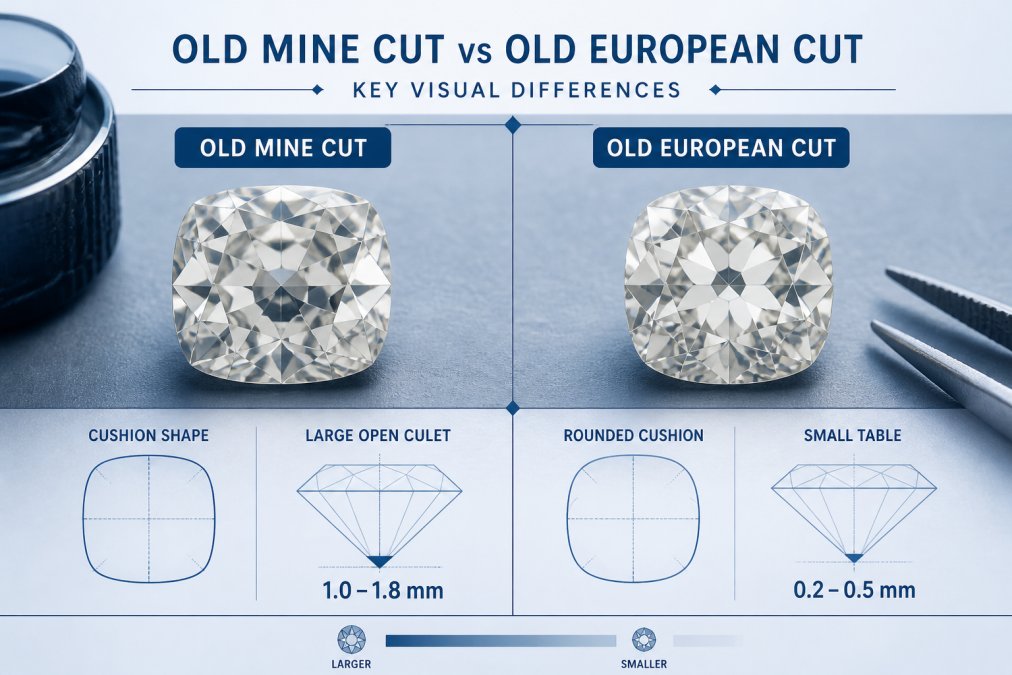
Identifying authentic antique cut diamonds requires understanding the two dominant hand-cut styles: Old Mine Cut (roughly 1700-1890) and Old European Cut (circa 1890-1920).
Cushion shape and facet patterns
Old Mine Cut diamonds display a cushion shape with rounded corners and slightly squared outline, with a smaller table and less organized facet patterns. Old European Cut refined the cushion into a more circular, symmetrical shape with larger tables and more geometric facet arrangements. Old European Cut appears more "finished," while Old Mine Cut looks more raw and individualistic. This distinction helps date a stone, a diamond claimed to be from 1850 but exhibiting Old European Cut characteristics suggests later origin or modern replication.
Table size, crown height, and pavilion depth
Old Mine Cut typically features table sizes between 40-60% of crown width, relatively tall crown height, and variable pavilion depth. Old European Cut refined these proportions to table sizes of 50-65%, more standardized crown height, and increased pavilion depth. These measurements are difficult to fake convincingly, as replicating authentic proportions requires deliberately sacrificing light performance.
The Culet and Girdle: Your Primary Authentication Markers
The culet and girdle are your most reliable authentication tools, revealing whether a diamond was truly hand-cut in the 18th or 19th century.
Open culets and their historical significance
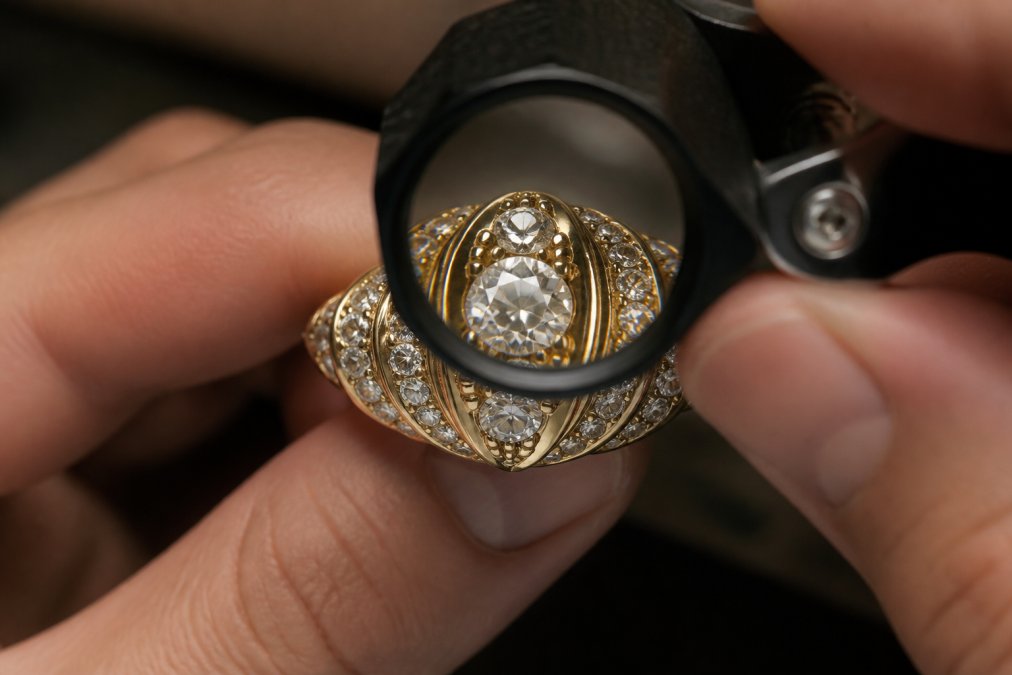
An open culet is a small flat facet at the diamond's bottom point. Antique diamonds frequently feature open culets because cutters believed they improved light performance. A closed or pointed culet on a stone claimed to be antique is a red flag, modern cutters almost never leave open culets. The historical significance relates to 18th and 19th-century understanding of light behavior; cutters believed reflecting light through the bottom improved brilliance, though we now know this represents a slight light loss.
Frosted girdle surfaces and wear patterns
The girdle on antique stones frequently displays a frosted or matte surface from period polishing techniques. Modern diamonds have polished, reflective girdles. This difference is immediately visible under magnification. Wear patterns on the girdle, microscopic scratches from 100+ years of jewelry wear, are difficult to replicate artificially. Authentic frosting shows natural variation; artificial frosting tends to be uniform and artificial-looking under magnification. vintage jewelry investment.
How to Verify Antique Diamond Authenticity
Verification requires multiple checks. No single test is definitive, but together they establish whether a diamond is authentically antique or a modern replica.
Loupe inspection and microscopic inclusions
A 10x loupe reveals features invisible to the naked eye: culet, girdle surface, facet symmetry, and internal characteristics. Antique diamonds often contain "feather" inclusions (internal fractures), pinpoints, or clouds in patterns unique to each stone. Microscopic wear on facets, tiny scratches and surface irregularities from centuries of wear, is another loupe-visible indicator. Modern stones, even vintage-styled ones, typically show pristine facet surfaces unless deliberately aged.
Laser inscription detection and certification
Laser inscriptions on the girdle indicate modern origin, antique diamonds never have these (gia.edu). Certification from the Gemological Institute of America (GIA) or American Gem Society (AGS) adds credibility, documenting the stone's characteristics and identifying Old Mine or Old European Cut styles. Proper certificates provide third-party verification and help establish provenance.
Antique Diamond Jewelry Appraisal Cost and Certification
Professional appraisal and certification are essential investments when acquiring antique diamonds. A qualified gemologist experienced with antique diamonds typically charges $150-$400 for detailed appraisal. Certification from major laboratories costs $200-$600 depending on size and analysis depth. Prioritize expertise in antique diamonds specifically, a gemologist experienced with modern diamonds may not recognize subtle characteristics distinguishing authentic antiques from replicas.
LÖF works with certified gemologists specializing in antique diamonds. Each stone comes with documentation of its characteristics and authenticity markers, providing the foundation for future appraisals and insurance claims.
Distinguishing Authentic Antique from Modern Vintage-Style Replicas
Modern vintage-style diamonds are honest replicas, not misrepresented fakes, but modern diamonds cut to resemble antique styles. They're not authentic antiques, and the distinction matters for collectors seeking true heirloom pieces.
Symmetry irregularities in hand-cut stones
Authentic antique diamonds show asymmetry in facet patterns, evidence of hand-cutting. No two facets are identical; angles and proportions vary as cutters adapted to the rough diamond's shape. Modern vintage-style diamonds, even when deliberately styled to look antique, typically exhibit greater symmetry. Under magnification, authentic antiques show facet variations; modern replicas show more consistent geometry.
Proportions and scintillation differences
Authentic antique diamonds often feature proportions modern cutters would consider suboptimal, unusually small tables, taller crowns, or shallow pavilions. Modern vintage-style replicas balance historical aesthetics with contemporary light performance. Authentic antique diamonds show larger, more visible light and dark areas as they move (sometimes described as "chunky" or "sleepy"). Modern vintage-style replicas blend both characteristics.
Light Performance Testing and Clarity Assessment
Specialized equipment can measure how a diamond returns light. Authentic antique diamonds typically show light return patterns differing from modern brilliant cuts. Clarity assessment in antique diamonds requires understanding historical inclusion patterns, antique diamonds often contain more visible inclusions because cutters didn't prioritize clarity the way contemporary cutters do.
An antique diamond graded VS1 might have inclusions considered flaws in modern stones but entirely consistent with authentic age. Feathers, clouds, and pinpoints are common in antique diamonds. Laser-drilled holes, sometimes used to improve modern diamonds' appearance, should never appear in authentic antiques, their presence is definitive proof of modern origin.
Authenticating antique cut diamonds requires patience and attention to detail, but the reward is owning a piece of jewelry history with genuine provenance and character. The culet, girdle, facet patterns, and proportions tell the story of how each stone was created by hand centuries ago.
At LÖF, we're committed to sourcing authentic antique diamonds meeting rigorous authentication standards. Our pieces showcase how antique diamonds create distinctive beauty that modern stones cannot replicate. When you invest in antique diamond jewelry from LÖF, you're acquiring a beautiful piece with documented authenticity and sustainable provenance, designed to become a true heirloom for generations to come. Choose options to explore our antique diamond collection.
Frequently Asked Questions
How can I tell if an antique diamond is real?
Authentic antique cut diamonds show specific hand-cut characteristics: an open culet (pointed bottom facet), frosted girdle surfaces, and irregular symmetry. Use a jeweler's loupe to examine microscopic inclusions and wear patterns. Check for laser inscriptions (modern additions indicating post-1990s grading). Certified antique diamonds from reputable appraisers like GIA or AGS provide documented authenticity. Modern replicas have perfect symmetry and closed culets, hallmarks of laser-cut production.
What is the difference between Old Mine Cut and Old European Cut diamonds?
Old Mine Cut diamonds feature a deeper pavilion, smaller table, and pronounced cushion shape with a more rounded appearance, typically cut before 1900. Old European Cut stones, produced from 1890-1930, have a larger table, higher crown, and more refined facet patterns. Both have open culets and hand-cut proportions, but Old Mine Cuts appear darker with warmer light, while Old European Cuts display brighter refraction and scintillation.
What does antique diamond jewelry appraisal cost?
Professional antique diamond appraisals typically range from $150 to $400, depending on stone size, complexity, and appraiser credentials. Certified gemologists (GIA, AGS, or independent specialists) charge hourly rates or flat fees. Appraisals verify authenticity, assess clarity and color grades, and establish fair market value for insurance or resale. Always request written certification with photographs and laser inscription details.
How do I distinguish between an authentic antique diamond and a modern reproduction?
Authentic antiques show hand-cut irregularities: asymmetrical facets, variable proportions, and natural wear on the girdle. Modern replicas are laser-cut with perfect symmetry and closed culets. Examine the diamond under magnification for microscopic inclusions consistent with historical production, modern stones are often too clean. Check for laser inscriptions (post-1990s markers). Authentic pieces also display unique light behavior: warmer refraction and softer scintillation compared to brilliant-cut modern diamonds. Certification from established grading labs confirms provenance.
This article was written using GrandRanker