

Table of Contents
- What Is an Old Mine Cut Diamond?
- Visual Characteristics of an Old Mine Cut
- Old Mine Cut vs Old European Cut: Key Differences
- How to Identify an Old Mine Cut: A Step-by-Step Checklist
- Antique Diamond Appraisal Cost and Certification Nuances
- Modern Lab-Grown vs Antique Reproduction: What to Watch For
- Setting Compatibility and Where Old Mine Cuts Shine
- Frequently Asked Questions
Last Updated: September 29, 2026
What Is an Old Mine Cut Diamond?
An Old Mine Cut diamond is an early hand-cut style, popular from the 18th to the late 19th century, defined by a cushion-shaped outline, a high crown, a small table, and a large culet (Guide to Old Mine Cut Diamonds). Knowing how to tell if a diamond is old mine cut starts with that silhouette: soft rounded corners, chunky facets, and a deep, open bottom that catches candlelight rather than modern spotlighting.
Visual Characteristics of an Old Mine Cut
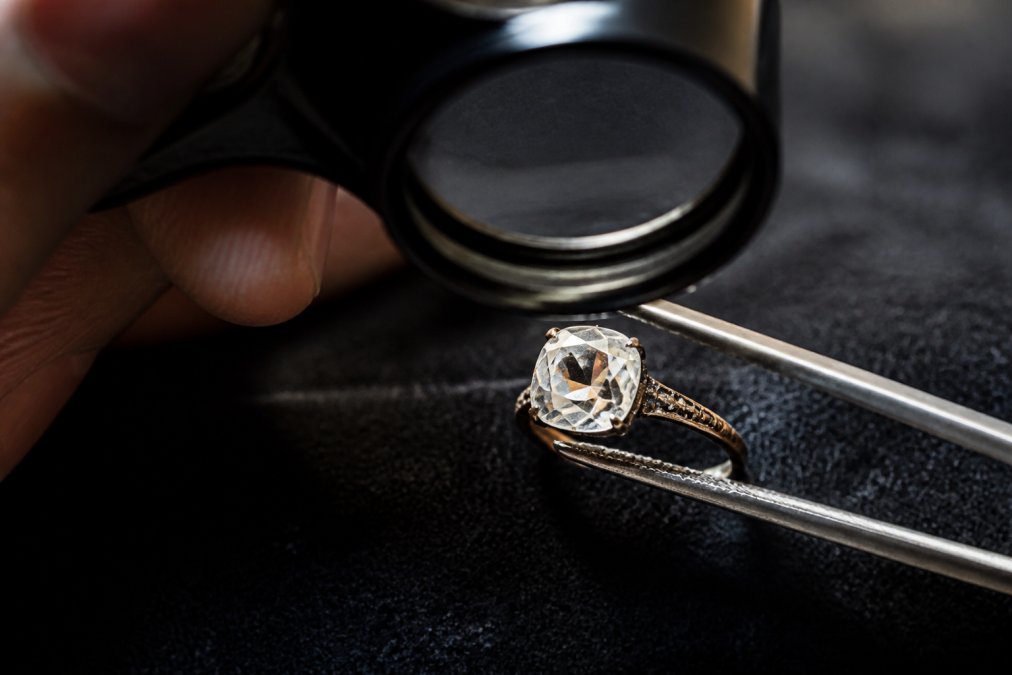
The defining visual traits of an Old Mine Cut are a cushion-shaped body with rounded corners, a small table relative to the crown, and a large, flat culet visible through the center. Together these produce a facet pattern that looks soft and watery rather than sharp and mirror-like.
The Cushion Shape and Rounded Corners
The cushion outline is the easiest marker to spot without magnification. Where a modern round brilliant is a near-perfect circle, an Old Mine Cut is squarish with softened, rounded corners. The crystal outline often looks slightly lopsided, because hand-cutting rarely produced a symmetrical girdle. According to GIA's diamond grading overview, cut quality is judged differently for antique stones precisely because their proportions fall outside modern parameters.
The Large Culet and Small Table
The culet is the flat facet at the very bottom of the stone. In most Old Mine Cuts it is large enough to see with the naked eye as a dark or bright spot in the center. The table, by contrast, is small, which pushes the crown upward and gives the stone its tall, domed profile, why antique diamonds show so much fire and scintillation but comparatively little of the bright, even brilliance modern buyers expect.
Old Mine Cut vs Old European Cut: Key Differences
The quickest way to separate these two antique styles is by outline and culet size. An Old Mine Cut is cushion-shaped with a large culet; an Old European Cut is round with a much smaller culet. Both are antique and hand-cut, but they belong to different eras and silhouettes.
| Feature | Old Mine Cut | Old European Cut |
|---|---|---|
| Outline | Cushion, rounded corners | Round, circular |
| Culet | Large, often visible | Small, sometimes nearly closed |
| Table | Small | Slightly larger |
| Era | 18th to late 19th century | Late 19th to early 20th century |
| Facet pattern | Chunky, irregular | More uniform, radial |
How to Identify an Old Mine Cut: A Step-by-Step Checklist
Use this checklist in order, the first two steps eliminate most modern stones immediately.
- Check the outline. Look for a cushion shape with rounded corners, not a perfect circle.
- Find the culet. Turn the stone over and look for a large flat facet at the bottom point.
- Measure the table. A small table with a tall crown points to an antique cut.
- Examine the facet pattern. Expect chunky, irregular facets rather than tight, uniform ones.
- Look for a girdle that varies in thickness. Hand-cutting left uneven girdles.
- Confirm with a gemologist. A trained eye under magnification settles it.
Microscopic Markers and Facet Alignment
Under a loupe, antique stones reveal what photos hide: facet alignment is rarely perfect, and the geometry shows hand-polishing rather than machine precision. Pavilion depth and crown height vary from stone to stone, and a gemologist can spot girdle and culet abrasions common in stones that survived a century or more of wear.
Antique Diamond Appraisal Cost and Certification Nuances
Most buying guides gloss over certification for antique stones, and that omission costs buyers real money. Here is what happens when an Old Mine Cut goes to a lab, and how to read the report.
How Major Labs Grade Antique Cuts
The two names you will see most often are GIA (Gemological Institute of America) and AGS (American Gem Society). Both grade cut quality against parameters developed for modern round brilliants, table percentage, crown angle, pavilion depth, that were never design goals for an 18th-century cutter. A perfectly genuine, well-preserved Old Mine Cut can therefore receive a cut grade of "Fair" or "Poor," not because it is badly made but because it was made to a different standard.
What to Request in an Appraisal
An appraisal is not the same document as a lab grading report: a lab report describes the stone, an appraisal assigns a value. For antique diamonds you generally want both, and the appraisal should do three things:
- Identify the cut explicitly as antique, by name (Old Mine Cut, Old European Cut) and with a note on the culet, table, and facet arrangement.
- State the valuation purpose, replacement value for insurance, or fair-market value for resale. These are different numbers, often by a wide margin, and an appraiser cannot give you both on one document.
- Note any antique-specific characteristics that affect value: culet size, girdle condition, presence of original setting, provenance.
Appraisal Cost and Turnaround
Appraisal fees vary by appraiser, stone value, and turnaround time, often a flat fee per item for lower-value pieces and a percentage of value for higher-value stones, with rush turnaround costing more. Ask for a written quote before committing, and ask whether the appraiser has specific experience with antique cuts; a generalist who mostly grades modern brilliants may not recognize the markers that distinguish a genuine Old Mine from a reproduction.
Why This Matters More for Antiques Than Modern Stones
With a modern round brilliant, a lab report and an appraisal are largely interchangeable, the cut grade tells you most of what you need. With an Old Mine Cut, the report is only a starting point: the value sits in what a standard report does not capture, hand-cut irregularity, age, originality of setting, provenance. A report calling an antique stone "poorly cut" is not wrong, but it is not the whole story.
Modern Lab-Grown vs Antique Reproduction: What to Watch For
This is where most buyers get caught. Three products now imitate the antique look, and none is a genuine Old Mine Cut. Knowing the difference is the most useful skill you can bring to a viewing.
The Questions That Separate Real From Reproduction
Ask these directly, and get the answers in writing on the invoice or receipt:
- Was this stone cut by hand before 1900, or is it a modern stone in an antique style?
- What is the country of origin of the rough, and when was it cut?
- Does the stone come with any provenance, an old setting, an estate inventory, a family history, a previous appraisal dated before the modern antique-revival trend?
- Is the culet a natural hand-cut facet, or was it added by a modern cutter to imitate one?
A Note on Modern Antique-Style Cuts
Some contemporary cutters produce what the trade calls "old mine style" or "antique cushion" cuts, new stones cut with a large culet and small table on purpose. These are legitimate and can be beautiful, but they are not antiques and should not be priced or insured as such. The distinction matters for resale, insurance replacement, and anyone who cares whether the stone is actually old.
What Genuine Antique Wear Looks Like
A real Old Mine Cut that has survived 100+ years will usually show some of the following under a 10x loupe: minor girdle abrasions, small nicks at the culet edges, facet junctions slightly rounded rather than razor-sharp, and a girdle that varies in thickness. None is a defect in an antique context, they are the signature of age.
Setting Compatibility and Where Old Mine Cuts Shine
Old Mine Cuts suit settings that protect a tall crown and let light reach the deep pavilion. Bezel and half-bezel settings work well; very low-profile settings can bury the culet and kill the stone's fire. Vintage-style settings with claw prongs are the classic pairing, letting the cushion outline read clearly from above.
Frequently Asked Questions
Are old mine cut diamonds worth anything?
Yes. Old mine cut diamonds hold value for their rarity, hand-cut character, and antique appeal. Value depends on carat weight, clarity, color, and condition. Because they were cut before modern machinery, no two are identical, which adds collector interest. A certified antique diamond from a maison like LÖF carries documented provenance, which supports both resale value and insurance replacement cost.
How does an old mine cut differ from a modern brilliant cut?
A modern brilliant cut has 57 or 58 facets engineered for maximum light return, with a small or pointed culet and a round girdle. An old mine cut is cushion-shaped with rounded corners, a small table, a large open culet, and a higher crown. The old mine cut prioritizes candlelight scintillation and warmth over the bright white flash of a modern stone.
How can I tell if my antique diamond is an old mine cut or an old European cut?
Look at the outline first. Old mine cuts are cushion-shaped with rounded corners; old European cuts are round. Next, check the culet: old mine cuts have a large, visible culet, while old European cuts have a smaller one. Finally, examine the table size. Old mine cuts have a smaller table relative to the crown height. A gemologist can confirm with a loupe and facet pattern analysis.
What does an antique diamond appraisal cost?
Antique diamond appraisal cost varies by appraiser, stone size, and report depth. A basic verbal assessment is the least expensive, while a full written appraisal with photos and certification typically costs more. For high-value antique diamonds, a formal appraisal is worth the investment because it documents replacement value for insurance and confirms authenticity. Ask whether the appraiser specializes in antique cuts before booking.
Telling a genuine antique from a modern imitation comes down to patience and a good loupe, and most buyers would rather have an expert do it for them. LÖF builds heirloom pieces around verified antique diamonds, set in 18k gold and platinum using recycled metals and ethically sourced stones. If you want a stone with a century of history behind it, choose options from LÖF and start with a piece you will want to pass down.