

Table of Contents
- Why Proper Storage Matters for Antique Diamond Jewelry
- Best Jewelry Storage Containers for Antiques
- Creating the Ideal Environment for Long-Term Storage
- Preventing Tarnish on Antique Gold Settings
- How to Clean Antique Diamond Jewelry Before Storage
- Organizing Rings, Necklaces, and Heirloom Pieces
- Insurance, Documentation, and Security
- Storage Solutions for Travel and Temporary Moves
- Frequently Asked Questions
Last Updated: September 23, 2026
Why Proper Storage Matters for Antique Diamond Jewelry
How you store antique diamond jewelry determines whether your heirloom pieces remain brilliant for generations or deteriorate irreversibly. When you store antique diamond jewelry properly, it's the difference between preservation and slow degradation.
Antique diamonds and precious metals are vulnerable to humidity (which causes oxidization on gold), direct sunlight (which fades gemstones), and careless storage (which causes scratches and tangling). Many collectors unknowingly accelerate this damage for months.
Restoration of damaged vintage settings is expensive and sometimes impossible. Proper storage creates an environment where your pieces remain untouched by the elements that harm them.
Best Jewelry Storage Containers for Antiques
The container you choose is your first line of defense against jewelry damage.
Soft Fabric Pouches and Individual Compartments
Soft fabric pouches protect individual pieces from scratching and tangling. Velvet and microfiber offer superior protection because they're gentler on polished surfaces and less likely to snag delicate settings.
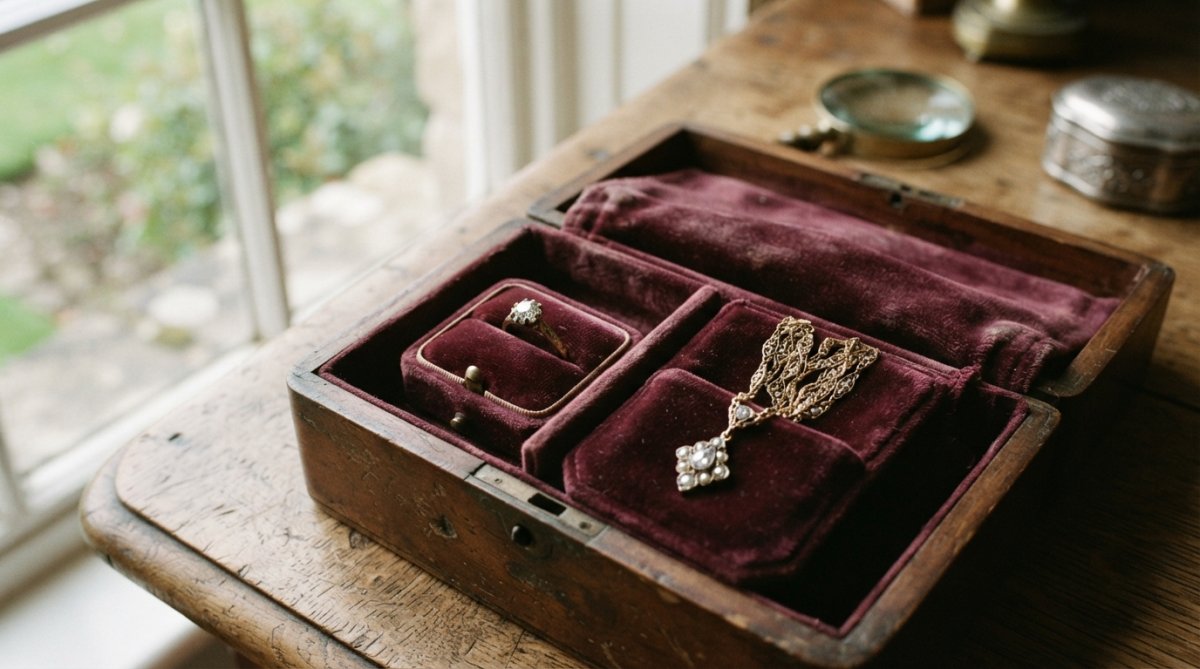
Individual compartments prevent tangling and scratches. Soft fabric pouches with separate slots for each piece eliminate this problem.
Combine pouches with a dedicated storage box: keep frequently worn pieces in a shallow drawer, and reserve deeper boxes for seasonal or rarely-worn items.
Velvet-Lined Jewelry Boxes
Velvet-lined jewelry boxes prevent scratching and protect from dust. Choose boxes with multiple compartments to prevent tangling and organize pieces logically.
Premium velvet-lined boxes use thicker fabric that lasts decades without shedding, making the investment worthwhile.
Traditional velvet-lined boxes offer minimal climate control. For long-term storage, combine them with climate management strategies.
Climate-Controlled Storage Options
Jewelry safes with humidity regulators maintain stable moisture levels, preventing oxidization on gold settings and protecting delicate gemstone bonds.
Add desiccant packets inside boxes to absorb ambient moisture. Silica gel desiccants are inexpensive and effective; replace them every 3-6 months to prevent tarnish on antique gold and platinum.
Climate-controlled safe deposit boxes at banks offer professional-grade environmental management at modest cost.
Creating the Ideal Environment for Long-Term Storage
Three factors determine whether stored jewelry remains pristine: temperature stability, humidity control, and light exposure.
Temperature and Humidity Control
Antique diamond jewelry thrives in cool, dry conditions: 55-70°F with 30-50% humidity. Fluctuations accelerate oxidization and stress gemstone bonds.
Choose interior closets over exterior walls, basements (which accumulate moisture), or attics (which experience extreme temperature swings).
Active Moisture Management with Desiccants
In humid climates, active desiccant use prevents tarnish on antique gold and platinum settings.
Silica Gel Packets are the most effective and affordable option. Place one or two packets in your jewelry box; they change color when saturated, indicating replacement is needed every 3-6 months in humid climates. Reactivate used packets in a 200°F oven for 1-2 hours to extend their lifespan.
Activated Charcoal absorbs moisture and odors, including sulfur compounds that cause tarnish. Use small pieces alongside desiccant packets; replace every 6-12 months.
Anti-Tarnish Strips absorb sulfur compounds and moisture without requiring replacement. They're effective in moderate climates but less reliable in very humid conditions.
Sealed Container Strategy
Combine desiccants with sealed storage using airtight boxes or resealable pouches. For valuable collections, consider a jewelry safe with built-in humidity regulation (30-50%), which eliminates manual desiccant replacement.
Protecting Against Light and Air Exposure
Store jewelry in dark conditions away from windows and heat sources. If using sealed containers with desiccants, complete sealing is appropriate; otherwise, ensure slight air exchange.
Preventing Tarnish on Antique Gold Settings
Tarnish on antique gold is oxidization, a chemical reaction between the metal and oxygen or sulfur compounds in the air. Understanding this process helps you prevent it.
Understanding Oxidization and Tarnish
Oxidization accelerates in humid environments. Once tarnish forms, professional cleaning is required; prevention is far simpler than restoration.
Using Desiccants and Moisture Absorbers
Silica gel desiccants are your best tool for preventing tarnish. Combine them with activated charcoal and anti-tarnish strips in sealed containers for optimal results.
How to Clean Antique Diamond Jewelry Before Storage
Clean jewelry before storing it using lukewarm water, mild dish soap, and a soft cloth. Soak for 2-3 minutes, then pat dry immediately with a microfiber cloth. For heavily tarnished pieces, seek professional cleaning to avoid permanent damage.
Organizing Rings, Necklaces, and Heirloom Pieces
Different jewelry types require different storage approaches. The goal is preventing tangling, scratching, and stress on delicate settings.
Safe Storage for Rings Versus Necklaces
Store rings individually in soft pouches to avoid stressing the band. Lay necklaces flat or coil them loosely in separate compartments; never hang them. Store bracelets similarly, never stacked.
Preventing Tangling and Scratching
Store each piece separately using soft fabric dividers. Label pouches to reduce unnecessary handling. For delicate chains, insert acid-free paper through the clasp loop before coiling to prevent snagging.
Insurance, Documentation, and Security
Proper storage extends beyond environmental control, it includes protecting your investment through documentation, insurance, and secure placement. This intersection of storage and insurance is rarely addressed in competitor guides, yet it's essential for collectors of significant antique jewelry.
Appraisals and Professional Documentation
Obtain appraisals from a certified gemologist accredited by the ASA or AGS. Separate appraisals are recommended for pieces valued over $5,000. Update appraisals every 3-5 years to ensure adequate insurance coverage.
Creating a Storage Inventory
Document each piece with photographs, measurements, and a detailed description. Create a spreadsheet or digital inventory that includes:
- Item description: Ring, necklace, bracelet, etc., with specific details (solitaire diamond ring, 18k yellow gold, vintage setting)
- Dimensions: Ring size, necklace length, weight
- Gemstone details: Diamond carat weight, color, clarity, any certifications (GIA, AGS)
- Metal details: Type, purity, weight
- Condition notes: Any existing damage, repairs, or restoration work
- Photographs: Clear images of the piece, clasp, hallmarks, and any identifying features
- Appraisal value: Replacement value from professional appraisal
- Storage location: Where the piece is stored (home safe, safe deposit box, etc.)
- Date stored: When the piece was placed in storage
Store this documentation separately from the jewelry itself. Keep physical copies in a safe deposit box at your bank, and maintain digital backups in cloud storage (encrypted, password-protected). If your home is damaged or jewelry is lost, this documentation is your proof of ownership and value for insurance claims.
Insurance Coverage and Scheduling
Standard homeowner's or renter's insurance typically covers jewelry only up to $1,500-$2,500 total, regardless of actual value. For antique diamond jewelry, this coverage is almost certainly insufficient.
Schedule individual pieces with your insurance provider by adding them to a personal property rider or jewelry floater. This provides coverage for the full appraised value of each piece, protecting against loss, theft, or damage. Provide your insurance company with:
- Professional appraisals for each scheduled piece
- Photographs and detailed descriptions
- Proof of ownership (receipts, certificates of authenticity)
Scheduled jewelry coverage typically costs 1-2% of the item's appraised value annually. For a $10,000 antique diamond ring, expect to pay $100-$200 per year for full coverage. This is a modest investment relative to the piece's value.
Important: Some insurance policies require that jewelry be stored in a safe deposit box or home safe to maintain coverage validity. Verify your policy's storage requirements before placing pieces in a drawer or standard jewelry box. Improper storage could void your coverage in case of loss or damage.
Secure Storage Options
The security of your storage location directly impacts insurance coverage and the safety of your collection.
Home Safes: A quality home safe provides immediate access to frequently worn pieces while offering security against theft. Choose a safe rated for jewelry (not just documents), with a fire rating of at least 1 hour at 1,200°F. Bolt the safe to the floor or wall to prevent theft. Home safes range from $300-$2,000 depending on size and security features. Keep the safe in a discreet location, not in a bedroom closet or obvious hiding spot.
Safe Deposit Boxes: For long-term storage of heirloom pieces you rarely wear, a safe deposit box at your bank offers professional-grade security and climate control. Annual rental fees range from $25-$200 depending on box size and location. Safe deposit boxes are ideal for:
- Pieces you wear fewer than twice per year
- Valuable collections you're preserving for future generations
- Documentation and appraisals you want to keep secure
Note: Safe deposit boxes are not accessible 24/7.
Insurance Claims and Storage Conditions
Maintaining proper storage conditions isn't just about preservation, it's about maintaining valid insurance coverage. Many insurance policies include clauses that void coverage if items are stored in conditions that increase risk of damage or loss.
Storage Solutions for Travel and Temporary Moves
Traveling with antique jewelry requires different strategies than home storage. The goal is protection during transit and in temporary locations.
Frequently Asked Questions
Should antique diamond jewelry be stored in a jewelry box?
Yes, but with specific conditions. A velvet-lined jewelry box with individual compartments protects antique diamond jewelry from dust, light, and humidity fluctuations. Ensure the box is stored in a cool, dry place away from direct sunlight. For long-term storage of precious heirloom pieces, combine the box with desiccants to control moisture and prevent oxidization of gold settings.
How do you prevent antique jewelry from tarnishing while in storage?
Store antique gold settings in a low-humidity environment using desiccant packets or silica gel to absorb excess moisture. Wrap pieces individually in soft, acid-free tissue or fabric pouches to minimize air exposure. Keep the storage location cool and dark, away from direct sunlight. Clean antique diamond jewelry gently before storage to remove oils and residue that can accelerate tarnish.
Does humidity affect antique diamond jewelry?
Yes, humidity significantly impacts jewelry preservation. Excess moisture accelerates oxidization of precious metals and can damage delicate diamond settings. Ideal humidity levels are between 30-50%. High humidity can cause tarnish on 18k gold and platinum, while very low humidity may affect certain gemstone coatings. Use moisture-control products and store pieces in sealed containers or jewelry boxes with desiccants for optimal protection.
What should I avoid when storing antique diamond jewelry?
Avoid storing jewelry on abrasive surfaces, in direct sunlight, or in fluctuating temperatures. Do not use plastic bags or containers that trap moisture. Avoid storing different metals together if possible, as they can cause cross-contamination. Never store antique jewelry in bathrooms or kitchens where humidity and temperature vary. Keep pieces away from harsh chemicals, perfumes, and cosmetics that can damage settings and gemstones.