

Table of Contents
- What to Decide Before You Start Designing
- Understanding the Custom Engagement Ring Design Process
- The Engagement Ring Design Consultation
- Selecting Your Center Stone
- Engagement Ring Setting and Metal Options
- Custom Engagement Ring Timeline and What to Expect
- Budget Planning and Cost Drivers
- Ensuring Ethical Sourcing and Durability for Daily Wear
- Frequently Asked Questions
Last Updated: October 20, 2026
What to Decide Before You Start Designing
Before meeting a jeweler to design your own engagement ring, get clear on your priorities, they shape everything that follows.
Ask yourself what matters most: the stone, the design, the timeline, or the budget? Most people juggle all four, but when trade-offs happen, knowing your hierarchy prevents frustration.
Will you wear this ring every day? If yes, durability and metal choice become critical, platinum and 18k gold hold up far better than softer metals.
Consider your lifestyle: an active job, hands-on work, or regular swimming all matter when choosing a setting and stone type.
Think about your personal style too. Bold, architectural pieces or classic, understated designs? This isn't just aesthetic, it affects which jewelers fit your vision.
Understanding the Custom Engagement Ring Design Process
When you design your own engagement ring, the process starts with understanding the journey from concept to finished piece.
The process begins with discovery: you meet with a jeweler to discuss your vision, budget, and timeline, share inspiration photos, and explore design directions.
Next comes the design phase.
Once you approve the design, production begins.
Finally comes finishing: your jeweler polishes, inspects for imperfections, and makes final adjustments. You'll receive the finished ring, often with documentation about the materials and stones used.
The entire timeline typically ranges from 8 to 16 weeks, depending on stone availability and design complexity. A simple design with readily available stones might take 8 weeks.
The Engagement Ring Design Consultation
Your engagement ring design consultation is where your vision becomes real and sets the tone for the entire project.
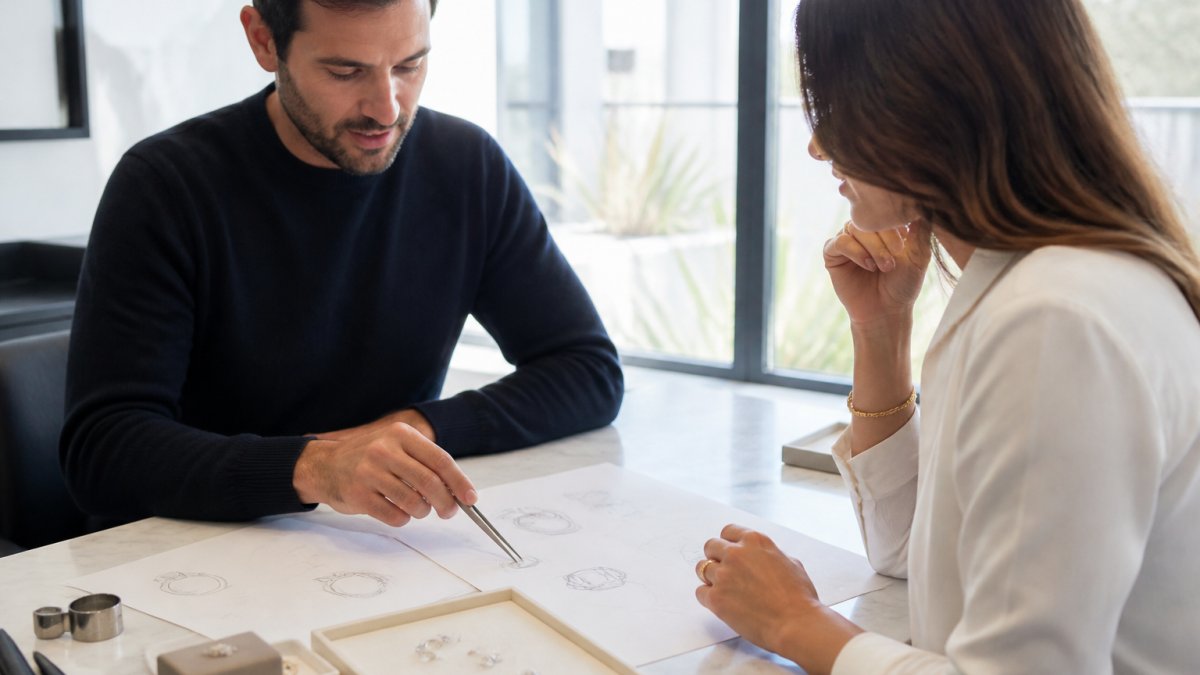
Prepare before you arrive. Bring inspiration photos of rings you love, even if they're not exactly what you want, plus settings, stone shapes, and band styles that resonate with you.
Discuss your budget openly.
Talk about timeline. If you need the ring for a specific date, say so, it affects stone sourcing and production scheduling. Rushing a custom piece is possible but often costs more.
Discuss daily wear expectations. Will you wear this ring constantly? Sleep in it? Do active work? These answers shape metal choice and setting security.
What to Bring to Your Consultation
Bring these items to make your consultation productive:
- Inspiration photos (at least 5-10 images of rings you like)
- Your budget range
- Any inherited stones or metals you want to incorporate
- Your ring size (or be prepared to have it measured)
- A list of questions or concerns
- Details about your lifestyle and daily wear plans
Questions to Ask Your Designer
Ask your jeweler these critical questions:
- What stones do you source, and where do they come from?
- Can you provide certification for the center stone?
- What metals do you work with, and what are the durability differences?
- How do you handle revisions if I want changes during production?
- What's your timeline for completion?
- Do you offer a warranty or guarantee?
- Can I see examples of similar pieces you've created?
- What happens if the stone I want isn't available?
Selecting Your Center Stone
Your center stone is the focal point. This decision carries weight, both visually and financially.
Start by understanding what "certified" means. A certified diamond or gemstone has been evaluated by an independent lab (typically GIA or IGI), and the certificate documents its carat weight, color, clarity, and cut, verifying what you're buying.
Not all stones require certification, but for diamonds and high-value gemstones, it's essential. It protects you and ensures you know exactly what you own.
Diamond Cut and Shape Options
Cut and shape are different things. Shape is the outline: round, oval, cushion, emerald, pear.
Round diamonds are the most popular and typically the most expensive, returning light beautifully and working with nearly any setting style.
Oval and cushion cuts offer elegance with a different visual profile. They often appear larger than round stones of the same carat weight.
Emerald and asscher cuts have a geometric, architectural look and require higher clarity because the faceting shows inclusions more readily.
Pear shapes are distinctive and dramatic, working beautifully in solitaire settings or multi-stone designs.
Choose a shape based on your personal preference, not trends. You're wearing this daily for years. The shape should feel right to you.
Certified Diamonds and Gemstones
For diamonds, certification from GIA or IGI is standard. These labs evaluate the four Cs: carat weight, color, clarity, and cut.
If you're considering colored gemstones, emeralds, sapphires, tourmalines, ask your jeweler about certification. Some gemstones are treated or enhanced, and certification documents this. Knowing whether your stone is natural, heat-treated, or enhanced affects both value and durability.
At LÖF, we source ethically verified gemstones and antique diamonds. This means we can document the origin and history of your stone. For conscious consumers, this transparency matters. You're not just buying a beautiful stone, you're investing in a piece with a verified story.
Engagement Ring Setting and Metal Options
Your setting is the framework that holds your stone and shapes how the ring looks and functions.
Gold, Platinum, and Precious Metal Choices
18k gold is the standard for fine jewelry. It's durable, holds detail well, and works beautifully with both diamonds and colored stones. Yellow gold is classic. White gold is modern.
Platinum is more durable than gold. It's denser, heavier, and doesn't wear away as quickly. Platinum also doesn't need replating like white gold sometimes does. The trade-off is cost, platinum is significantly more expensive than gold.
At LÖF, we work with 18k gold and platinum, often incorporating recycled metals. This means your ring combines luxury with sustainability.
Both metals work for daily wear. Your choice depends on your budget, aesthetic preference, and how much durability you prioritize.
Setting Styles and Ring Design
Your setting determines how the stone sits and how the ring looks overall.
A solitaire setting is simple and timeless, the stone sits alone on a band.
A halo setting surrounds the center stone with smaller diamonds or gemstones. This creates visual impact and can make a smaller stone appear larger.
A three-stone setting features your center stone flanked by two accent stones. This adds complexity and visual interest.
A pavé setting has small stones set along the band. This adds sparkle and detail to the band itself.
Consider your lifestyle when choosing a setting. Intricate designs with lots of prongs require more careful handling. Simpler settings are more forgiving for active wearers.
Custom Engagement Ring Timeline and What to Expect
Understanding the timeline prevents frustration and sets realistic expectations.
Initial consultation to design approval typically takes 1-2 weeks. You'll meet with your jeweler, review sketches or renderings, and request revisions. Most designs need at least one round of adjustments.
Stone sourcing takes 2-6 weeks, depending on what you want. A readily available diamond might arrive in days. A specific colored gemstone or rare stone might take months.
Production and setting typically takes 4-8 weeks. Your jeweler crafts the setting, receives the stone, and sets it carefully. Quality work can't be rushed.
Final finishing and inspection takes 1-2 weeks. Your jeweler polishes, checks for any imperfections, and makes final adjustments.
Total timeline: 8-16 weeks from consultation to finished ring. Some projects finish faster. Complex designs or rare stones take longer.
Budget Planning and Cost Drivers
Your engagement ring budget breaks down into distinct components. Understanding each helps you allocate your money wisely.
The center stone typically represents 40-60% of your total budget.
The setting and metal account for 20-40% of your budget. Platinum costs more than 18k gold. Intricate designs with lots of detail cost more than simple settings.
Labor and design work typically represent 10-20% of your budget. A custom design requires skilled craftsmanship.
Certification and documentation add 2-5% to your budget. This protects your investment and ensures you know exactly what you own.
Here's how this breaks down for a typical custom engagement ring:
| Component | Budget Percentage | Notes |
|---|---|---|
| Center Stone | 40-60% | Largest cost driver; quality varies significantly |
| Metal and Setting | 20-40% | Platinum costs more; complex designs cost more |
| Labor and Design | 10-20% | Custom work requires skilled craftsmanship |
| Certification | 2-5% | Documents stone quality and authenticity |
| Contingency | 5-10% | Allows for adjustments or unexpected costs |
At LÖF, our custom engagement rings start at $24,000 and extend well beyond, depending on your stone choice and design complexity. The Rockwell Ring, featuring a 2-carat emerald with a custom halo setting, represents a mid-to-premium investment.

If you're working with a specific budget, be transparent about it. A good jeweler will help you allocate your resources to maximize impact within your range.
Ensuring Ethical Sourcing and Durability for Daily Wear
Ethical sourcing and durability aren't luxuries, they're foundational to a ring you'll wear and treasure for decades.
Ask your jeweler about stone sourcing. Where do the diamonds come from? Are they conflict-free? For colored gemstones, what's the origin? Are they lab-created or natural?
At LÖF, we prioritize ethically sourced gemstones and antique diamonds. Antique diamonds carry history, they've already been worn, so they're not contributing to new mining.
Ask about durability for daily wear. Diamonds rate 10 on the Mohs hardness scale, nearly indestructible (Natural Gemstones). Sapphires and rubies rate 9 (Natural Gemstones).
Discuss maintenance with your jeweler. Will your ring need regular polishing? Occasional re-tipping of prongs? These conversations ensure your ring stays beautiful for life.
Designing your own engagement ring in Los Angeles gives you control over every detail, the stone, the setting, the metals, the timeline. Our pieces, like The Shard Ring with its antique pear diamond and geometric platinum band, exemplify how thoughtful design and sustainable materials create heirlooms. When you're ready to start your custom design journey, choose options and let's create something extraordinary.

Frequently Asked Questions
How long does it take to design and create a custom engagement ring in Los Angeles?
The custom engagement ring timeline typically spans 8-12 weeks from initial consultation to final delivery. This includes the design consultation (1-2 weeks), stone sourcing and certification (2-4 weeks), and handcrafted production (4-6 weeks). Rush timelines are sometimes available but may incur additional fees. Your jeweler will provide a specific timeline after your consultation based on the complexity of your design and stone availability.
What should I bring to my engagement ring design consultation?
Bring reference images of rings you admire, your budget range, and any heirloom stones or metals you want incorporated. Wear rings you typically use so your designer can assess your lifestyle and sizing needs. Consider bringing a trusted friend or partner for a second opinion. If you have specific gemstone preferences or certifications you want, mention these upfront. Having these details ready helps your jeweler understand your vision and create a design that suits both your aesthetic and daily wear needs.
Can I use an heirloom or antique diamond in a custom engagement ring?
Yes, heirloom and antique diamonds can be incorporated into custom designs. Many Los Angeles jewelers, including those specializing in sustainable luxury, work with family stones to create one-of-a-kind pieces. Before bringing your stone, have it professionally appraised and certified by GIA or IGI to verify its quality and authenticity. Discuss any resetting costs and whether your stone's cut and proportions suit your desired setting style. Some antique cuts may require custom settings, which affects both timeline and cost.
How do I know if a Los Angeles jeweler is using ethically sourced materials?
Ask your jeweler for documentation: GIA or IGI certification for diamonds and gemstones, proof of recycled metal sourcing, and ethical supply chain certifications. Reputable designers will provide transparency about their material origins and craftsmanship practices. Request written confirmation of metal purity (18k gold or platinum) and any treatments applied to gemstones. A jeweler committed to ethical practices will welcome these questions and provide verifiable documentation rather than vague assurances. This documentation protects your investment and ensures your ring aligns with your values.