

Table of Contents
- 1. Mix Metals and Textures for Modern Contrast
- 2. How to Stack Vintage Engagement Rings Without Clutter
- 3. Pair a Vintage Diamond Ring With a Modern Wedding Band
- 4. Style by Hand Shape, Not Just by Era
- 5. Let One Antique Diamond Ring Carry the Outfit
- 6. Antique Diamond Ring Care Tips for Daily Wear
- 7. Budget-Friendly Styling Hacks That Still Look Luxurious
- Frequently Asked Questions
Last Updated: September 28, 2026
1. Mix Metals and Textures for Modern Contrast
The fastest way to make vintage diamond rings feel current is to stop matching your metals. Pairing a warm 18k yellow gold antique piece with a cool platinum or white gold band creates tension that reads as intentional rather than inherited.
2. How to Stack Vintage Engagement Rings Without Clutter
The 2:1:1 rule is the simplest way to stack vintage engagement rings without visual noise: two thin bands, one textured or antique piece, and one plain spacer. That ratio gives the eye a resting point between detailed rings.
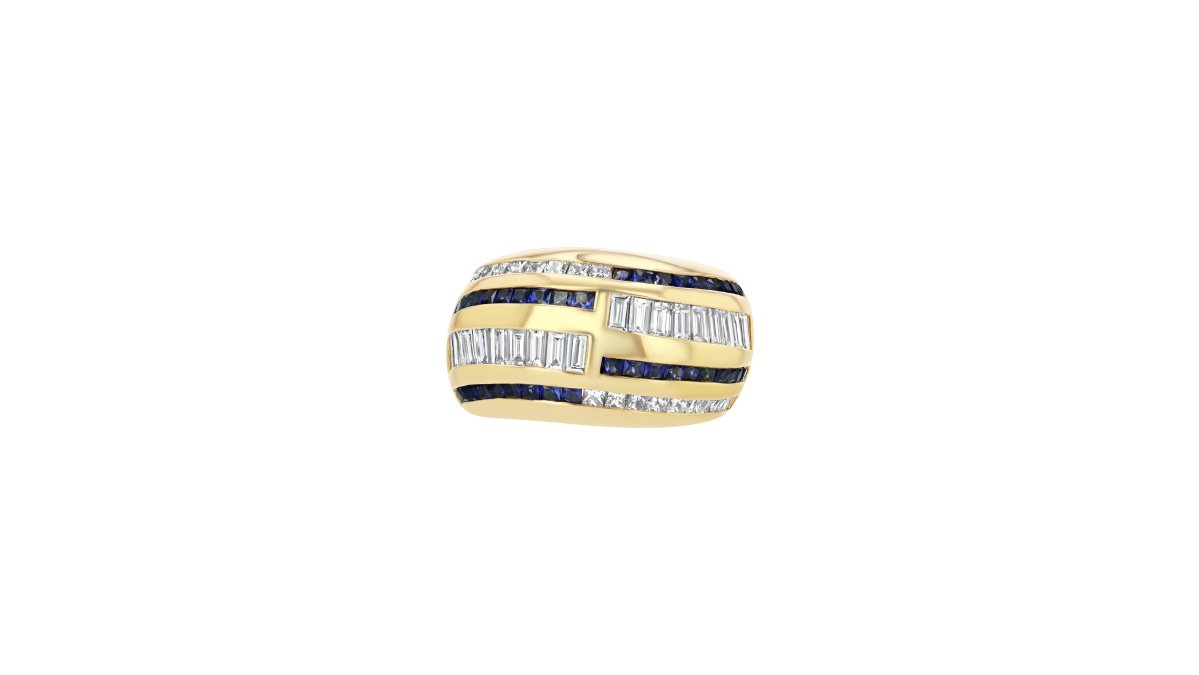
The 2:1:1 Rule for Balanced Stacking
- Two thin bands (plain or pavé)
- One textured or antique statement ring
- One plain spacer band to separate them
Cigar Bands and Solitaires: A Pairing That Holds
A wide band at the base plus a single stone above gives you height without bulk.

3. Pair a Vintage Diamond Ring With a Modern Wedding Band
Matching a vintage diamond ring to a modern wedding band comes down to one decision: do you want the band to blend or to frame? A plain band lets the antique stone lead. A geometric or zigzag band turns the pairing into a conversation.
Geometric Settings Against Old European Cuts
Geometric settings work with Old European Cuts because the contrast is structural, not decorative. The soft, high-crown sparkle of the old stone sits inside crisp modern lines, and each makes the other look more deliberate.
4. Style by Hand Shape, Not Just by Era
- Long, slender fingers: wide cigar bands, chunky cuffs, and multi-ring stacks all work because there is enough vertical real estate to carry the bulk. A trio of rings that would swallow a shorter finger reads as balanced here.
- Shorter fingers: elongated cuts (marquise, pear, oval) and single-band stacks. Skip wide bands, which cut the finger visually and make it read shorter still.
- Wide fingers: domed or architectural rings that add height rather than width. A high-crown antique solitaire or a bezel-set dome gives the eye something to travel over instead of across.
- Knuckle-dominant hands: rings that sit lower on the finger, avoiding tall settings that catch on gloves, pockets, and doorframes. A low-profile bezel or a flush-set band solves this where a prong-set solitaire will not.
- Petite hands: one focal ring plus one thin companion band. Stacking three or more rings on a small hand compresses the visual space and makes each ring read as smaller than it is.
One trade-off worth naming: the shapes that flatter shorter fingers most (marquise, pear, oval) are also the shapes most likely to snag, because their points and curves catch on fabric. If you have a shorter finger and an active lifestyle, look for a bezel or half-bezel setting on an elongated stone rather than a prong setting, you keep the elongating line without the daily snag risk.
5. Let One Antique Diamond Ring Carry the Outfit
One strong antique diamond ring beats three competing ones. If your ring has real presence, a cocktail ring or an illusion setting, it should be the only jewelry above the wrist that asks for attention.
6. Antique Diamond Ring Care Tips for Daily Wear
Antique diamond ring care tips matter more than care advice for modern pieces because old settings were hand-finished, often with thinner prongs and softer metal. Daily wear is fine, but it needs a routine.
- Remove rings before showering, swimming, or applying lotion
- Clean with lukewarm water, a drop of mild soap, and a soft brush
- Skip ultrasonic cleaners on antique settings unless a jeweler confirms they're safe
- Check prongs every six months for movement or thinning
- Store each ring separately in a soft pouch to prevent metal-on-metal scratches
7. Budget-Friendly Styling Hacks That Still Look Luxurious
You don't need a new ring to change how your vintage piece reads. Most of the impact comes from proportion, spacing, and what you pair it with, three things you can adjust for free. The luxury look in vintage styling is rarely about the price of the newest piece; it is about whether the set looks deliberate. A $40 plain band in the right metal can do more for an antique solitaire than a second statement ring ever will.
- Add a thin plain band in a contrasting metal instead of buying a second statement ring. A 1.5-2mm band in platinum or white gold beside a warm 18k yellow gold antique piece creates the same tension a designer would charge for. The mechanism is contrast: the cool metal sharpens the warm antique sparkle rather than competing with it. Reach for this when your vintage ring feels flat or dated on its own.
- Wear your antique piece on the pinky or index finger to reset how it reads. The same ring on a different finger changes its proportion against the hand and its relationship to the rest of your jewelry. A cocktail ring that feels like too much on the ring finger often reads as a considered accent on the index finger. Reach for this when a piece feels like it is trying too hard.
- Use a single spacer band to separate two rings you already own. A plain 1mm spacer prevents metal-on-metal rubbing and gives the eye a resting point between two detailed rings. This is the cheapest way to make an existing stack look intentional rather than accidental. Reach for this when two rings you love look cluttered together.
- Rotate one statement ring across fingers rather than stacking three. One strong ring per hand almost always outclasses three competing ones. Rotation also spreads wear across different fingers, which matters for antique settings with softer metal. Reach for this when you are tempted to buy a third ring to 'complete' a stack.
- Pair with plain gold or platinum earrings, not a matching diamond set. Matching sets read as dated; a plain metal hoop or stud lets the vintage ring be the only piece asking for attention. Reach for this when your outfit feels over-accessorized.
| Styling Goal | What to Add | Why It Works |
|---|---|---|
| Modern contrast | One platinum or white gold band | Cool metal sharpens warm antique sparkle |
| Balanced stack | Thin spacer band | Prevents metal rub and visual clutter |
| Statement look | Single cocktail or illusion ring | One focal point reads as intentional |
| Budget refresh | Pinky or index finger placement | Resets proportion without a purchase |
| De-clutter | Rotate one ring across fingers | One strong ring beats three competing ones |
Frequently Asked Questions
What is the 2:1:1 rule in jewelry?
The 2:1:1 rule is a stacking guideline: two thin bands, one medium band, and one statement piece per hand. It keeps a stack from looking crowded while still letting a vintage diamond ring stand out. Applied to antique pieces, it means pairing a detailed Old European cut ring with two plain bands and one textured band. The ratio matters more than the exact ring count, because it balances visual weight across the finger.
Can you wear a vintage diamond ring every day?
Yes, with care. Antique diamonds are durable, but older settings can be thinner than modern ones, so prongs need checking every six to twelve months by a jeweler. Take the ring off for gym sessions, gardening, and cleaning with harsh chemicals. Platinum and 18k gold both hold up well to daily wear. A ring worn daily will show minor surface marks over time, which many collectors consider part of its character rather than damage.
What is the best way to stack vintage engagement rings?
Start with the ring you want to lead, usually the one with the largest or most detailed stone, and build outward with thinner bands. Keep metals consistent or deliberately two-tone, not accidentally mixed. Leave a small gap between rings with high prongs so they do not scratch each other. Three to four rings per hand is usually the practical maximum before a stack starts to feel heavy and hard to clean.
How do you clean and maintain vintage diamond rings?
Soak the ring in warm water with a drop of mild dish soap for fifteen minutes, then brush gently with a soft-bristled toothbrush, focusing on the underside of the stone where oils collect. Rinse and pat dry with a lint-free cloth. Avoid ultrasonic cleaners on antique pieces with filigree, milgrain, or fragile prongs, since vibration can loosen older settings. Have a jeweler inspect prongs annually, and insure the piece separately if you wear it daily.
How do you mix vintage and modern jewelry without it looking mismatched?
Pick one element to repeat across both pieces, such as metal tone, stone shape, or band width. A Victorian scroll-motif ring in rose gold sits well next to a plain modern rose gold band because the metal ties them together. Deliberate contrast also works: a geometric modern band against an ornate antique setting reads as intentional when the two share a finish. The mismatch only looks accidental when nothing connects the pieces.
Vintage diamond rings reward a light touch. The pieces themselves carry the history, and your job is spacing, contrast, and restraint rather than addition. At LÖF, we build around exactly that idea: antique diamonds set in 18k gold and platinum, crafted from recycled precious metals and ethically sourced stones, so an heirloom you style today is one you can pass down tomorrow. Explore the collection and choose options that suit your hand, your stack, and the way you actually wear jewelry.